


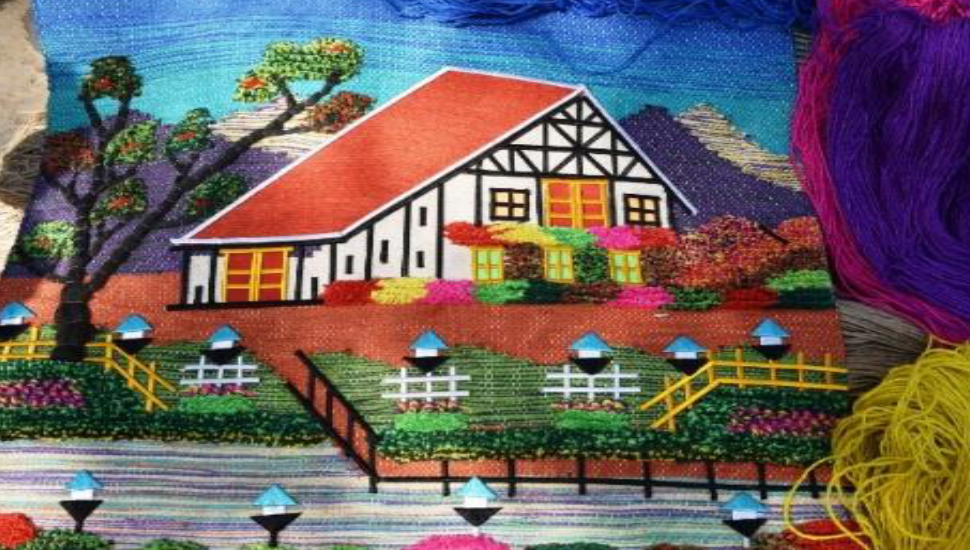
Amidst the diverse crafts of Uttar Pradesh, one stands out for its intricate detailing, vibrant colours, and regal legacy — the Ghazipur Wall Hanging. Handwoven by local artisans with great precision and passion, these traditional hangings are not just decorative items but a living expression of rural India’s artistry.
In This Article:
Granted the Geographical Indication (GI) tag in 2015, the Ghazipur wall hanging is an example of how regional textile crafts can carry centuries of cultural symbolism while adapting to modern tastes.
A Harmony of Weaving, Embroidery, and Storytelling
- The Ghazipur wall hanging is a decorative textile product made using jute, cotton threads, and applique work.
- They often depict scenes from nature, village life, and mythological stories, beautifully stitched and embroidered.
- These hangings feature patchwork, mirror work, tassels, and hand-stitched borders, adding both visual richness and tactile depth.
- The art is primarily practiced in and around Zamania block of Ghazipur district in eastern Uttar Pradesh.
Historical Roots and Cultural Relevance
- The tradition of making wall hangings in Ghazipur dates back over a century and is closely tied to rural domestic decor and ceremonial usage.
- Originally used during marriages, religious rituals, or as dowry gifts, the craft became popular for its handcrafted beauty and symbolic motifs.
- Passed down from generation to generation, the practice has survived despite mechanization, thanks to local cooperatives and craft groups.
Recognition and Revival
- In 2015, the Ghazipur Wall Hanging was awarded a GI tag (No. 247) by the Government of India, protecting its authenticity and encouraging promotion.
- It is also listed under the ODOP (One District One Product) initiative of the Uttar Pradesh government to support regional crafts and artisan welfare.
- Various exhibitions, including India Handloom Brand fairs and Hunar Haat, have featured Ghazipur wall hangings on national platforms.
Challenges Facing the Artisans
- Despite official recognition, lack of direct market access and middlemen exploitation reduce artisan profits.
- Cheaper machine-made alternatives have also affected traditional demand.
- Youth from artisan families often migrate to cities for alternative livelihoods, risking the continuity of the craft.
The Way Forward – Supporting Rural Craftsmanship
With increased focus on sustainable and handmade home decor, Ghazipur wall hangings have the potential to appeal to urban buyers and global markets.
By combining e-commerce, government support, and design innovation, this heritage craft can not only survive but thrive.
Let’s not just decorate our walls — let’s celebrate the hands that weave them.
By – Nikita