


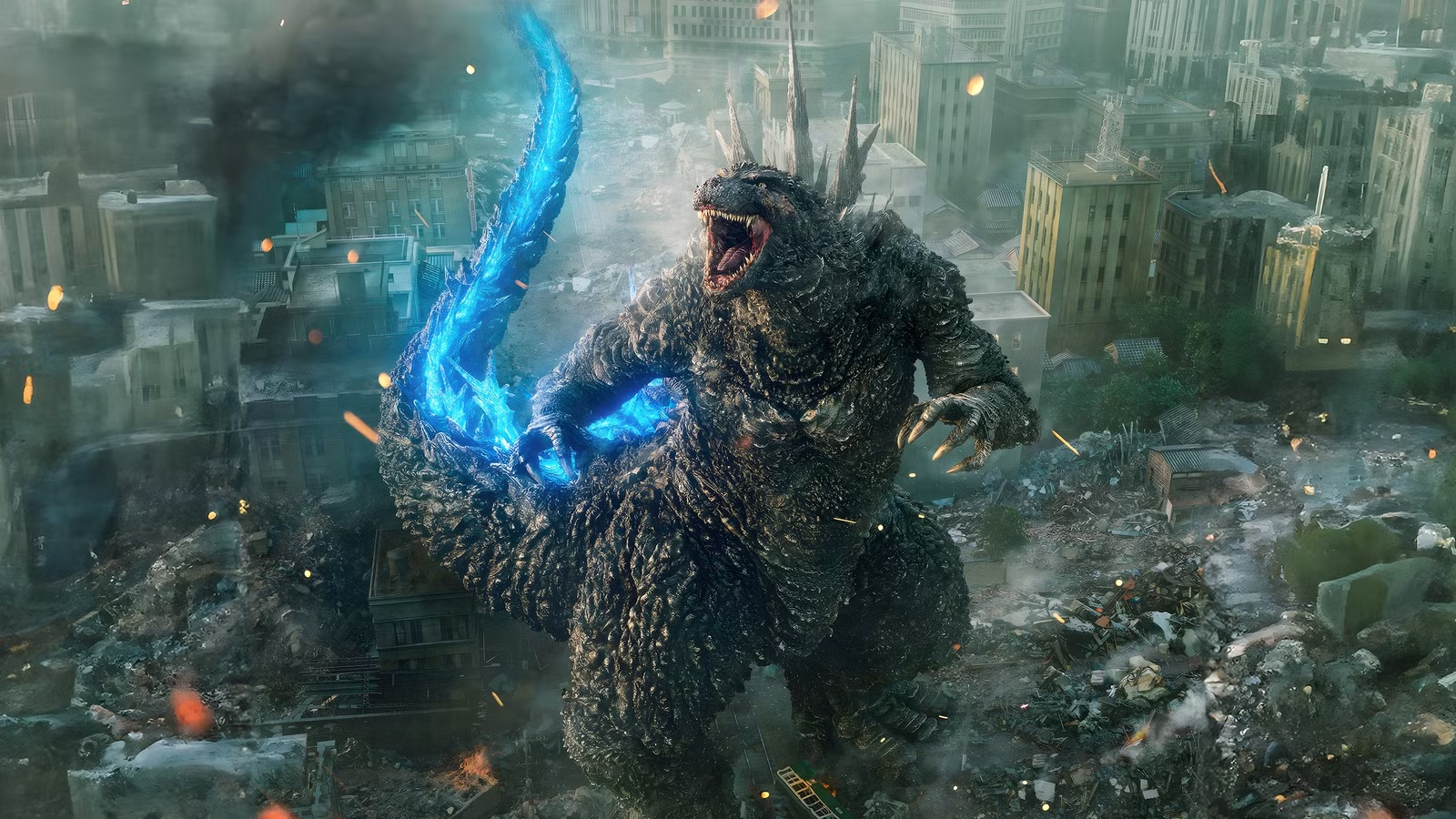
In a thunderous tribute to the King of the Monsters on his 71st anniversary, Toho Studios officially announced Godzilla Minus Zero (styled as Godzilla -0.0) as the direct sequel to the Oscar-winning Godzilla Minus One, unveiled during Godzilla Fest 2025 in Tokyo on November 3, 2025. Writer-director-VFX maestro Takashi Yamazaki returns to helm the project, sharing a moody hand-drawn logo and a cryptic teaser that hints at escalating chaos. Set against the franchise’s post-war legacy, the film promises deeper dives into regeneration horrors and human resilience, with a late 2026 global release window. The reveal has generated 1.5 million mentions of #GodzillaMinusZero X, celebrating a rebirth of the kaiju era amid the $100 billion global entertainment surge and 300 million social media users.
From Oscar Glory to Sequel Surge
Godzilla Minus One (2023) redefined the beast with its $113 million box-office haul and groundbreaking Visual Effects Oscar win—the first for a Japanese film in that category—grossing $116 million worldwide on a modest $15 million budget. Yamazaki’s tale of post-WWII Japan ravaged by a vengeful Godzilla, starring Ryunosuke Kamiki and Minami Hamabe, clinched 12 Japan Academy Prize nominations (eight wins) and a 98% Rotten Tomatoes score. Sequel whispers began in February 2024, with Yamazaki teasing storyboards and a bigger canvas; by July, Toho president Koji Ueda eyed 2026. The November 3 Fest drop—timed for Godzilla’s 1954 debut—confirmed the follow-up, with production ramping in New Zealand and Norway later this year, dodging Legendary’s MonsterVerse clash (Godzilla x Kong: Supernova in 2027).
Yamazaki’s Vision: Zero Point of Terror
The teaser, a shadowy montage of atomic blasts and a regenerating silhouette, fades to Yamazaki’s brushstroke logo, evoking the original’s minimalist menace. “Minus Zero” fuels speculation: A prequel to Minus One (set pre-1954), a Ghidorah nod (“Monster Zero”), or a “zero hour” reset amid the cliffhanger’s fleshy revival? Yamazaki, overseeing VFX again, vows emotional continuity with returning characters like Koichi Shikishima, blending low-budget ingenuity with amplified spectacle. “It’s about the human cost of survival,” he hinted at Fest, positioning it as a “statement piece” on nationalism and remilitarization—echoing Minus One’s themes without U.S. reliance. Produced by Toho Studios, the film eyes IMAX and Dolby Atmos for global theaters, with insiders projecting $200 million earnings.
Fan Frenzy and Kaiju Kingdom’s Evolution
Social media erupted: “Minus Zero? Yamazaki’s dropping a prequel bomb—Ghidorah incoming?!” one viral X thread roared, amassing 700K likes, while TikTok edits fused the teaser with Minus One’s heat ray. Fans laud the standalone Reiwa era’s grit over MonsterVerse silliness, with IGN calling it “the sequel we deserve.” In a post-Oppenheimer wave of atomic angst, Minus Zero taps 70% audience demand for “grounded” kaiju (2025 Nielsen), bridging Japan’s $5 billion film export legacy with Hollywood’s $1 billion Godzilla franchise. Yet, questions linger: Returning cast? New threats? The Fest applause suggests Yamazaki’s magic will deliver.
A Zero-Hour Reckoning: Godzilla’s Legacy Reloaded
Godzilla Minus Zero isn’t sequel—it’s singularity. As Yamazaki charts the abyss before the storm, it thunders: Can one monster minus humanity’s hope? His visionary void affirms yes, unleashing an era where kaiju claws carve cinema’s colossal core.
-By Manoj H