


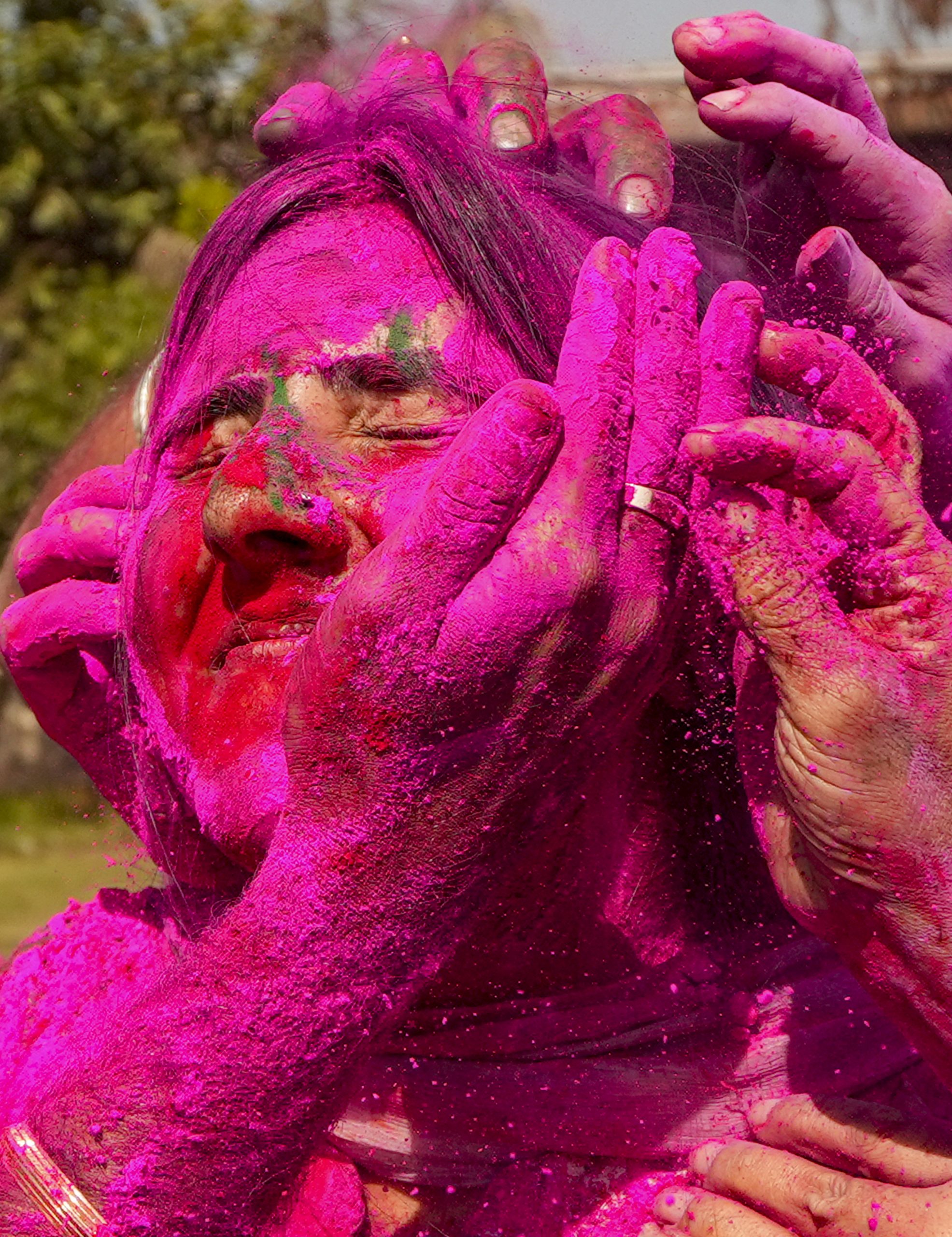
As Holi approaches, “herbal gulal” is being marketed as the safer alternative to chemical colours—but dermatology and eye-safety literature consistently flags one problem: the label alone isn’t a guarantee. Unregulated powders may be sold as “herbal” without full ingredient disclosure, and some samples have been found to contain hazardous contaminants, including heavy metals.
Medical reports around Holi repeatedly link unsafe colours—especially fine powders and adulterated dyes—to skin irritation/allergic reactions and eye injuries such as conjunctivitis and corneal abrasion, with risk rising when powders are rubbed into skin/eyes or thrown into the air.
What’s safer: Ingredients to look for in “herbal gulal”
Genuinely safer gulal typically uses plant-based colour sources plus a skin-friendlier carrier powder. (Even then, sensitive skin can react to botanicals—so “safer” doesn’t mean “risk-free.”)
Safer ingredient checklist
Plant/flower colour sources
- Palash/tesu (flame-of-the-forest), marigold, rose, hibiscus (flower powders/extracts)
Food-like, plant-derived colour sources
- Turmeric (yellow), beetroot (pink/red), spinach (green)
Base powders (carrier)
- Rice flour, corn starch/cornflour, arrowroot (commonly used as bases; generally preferable to unknown mineral powders for many users)
Optional “adds” (use with caution if sensitive)
- Mild natural fragrance (very strong perfume can be an irritant)
- Herbal extracts such as neem/henna may be tolerated by many people, but can still trigger contact allergy in some.
What’s not safe: red flags and risky additives
Several peer-reviewed sources and advisories note that modern Holi colours may be contaminated with industrial dyes and adulterants, including metal salts and irritant particles.
Unsafe ingredient checklist
Named synthetic dyes (avoid)
- Malachite green, rhodamine, auramine O, gentian violet (reported as hazardous contaminants in Holi colours; linked with irritation/toxicity concerns).
Heavy metals / metal salts (avoid)
- Lead compounds and other metal-salt adulterants have been reported in market colours and are associated with potential harm (especially with repeated/high exposure or unsafe formulations).
Sparkle/abrasive additives (avoid—especially near eyes)
- Glass powder and similar abrasives; mica dust is also cited among adulterants and can aggravate eye/skin irritation.
High dust/inhalation risk powders (use caution; avoid throwing into the air)
- Many “colour powders” contain a large fraction of fine particles (PM10-range) that can reach the lower respiratory tract if inhaled—higher concern for children, asthma, sinus issues.
How to identify genuine “herbal” gulal
Quick checks that work in real life
- Choose packs with full ingredient disclosure (not just “herbal” printed on the front).
- Avoid powders that look neon-bright, metallic, or overly shimmery (often a sign of synthetic pigments or additives).
- Be wary of strong artificial perfume—it can signal added fragrance chemicals and may trigger reactions.
- Prefer sellers/brands with batch details, manufacturer info, and clear labeling (lack of checks and poor labeling is a recurring concern in reports on local-market colours).
A simple safety step
- Do a patch test (inner elbow/behind ear) before full use—especially for children and anyone with eczema/allergy history.
The shift toward safer celebrations
The move toward flower- and plant-based colours is growing because it aligns with both personal safety and environmental responsibility—but the most practical protection remains basic: read the label, avoid suspicious brightness/sparkle, and don’t inhale the dust.
Bottom line: If you can recognise the ingredients as food/flowers/starches and the pack discloses them clearly, risk is generally lower. If it reads like industrial chemistry—or the pack won’t say what’s inside—skip it.
By – Sonali