


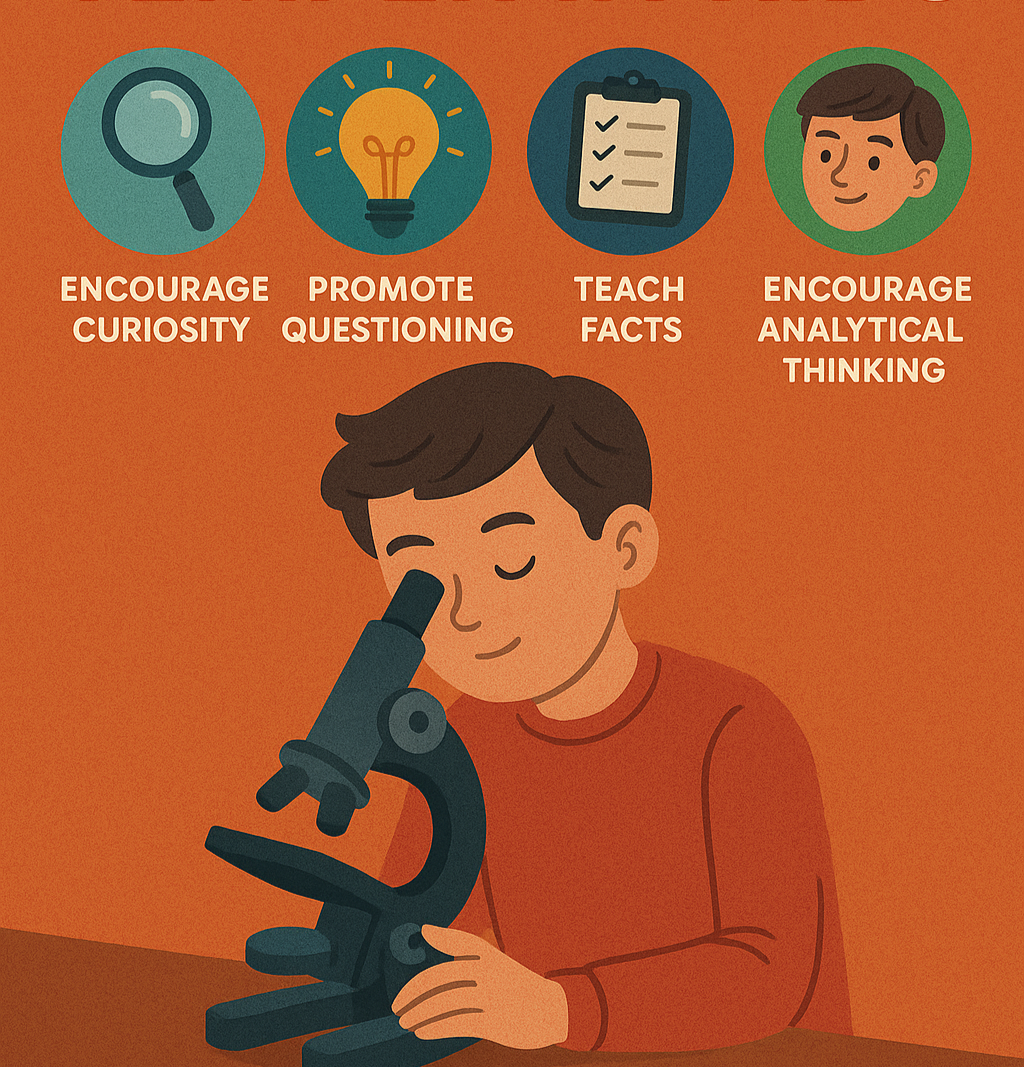
Every parent dreams of raising curious, critical thinkers who can navigate the complexities of life with confidence. But how do you nurture that inquisitive spirit? The answer lies in fostering a scientific temper. This concept goes beyond just learning facts; it’s about cultivating a mindset rooted in inquiry, experimentation, and rational thinking.
In This Article:
Imagine your child exploring the world through questions like “Why is the sky blue?” or “What makes things fall?” These moments are gateways to deeper understanding and discovery. Instilling such curiosity early on not only prepares them for academic success but also equips them to tackle real-world challenges with a creative approach. Ready to dive into the exciting world of science and wonder? Let’s unpack how to develop this invaluable trait in kids while making it fun along the way!
What is Scientific Temper?
Scientific temper is more than just an appreciation for science; it’s a mindset that embraces critical thinking and rationality. It encourages individuals to question, explore, and seek evidence before forming conclusions. At its core, scientific temper fosters curiosity. Children with this quality view the world as a puzzle waiting to be solved. They learn to ask questions rather than accept information at face value.
This approach promotes skepticism in a healthy way. Rather than doubting everything blindly, kids develop the ability to evaluate claims based on facts and logic. This skill is essential not only in academics but also in everyday life decisions.
Moreover, scientific temper is about understanding processes through observation and experimentation. It’s recognizing patterns, testing hypotheses, and drawing informed conclusions from experiences—a foundation for lifelong learning and innovation.
Science outside books!
Science can be a thrilling adventure when approached creatively. Start with everyday activities to spark curiosity. Cooking, for instance, becomes a chemistry lesson as kids mix ingredients and observe transformations. Use simple experiments to visualize concepts. A homemade volcano using baking soda and vinegar is always a hit. Kids not only see the reaction but also learn about chemical processes in an engaging way. Storytelling can bring scientific principles to life.
Create narratives around natural phenomena, like how rainbows form or why leaves change color in autumn. This imaginative approach makes retention easier. Incorporate nature walks into learning sessions. Observing plants, insects, and weather patterns ignites wonder while reinforcing scientific ideas organically. Games also play an important role; think scavenger hunts that require identifying different species or collecting rocks of various types. Each activity intertwines fun with fundamental science skills.
Methods to grow scientific temper in kids
- Encourage curiosity by asking open-ended questions. Instead of providing answers, let kids explore their thoughts. This sparks critical thinking.
- Hands-on experiments can be incredibly effective. Simple activities like growing plants or mixing baking soda and vinegar make science tangible and fun.
- Introduce them to scientific stories or biographies of famous scientists. These narratives inspire and show how inquiry leads to discoveries.
- Create a safe space for discussing ideas without fear of being wrong. Emphasize that mistakes are part of learning, fostering resilience and creativity.
- Incorporate technology through educational games or apps that promote problem-solving skills. Interactive platforms can ignite interest in various scientific fields while keeping it engaging.
- Regular visits to museums or science fairs can broaden their horizons too. Experiencing exhibits firsthand amplifies understanding and enthusiasm about the world around them.
Why is it necessary?
Cultivating a scientific temper in children is essential for their development. It equips them with critical thinking skills, enabling them to analyze situations and make informed decisions. In an age where information is abundant yet often misleading, teaching kids to question and verify becomes crucial. A scientific mindset fosters curiosity, encouraging children to explore the world around them. This exploration can ignite passions that lead to careers in science, technology, engineering, or mathematics, fields that drive innovation and progress.
Moreover, embracing a scientific approach helps build resilience. When faced with challenges or failures, kids learn that setbacks are opportunities for learning rather than reasons to give up. They develop problem-solving skills that will serve them well throughout life.
In our rapidly changing world, instilling a scientific temper also prepares children for future citizenship responsibilities. As they navigate complex issues like climate change or public health crises, having the ability to think critically about evidence will empower them as informed individuals. Nurturing a scientific temperament enriches children’s lives today while laying the groundwork for tomorrow’s thinkers and innovators.
A little joke before I say goodbye.
Why did the little scientist refuse to play hide and seek?
Because every time someone hid, she yelled, “I need evidence!”
By – Sonali