


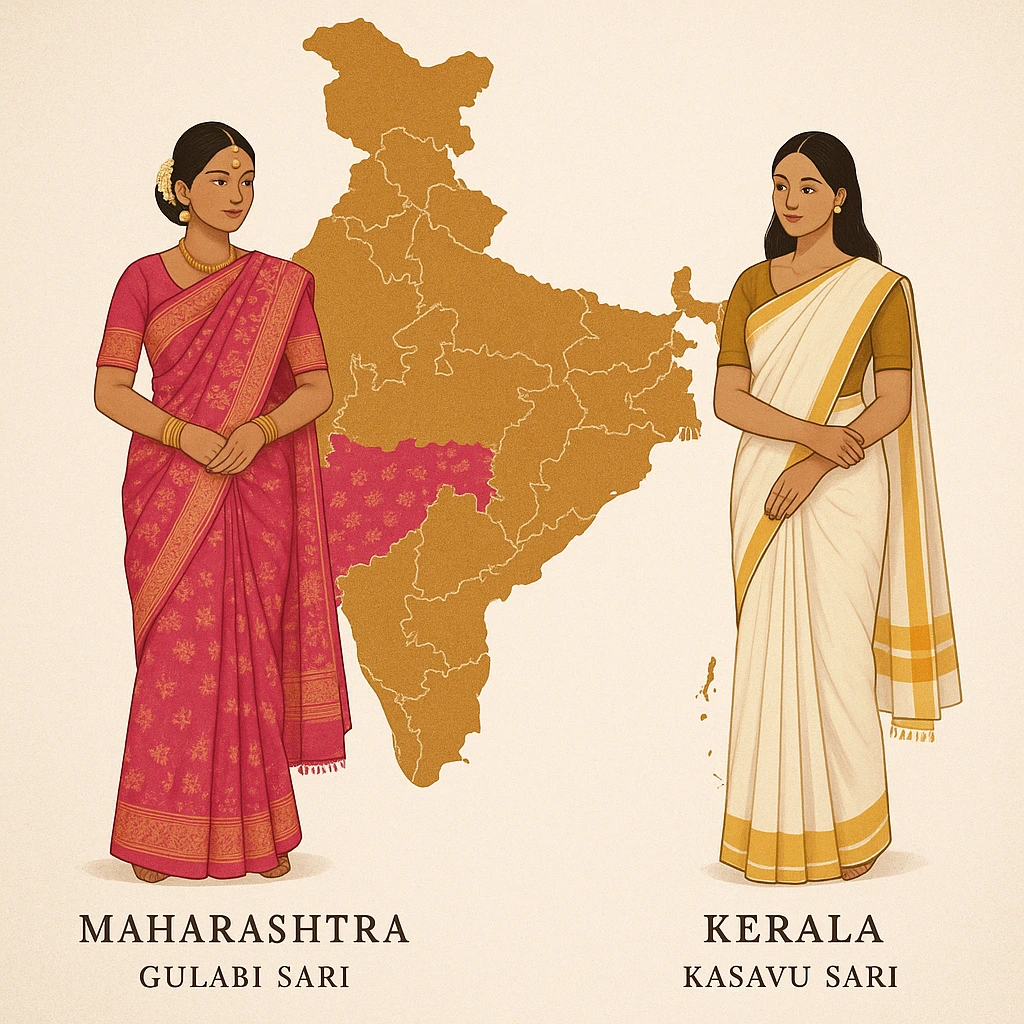
India’s regional attire, such as Maharashtra’s vibrant Gulabi sari and Kerala’s elegant Kasavu sari, continues to weave narratives of climate, community, and identity. Worn during festivals like Ganesh Chaturthi in Mumbai or Onam in Kochi, these handwoven garments reflect local environments and cultural heritage. From rural looms to urban runways, artisans and wearers preserve these traditions while embracing modern trends.
In This Article:
Maharashtra’s Gulabi Sari: Vibrancy in Arid Lands
The Gulabi sari, a Paithani weave from Paithan, Maharashtra, is a silk masterpiece with shimmering zari (gold or silver thread) and vivid pink hues adorned with peacock or lotus motifs. Designed for Maharashtra’s hot, dry climate (35–45°C), its breathable silk suits summer wear, while its durability supports rural women’s active lives. Priced between ₹10,000 and ₹1 lakh, these saris, taking months to weave, symbolize status during Marathi weddings and festivals. The craft, centered in Yeola, fosters community bonds, with families passing down looms across generations. Posts on X highlight its resurgence, with young Mumbaikars wearing Gulabi saris to assert Marathi identity, though artisans face threats from mechanized looms.
Kerala’s Kasavu Sari: Simplicity in Humidity
Kerala’s Kasavu sari, with its cream cotton body and golden border, is tailored for the state’s humid, tropical climate (26–32°C, 70–90% humidity). Originating in Balaramapuram, its lightweight cotton ensures comfort during Onam or temple visits, while the zari border, historically made with real gold, reflects Kerala’s trade heritage. Priced from ₹2,000 to ₹50,000, Kasavu unites communities through weaving cooperatives in Chendamangalam, employing thousands. X trends show young Keralites pairing it with modern blouses, blending tradition with style, as seen with celebrities like Parvathy Thiruvothu embracing its elegance.
India’s Climate-Driven Craftsmanship
Both saris are climate-responsive: Gulabi’s silk withstands Maharashtra’s heat, while Kasavu’s cotton absorbs Kerala’s moisture. Natural dyes—turmeric for Kasavu, madder for Gulabi—tie them to local ecosystems. Climate change, however, threatens silk and cotton yields with erratic monsoons, pushing artisans to innovate. Maharashtra’s weavers use water-saving techniques, while Kerala’s adopt organic cotton.
Community and Identity
These saris are cultural anchors. Gulabi saris unite Marathi women during festivals, symbolizing pride, while Kasavu’s simplicity reflects Kerala’s egalitarian ethos. Designers like Anavila Misra modernize these weaves, but only 1.2 lakh handlooms remain active in both states (2024 data). Social media campaigns, like #WearHandloom, boost their visibility.
-By Manoj H