


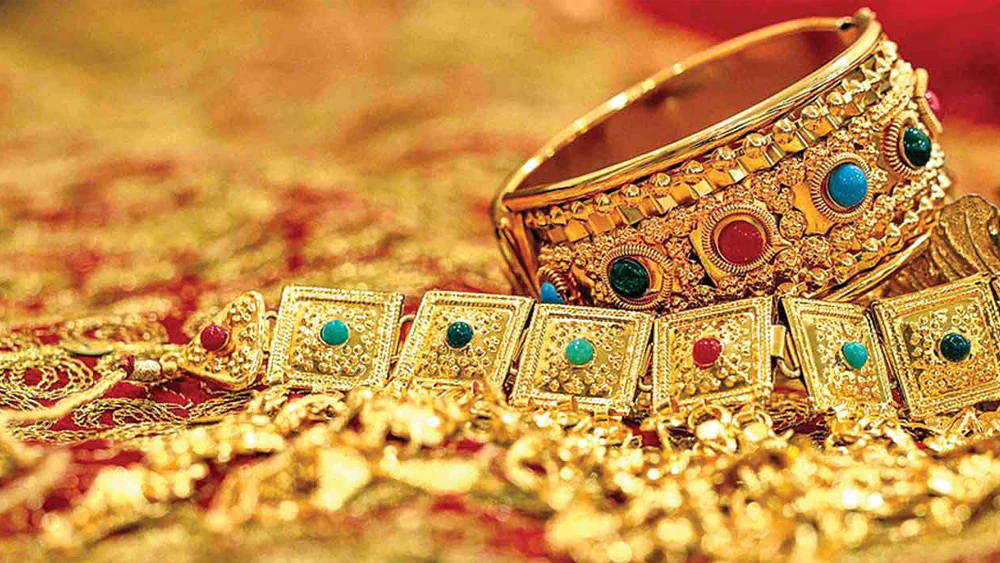
Across India’s cultural landscape, jewellery is far more than ornamentation. From the desert forts of Rajasthan to the river valleys of Assam and the temple towns of Tamil Nadu, regional jewellery traditions carry layers of history, social meaning, spirituality, and identity. In recent years, these traditions continue to resonate not just as fashion but as living heritage, shaped by centuries of craft and symbol.
Northern Grandeur: Royalty & Rituals
In Rajasthan and Gujarat, the glittering legacy of Kundan and Polki jewellery stands out. Crafted through jadau-style setting where stones are embedded using refined gold foil, these styles flourished in royal courts and under Mughal-era patronage, and today symbolize wealth, celebration, and bridal splendour.
Across Punjab, wedding jewellery like Chooda (bridal bangles) and Kalire (umbrella-shaped hanging ornaments tied to the chooda) are worn by brides to signify blessings, joy and auspiciousness around the new marriage.
In Kashmir, the traditional Dejhoor earrings—worn among Kashmiri Pandit women from the eve of the wedding onwards—paired with a chain called an ath (often replacing the initial red thread) signal marital identity and sacred symbolism.
Eastern India: Art, Devotion & Nature
West Bengal showcases jewellery traditions that are intimately tied to social identity. Married women wear Shakha (white conch shell bangles) and Pola (red bangles, traditionally associated with coral), symbols closely linked with marital status and auspiciousness.
In Odisha, the exquisite silver filigree known locally as Tarakasi (also associated with Cuttack) exemplifies fine craftsmanship and devotion. Earrings, bangles, and chokers often feature intricate motifs that reflect both spiritual devotion and artisanal mastery.
Assamese jewellery including Lokaparo (twin-bird motif earrings) and Junbiri/Jonbiri (crescent-moon inspired ornament) draws inspiration from flora and fauna, celebrating nature, harmony, and regional identity.
Western India: Symbolism & Festive Spirit
In Maharashtra, iconic pieces such as the Nath (traditional nose ring) and Kolhapuri Saaj (a multi-motif necklace) stand as emblems of marriage, dignity, and cultural pride—often described as featuring multiple pendants/motifs with auspicious and cultural symbolism.
In Gujarat, tribal and bohemian silver jewellery with bold beads and folk detailing reflects a lively festive tradition and connection to community and land.
South India: Divine Inspiration & Heirloom Legacy
Southern India is synonymous with Temple Jewellery, rich gold pieces originally crafted for temple deities and later adopted by brides and classical dancers. Motifs of Lakshmi, peacocks, and lotuses symbolize prosperity, grace, and spiritual protection.
In Tamil Nadu and Kerala, elaborate necklaces such as Manga Mala (mango/paisley motif) and Kasu Mala (coin necklace) signify abundance, auspiciousness, and familial legacy—collectibles passed through generations.
Central & Tribal India: Earthly Narratives
Across tribal belts in Madhya Pradesh, Chhattisgarh, Himalayan regions such as Himachal Pradesh, and the Northeast, jewellery often incorporates natural materials like beads, feathers, coins, brass, and silver and carries meanings tied to community tales, protection, and identity. These rustic designs are both celebration and storytelling tools.
Heritage Worn as Identity
In India, jewellery remains much more than ornamentation—it is a living cultural language that marks life’s milestones, celebrates spirituality, and reflects centuries of artisanal mastery. Each region’s traditions—from Kundan and Polki in the North to temple motifs in the South—carry deep symbolic meaning tied to prosperity, protection, marriage, and devotion, preserving stories and social values through generations.
Today, as modern design sensibilities intersect with heritage craftsmanship, these regional styles continue to evolve while holding true to their symbolic roots. Whether passed down as heirlooms, worn at weddings, or appreciated as art, Indian jewellery stands as an enduring emblem of cultural richness, identity, and emotional legacy—a tradition that remains vibrant and relevant in contemporary India and beyond.
By – Sonali