


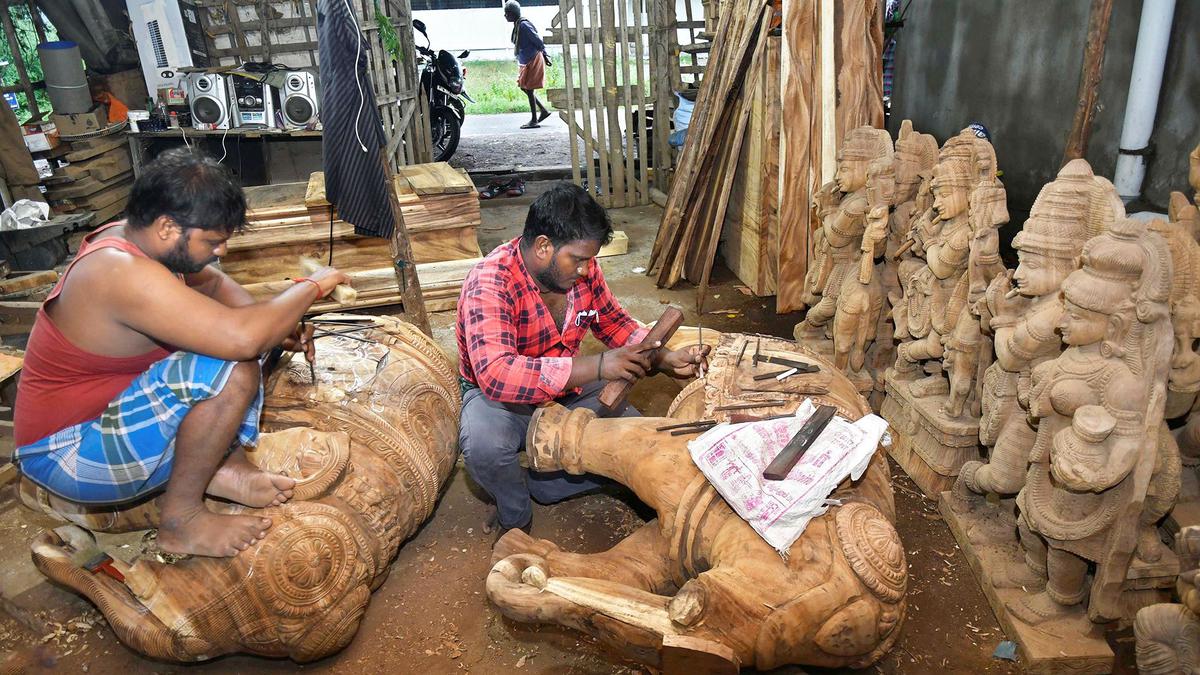
In a quiet corner of Tamil Nadu, chisels meet seasoned wood, and tradition breathes life into timber. The town of Kallakurichi, known more for its rural landscapes than global acclaim, is now earning national and international recognition for its centuries-old wood carving legacy. With intricate sculptures of deities, temple chariots, and mythological figures crafted by hand, this artistry is more than just decorative; it’s devotional, generational, and deeply rooted in cultural pride. Now officially recognized with a Geographical Indication (GI) tag, Kallakurichi’s wood carving community stands poised at the intersection of legacy and livelihood, turning quiet craftsmanship into a loud celebration of heritage.
Roots of the Craft: From Farm Tools to Divine Idols
The craft’s legacy traces back to ancestral traditions. Initially, artisans shaped farm implements like ploughs, gradually progressing to intricate depictions of deities on temple chariots. Today, over 700 families in Anna Nagar and surrounding regions specialize in crafting wooden idols, with heritage techniques spanning more than a century. A veteran artisan, K. Mayavan, shared how practices inherited from forebears have transformed into finely honed devotional artistry.
Craftsmanship Unveiled: Materials, Techniques & Economics
Craftsmen rely on locally sourced wood, particularly the Vagai (Lebbek) tree, along with teak and mahakali, as the preferred material for carving idols ranging from one to seven feet in height. The carving process unfolds in stages: sketching, smoothing, detailed carving by hand (refusing mechanization to preserve authenticity), followed by painting and polishing, often with women playing key roles in finishing.
The cost of wood procurement is approximately ₹1,200 per cubic foot, and the creation of an idol, spanning around 1.5 months, integrates multiple artisans performing specialized tasks. Despite the labor intensity, earnings remain modest, with many artisans earning around ₹2–3 lakh annually.
Momentum & Market: GI Tag, Exhibitions & Challenges
Recognition through the GI tag, which was granted in 2021, has boosted both visibility and pride in the craft, particularly across digital platforms. Institutions like NABARD also contribute through exhibitions such as Umang 2k22, offering artisans opportunities to showcase and sell their work in cities like Bhopal.
Nonetheless, challenges persist. Aging artisans find it increasingly difficult to transport heavy carvings to exhibitions, and fragile surfaces easily sustain scratches from well-meaning but careless handling.
Preserving a Precious Art: Training and the Road Ahead
To ensure the transfer of skills, the Kallakurichi District administration, through organizations like TNSDC and SIPPO, initiated free, three-month wood carving training programs for aspiring entrepreneurs, starting December 2023 through March 2024. These efforts aim to sustain the tradition by nurturing a new wave of craftsmen.
Final Take
In summary, Kallakurichi’s wood carving tradition stands at a crossroads of legacy and modernity. Anchored by deep-rooted craftsmanship, celebrated through GI recognition, and bolstered by training and exposure, the craft endures. Yet, its survival will depend on continued support, from respectful markets to protective policies, ensuring that this time-honored art lives on.
By – Sonali