


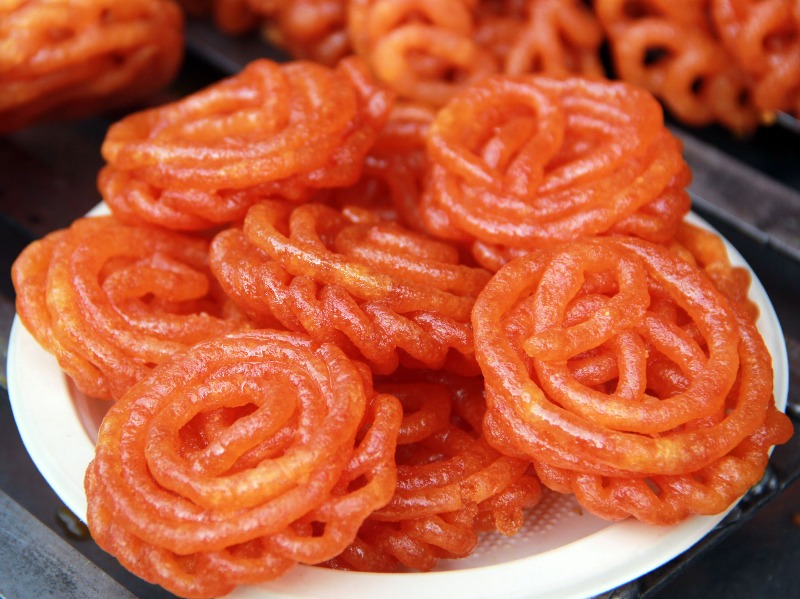
In the crowded lanes near Atala Mosque and Shahi Bridge, the aroma of ghee and fermented batter announces something unmistakably local: Jaunpur imarti. More than just a dessert, this deep-orange delicacy has become a cultural marker of the city, drawing food lovers, pilgrims, and tourists who believe a trip to Jaunpur is incomplete without tasting its iconic sweet.
A Sweet with a Storied Past
Imarti’s association with Jaunpur dates back several centuries, often linked to the region’s Mughal-era culinary traditions. While imarti is found across North India, the Jaunpur version has earned a distinct reputation for its crisp texture, rich flavour and artisanal preparation. Local historians suggest that the sweet flourished during the Sharqi Sultanate period, when Jaunpur emerged as a centre of art, architecture and refined tastes.
Over time, imarti became embedded in everyday life – served at weddings, religious festivals, and community gatherings, transforming from royal indulgence to people’s pride.
What Sets Jaunpur Imarti Apart
Unlike jalebi, which is made from refined flour, authentic Jaunpur imarti is prepared using urad dal (black gram) batter. The lentils are soaked, stone-ground and fermented just enough to achieve a slightly tangy note. The batter is then piped into intricate flower-like spirals and fried slowly in pure desi ghee.
The result is a sweet that is crisp on the outside, soft and airy within, and soaked in mildly spiced sugar syrup infused with cardamom and sometimes saffron. Locals insist that the water quality, climate and traditional frying techniques all contribute to its unique taste—factors impossible to replicate elsewhere.
The Artisans Behind the Sweet
Jaunpur’s imarti-making remains largely a family-run craft. Many halwais have been preparing the sweet for generations, passing down closely guarded techniques. Shops begin work before sunrise, with fresh batches fried in large iron kadhais to meet morning demand.
Veteran sweet-makers emphasise patience as the secret ingredient. “Imarti cannot be rushed,” says a third-generation halwai from Olandganj. “From soaking the dal to frying at the right temperature, everything decides the final taste.”
Festivals, Faith and Food
Imarti consumption peaks during festivals like Diwali, Eid and Makar Sankranti, when shops witness long queues. It is also a popular prasad offering at temples and dargahs in and around Jaunpur. During wedding seasons, bulk orders travel to neighbouring districts, reinforcing the sweet’s reputation beyond city limits.
In recent years, imarti has also become a nostalgic food item for migrants from Jaunpur, who often carry boxes back to metros like Delhi, Mumbai and Lucknow.
GI Tag Recognition Boosts Legacy
With India’s renewed focus on regional cuisines, Jaunpur imarti has gained fresh visibility on social media, food blogs and travel vlogs, often being highlighted as one of Uttar Pradesh’s must-try traditional sweets. This attention received a major institutional push when Jaunpur imarti was officially granted the Geographical Indication (GI) tag in 2024, recognising its unique origin, method of preparation and cultural significance.
Challenges in a Changing Market
Despite its popularity, the craft faces challenges. Rising costs of ghee, competition from mass-produced sweets, and declining interest among younger generations threaten continuity. Some shop owners are now experimenting with vacuum packaging and limited online delivery to adapt to modern markets without compromising quality.
A Sweet That Endures
In an age of fast food and fleeting trends, Jaunpur imarti stands firm as a symbol of slow, skilled cooking and cultural continuity. Whether savoured hot in winter mornings or shared during celebrations, it remains a reminder that some flavours are not just eaten – they are inherited.
As Jaunpur balances heritage and modernity, its beloved imarti continues to bind generations, one syrup-soaked spiral at a time.
By – Sonali