


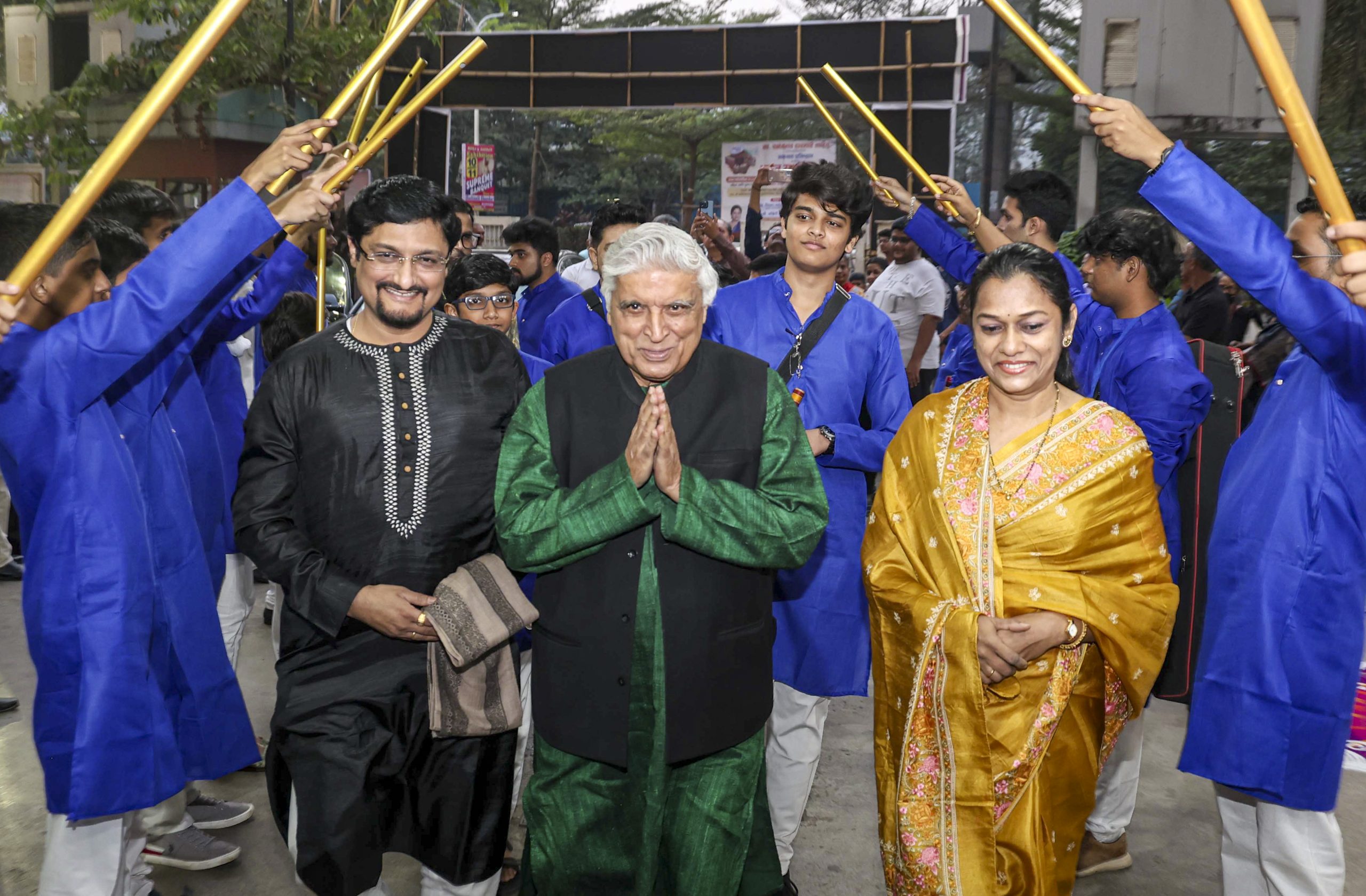
Veteran lyricist and screenwriter Javed Akhtar has sparked a strong debate online after sharply criticizing the recent US-Israel military strike on Iran, calling the leaders involved “bullies” and warning of serious geopolitical consequences. His remarks came amid escalating tensions in West Asia and widespread global reactions to the dramatic developments.
Strong reaction to coordinated military operation
Javed Akhtar took to social media platform X (formerly Twitter) to express his views following the coordinated military operation launched by the United States and Israel against Iran on February 28. The strike reportedly triggered explosions, emergency alerts, and widespread unrest across several countries in the Gulf region.
The veteran writer did not hold back in his criticism. In his post, he said that former US President Donald Trump and Israeli Prime Minister Benjamin Netanyahu had “overplayed their hand” and compared their actions to those of bullies pushing others into a corner. He suggested that such aggressive moves could provoke decisive retaliation and shift the global balance of power.
Akhtar also warned that if such actions went unchecked, it could affect the credibility of major global powers, particularly China, which he implied would face pressure to respond or risk losing international standing. His remarks reflected concerns about wider geopolitical consequences beyond the immediate conflict.
The internet erupts with divided reactions
Akhtar’s comments quickly gained traction online, generating widespread reactions from supporters and critics alike. While many users agreed with his concerns about escalating tensions and global power dynamics, others challenged his analysis and urged caution in interpreting geopolitical developments.
Some social media users called his comments bold and timely, emphasizing that global stability depends on balanced international responses. Others, however, questioned whether public figures should comment on sensitive geopolitical matters, highlighting the polarizing nature of the conflict.
Responding to critics, Akhtar clarified that his comments represented his personal assessment of the situation and that only time would reveal how world powers respond.
Regional fallout disrupts travel and raises safety concerns
The conflict has already begun to affect civilians and international travel. Several flights across the Middle East were suspended due to security risks, leaving multiple Indian celebrities stranded in Dubai. Bengali actress Subhashree Ganguly and Bollywood actors Sonal Chauhan and Esha Gupta were among those affected, though their representatives confirmed they were safe in their hotels.
The disruption highlights how rapidly escalating geopolitical conflicts can affect ordinary travel and global connectivity, especially in major aviation hubs like Dubai.
Escalation signals dangerous new phase in regional conflict
The military strike marked a significant escalation in the ongoing tensions involving Iran, Israel, and the United States. In response, Iran reportedly launched retaliatory strikes targeting US and Israeli-linked locations across the region, including Bahrain, the UAE, and Jordan. Meanwhile, Israel also carried out strikes in Lebanon after Hezbollah fired rockets in response to the killing of Iran’s Supreme Leader.
These developments indicate a rapidly widening conflict zone with potential global implications, raising fears of prolonged instability in West Asia.
Celebrity voices enter global political discourse
Javed Akhtar has long been known for speaking openly on political and social issues, and his latest remarks reinforce the increasing role of public figures in shaping online discourse around international affairs. His comments reflect growing concern among intellectuals and artists about the human and political consequences of escalating military confrontations.
As the situation continues to evolve, reactions from global leaders, analysts, and public figures are expected to shape both public opinion and diplomatic narratives. Akhtar’s remarks, meanwhile, have added a prominent cultural voice to the ongoing global conversation about war, power, and responsibility.
By – Sonali