


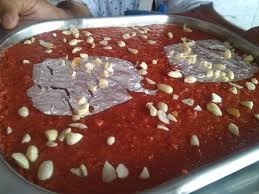
Among the rich tapestry of Indian desserts, Jouzi Halwa from Hyderabad holds a regal status not just for its rare ingredients and rich taste, but also for its unique history tied to Turkish origins and the legacy of the Nizams. A delicacy that takes hours of preparation, immense patience, and deep culinary expertise, Jouzi Halwa is a dessert that continues to captivate palates more than a century after it was introduced.
In This Article:
Historical Origins: A Dessert with Turkish Heritage
Jouzi Halwa’s journey to Hyderabad begins in the early 20th century. In 1913, a Turkish boy named Mohammad Hussain arrived in Hyderabad and established a small sweet shop near the iconic Mozam Jahi Market. His preparation of a special kind of halwa, rich in oats, ghee, and exotic spices, soon attracted the attention of none other than Mir Osman Ali Khan, the seventh and last Nizam of Hyderabad.
Deeply impressed by the dessert, the Nizam not only became a regular patron but also named the sweet shop Hameedi in honor of his Turkish relative, Sultan Abdul Hamid II (Hamed). The halwa served there was called Jouzi Halwa – “Jouzi” deriving from the Turkish word “jouz” which means nutmeg, one of the key ingredients in the dish.
The Art of Making Jouzi Halwa
Jouzi Halwa is not a dessert that can be whipped up in a few minutes. It is a labor-intensive preparation that can take up to 16 hours to perfect. What makes it unique is its base: oat milk – a rare ingredient in Indian sweets – combined with broken wheat rawa and a blend of aromatic spices and dry fruits.
Main Ingredients:
- Oat milk (extracted manually from soaked oats)
- Broken wheat rawa (semolina)
- Almond powder
- Nutmeg (jouz)
- Mace (javitri)
- Saffron (kesar)
- Cardamom powder
- Ghee (clarified butter)
- Sugar
- Almonds and pumpkin seeds (for garnishing)
The process begins with slowly cooking the broken wheat in ghee until golden. Oat milk is gradually added, followed by sugar and almond powder. The mixture is then delicately spiced with nutmeg, cardamom, mace, and saffron – each added at different stages for optimum flavor release. Continuous stirring over a slow flame ensures the right texture and prevents burning.
The final product is a thick, glossy, intensely flavored halwa with a warm golden-brown hue, garnished generously with almonds and melon seeds.
Cultural and Culinary Significance
Jouzi Halwa is more than just a festive sweet – it is a piece of Hyderabad’s culinary legacy. During the reign of the Nizams, it was considered a dessert fit for royalty. Even today, Hameedi Confectioners, the original creators, remain the most trusted and celebrated source for authentic Jouzi Halwa.
This dessert is typically served during:
- Royal weddings and celebrations
- Religious festivals like Eid and Ramzan
- Winter months, due to its warming spices and ghee-rich composition
It also finds a place in the nostalgic memories of Hyderabadis who grew up savoring it on special occasions.
Modern-Day Appeal
Despite the rise of fast food and modern desserts, Jouzi Halwa has stood the test of time. It’s now often considered a heritage dessert, cherished by connoisseurs and tourists alike. Food historians and chefs regard it as one of the rare examples of Turkish-Indian fusion done right.
The exclusivity of ingredients and the complexity of the process mean that authentic Jouzi Halwa is not easily found in regular sweet shops. For many, a visit to Hameedi Confectioners is like stepping into a royal kitchen of the past.
Moving Forward
Jouzi Halwa is not just a dish—it’s a story. A story of migration, royal patronage, cultural synthesis, and culinary excellence. It represents how food transcends borders and time, becoming a lasting symbol of identity and tradition.
If you ever find yourself in Hyderabad and want to taste something truly regal and rare, skip the modern cafes for a moment and let your taste buds savor the grandeur of Jouzi Halwa.
By – Nikita