


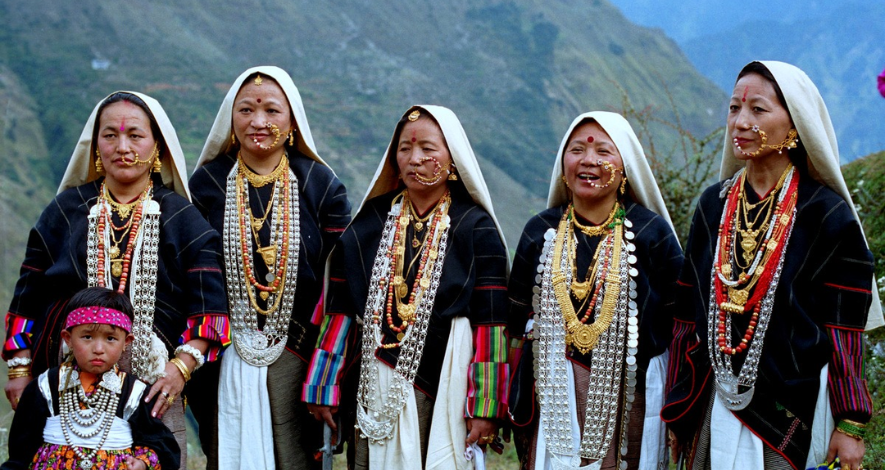
Hidden in the folds of the majestic Kumaon Himalayas lies one of India’s rarest and most fascinating cultural celebrations—the Kandali Festival, observed by the Rung tribe in Chaundas Valley of Pithoragarh district, Uttarakhand. What makes this festival extraordinary is that it occurs only once every 12 years, aligning with the rare blooming cycle of the Kandali plant (Strobilanthes wallichii).
In This Article:
A Festival Rooted in Nature and Oral Tradition
- The festival is named after the Kandali flower, which blooms once every twelve years between August and October.
- The event is deeply linked to local mythology and oral traditions passed down through generations of the Rung community.
- According to legend, the Kandali plant is symbolic of an enemy army that once attempted to invade the valley. The women of the village, disguised as warriors, successfully repelled the attack — the plant is thus ritually “attacked” and uprooted as a symbolic re-enactment of that victory.
Rituals, Warfare Reenactment, and Community Unity
The festival is not just a tribute to nature but a powerful display of cultural identity and collective resilience:
- Men and women dress in traditional warrior attire, brandishing swords and spears made of wood and bamboo.
- The villagers march to the forests where the Kandali plants bloom and ceremonially attack and uproot them.
- War cries, traditional music, drums, and folk songs fill the air, creating a spectacle of unity and valor.
- It is followed by community feasts, dances, and the sharing of stories — a celebration of heritage and resistance.
Cultural Preservation and Eco-Spiritual Significance
- The Kandali Festival also highlights the Rung tribe’s deep ecological sensitivity, as it revolves around a plant species indigenous to the high-altitude Himalayan terrain.
- The event fosters intergenerational bonding and keeps ancient oral traditions alive in a region often overshadowed by modernization and migration.
- Cultural activists and anthropologists are advocating for greater awareness and recognition of the festival at the national and global levels.
A Once-in-a-Decade-and-More Experience
As Uttarakhand continues to promote sustainable and cultural tourism, the Kandali Festival stands out as a symbol of the interweaving of nature, history, and identity. With its next occurrence due based on the plant’s blooming, the event draws curiosity not just from cultural enthusiasts but from eco-tourists and researchers worldwide.
By – Nikita