


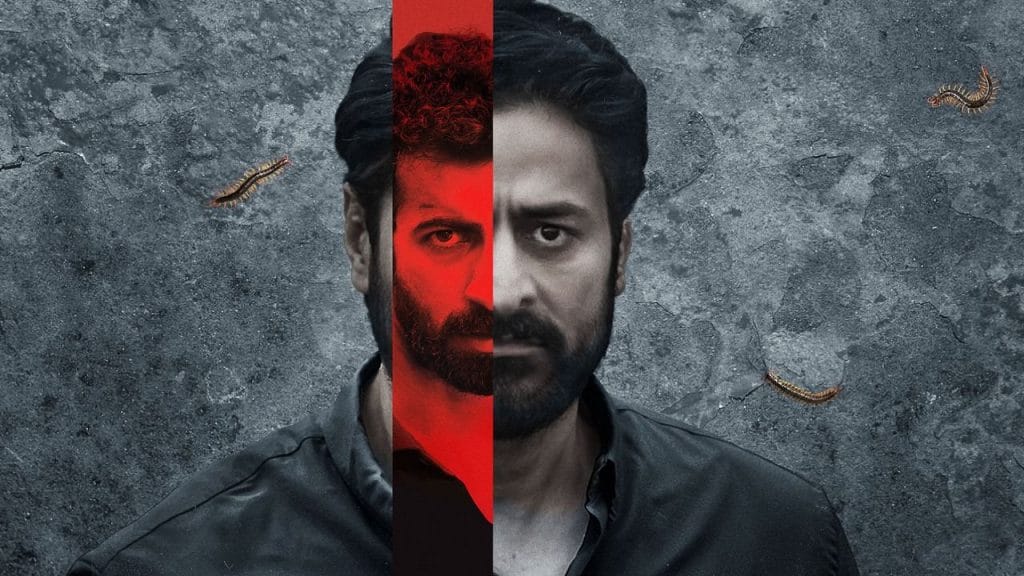
SonyLIV’s latest psychological thriller Kankhajura walks the tightrope between suspense and emotion with remarkable finesse—at least for most of its journey. Directed by Chandan Arora and produced by Ajay Rai, the show is a Hindi adaptation of the Israeli series Magpie. What unfolds is a simmering tale of guilt, redemption, manipulation, and familial conflict, told through the lens of two estranged brothers entangled in a disturbing past.
In This Article:
With only six episodes, the series attempts to keep things taut and moody. But despite a promising premise and a strong buildup, Kankhajura falters toward the end, leaving audiences slightly underwhelmed by its resolution.
Plot: Two Brothers, One Crime, and a History That Won’t Die
The story begins with the release of Ashu (played by Roshan Mathew), a young man who has just completed a 14-year sentence for a heinous crime committed when he was just 17. Seeking to reconnect with his family and rebuild his life, Ashu returns to the home of his older brother Max (Mohit Raina), who has since settled into a seemingly peaceful domestic life.
At first glance, Max appears to be the perfect elder sibling—protective, responsible, and unwilling to stir up the past. But as Ashu settles into their new reality, cracks in their relationship begin to emerge. The audience is drawn into an increasingly disturbing narrative, where manipulation, paranoia, and trauma reveal themselves layer by layer.
The series excels in creating a tense environment where viewers are never quite sure who’s telling the truth. Is Ashu a misunderstood victim of circumstance? Or is he quietly plotting revenge for the life he lost?
Roshan Mathew Shines in a Layered Role
Roshan Mathew delivers a hauntingly powerful performance as Ashu. With a stammer that reflects both vulnerability and suppressed rage, he captures the conflict of a man torn between remorse and resentment. Mathew’s portrayal is unsettling in the best way—he makes viewers feel both sympathy and suspicion. His body language, silences, and eyes often speak louder than the script.
In many ways, it is Mathew’s portrayal that holds the series together. The character of Ashu could have easily slipped into cliché, but Mathew ensures he remains unpredictable and human.
Mohit Raina: The Calm Opposite
Mohit Raina’s Max, on the other hand, is the quiet and composed brother—at least on the surface. Raina plays Max with a subtlety that contrasts effectively with Mathew’s intensity. He manages to communicate the fear of losing his hard-earned peace without ever appearing weak. While Max’s arc is not as emotionally dynamic as Ashu’s, Raina’s performance provides the emotional grounding necessary for the show’s psychological tension to build.
Strong Support Cast Adds to the Drama
The series is bolstered by a compelling supporting cast. Sarah Jane Dias, Trinetra Haldar, Mahesh Shetty, and Usha Nadkarni lend credibility and texture to the storyline. Usha Nadkarni, in particular, adds an emotional weight to scenes involving family tension, subtly representing the generational trauma that often goes unspoken in Indian households.
Direction and Cinematic Atmosphere
Director Chandan Arora successfully crafts an immersive and claustrophobic atmosphere. The tight frames, shadowy lighting, and minimalist background score all work together to enhance the psychological dread. The use of silence and long pauses helps to emphasize the inner struggles of the characters rather than relying on conventional thriller tropes.
Arora’s background in editing (he’s an award-winning editor turned director) is evident in the sharp pacing of the first few episodes. The storytelling is crisp and deliberately ambiguous, allowing viewers to read between the lines.
The Ending: A Misstep in an Otherwise Strong Journey
However, it’s in the final act that Kankhajura loses its grip. After building suspense and emotional complexity across five episodes, the show rushes toward a climax that feels both abrupt and emotionally unearned. The ambiguity that worked so well earlier becomes frustrating when not adequately resolved.
The last episode attempts to tie things together but does so in a way that dilutes the tension. Viewers are left with more questions than answers—not in a poetic or philosophical sense, but in a way that feels like narrative shortfall. While the open-ended approach may appeal to some, many are likely to feel short-changed by the lack of closure.
Critical Reception and Final Verdict
Kankhajura has received mixed-to-positive reviews from critics. Most praise has been directed at the performances—especially Roshan Mathew’s—and the taut psychological landscape the show constructs. However, the criticism is near-universal when it comes to the unsatisfying finale.
As a character-driven thriller, it has much to offer, but it stops short of being truly great due to its faltering end. Fans of shows like Delhi Crime or Tabbar will find Kankhajura compelling, though perhaps not as cohesive.
By – Sonali
Also Read – Don’t think Indo-Pak situation will get better politically: Javed Akhtar