


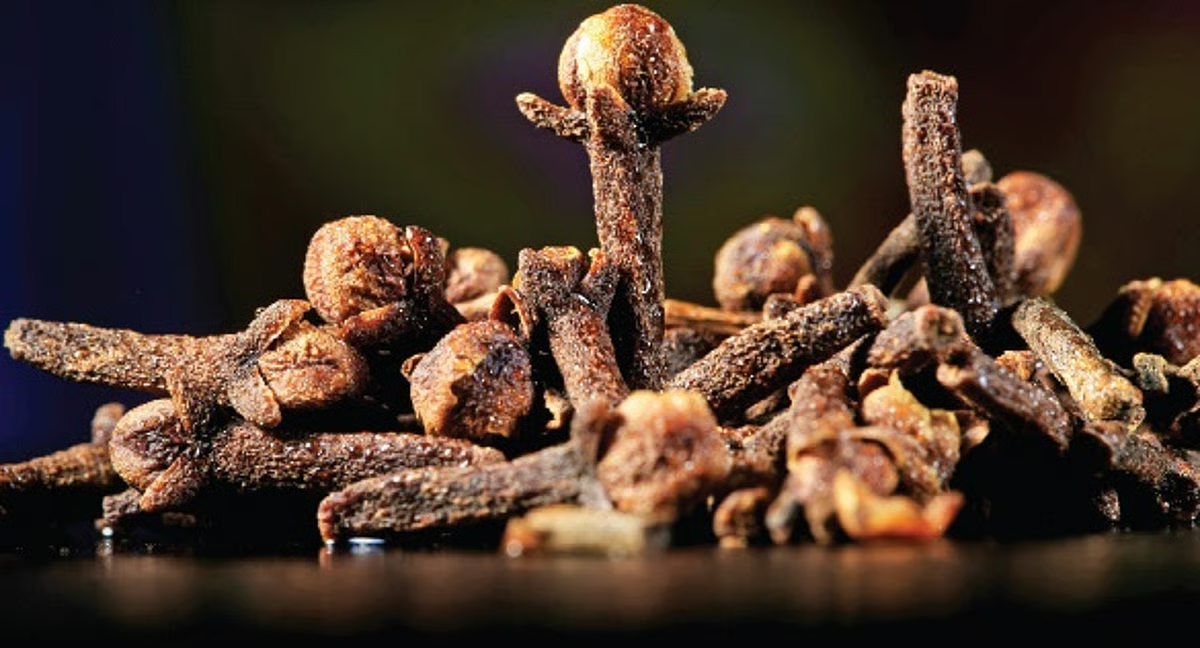
In the southernmost tip of India lies a region not just known for its sunsets and pilgrimage spots but also for a spice that has captured international admiration, the Kanniyakumari Clove. This intensely aromatic spice, grown in the hilly terrains of the Western Ghats, is one of India’s finest and most expensive cloves, prized for its oil content and medicinal value. Proudly accorded the Geographical Indication (GI) tag, the clove has put Kanniyakumari on the global spice map, not for quantity, but for unmatched quality.
A Long-standing Legacy in Spice Cultivation
Kanniyakumari’s tryst with cloves dates back to the colonial era. Introduced by the Portuguese and nurtured by local farmers over generations, clove cultivation became an integral part of the region’s agrarian identity. The Agastheeswaram, Thovalai, and Vilavancode taluks are major clove-growing belts, where the altitude, climate, and soil collectively create ideal conditions for this spice to thrive.
Local farmers recall how clove plantations have been handed down through generations, with traditional knowledge playing a crucial role in maintaining the superior quality of the yield. “It’s not just a crop for us,” says Mariappan, a farmer from Thovalai. “It’s a legacy.”
What Makes Kanniyakumari Clove Unique?
The Kanniyakumari clove (Syzygium aromaticum) stands out for its high essential oil content, often exceeding 20%, compared to cloves from other parts of India or even other clove-producing countries like Indonesia, Sri Lanka, and Madagascar. This oil content contributes to the strong aroma, pungent taste, and superior medicinal properties.
According to the Spices Board of India, the Kanniyakumari clove is among the best in the world in terms of oil composition, specifically eugenol, which is used in perfumery, dental care, and pharmaceuticals.
Economic Backbone for Local Farmers
Clove farming in Kanniyakumari supports thousands of small and marginal farmers. With international demand increasing, particularly from Europe and the Middle East, prices for high-quality Kanniyakumari cloves often fetch between ₹800–₹1200 per kilogram, depending on the season and market fluctuations.
However, the yield is heavily dependent on weather conditions. The trees require consistent rainfall and cool temperatures, making them vulnerable to climate change. “One bad monsoon and we lose half our income,” says Parvathy, a clove farmer from Nagercoil. “But still, we hold on to this spice because its value never fades.”
The GI Tag Boost and Government Support
In 2021, the Kanniyakumari clove received the Geographical Indication (GI) tag, a move that helped formalize its identity and protect its uniqueness in both domestic and global markets. This recognition ensures that only cloves grown in the specified region under specific conditions can be sold as “Kanniyakumari Clove.”
The Tamil Nadu government and Spices Board have since ramped up efforts to promote scientific farming practices, sustainable harvesting, and better packaging. Training workshops, organic farming initiatives, and market linkage programs have benefited local farmers and improved their bargaining power in the spice market.
Challenges in the Clove Belt
Despite its reputation, clove cultivation in Kanniyakumari is not without challenges. Pests, erratic weather, and middlemen often reduce the income potential for farmers. Moreover, the lack of modern processing units forces many cultivators to sell raw cloves rather than value-added products like clove oil or powder.
There are also calls for better infrastructure and storage facilities, especially during the harvest season from September to December, when market rates fluctuate and farmers rush to sell their produce before it spoils.
A Growing Global Footprint
Kanniyakumari cloves are increasingly being exported to countries such as Germany, the UAE, Japan, and the UK, where consumers appreciate their purity and strength. Niche spice retailers and Ayurveda brands are also turning to this GI-tagged product to ensure quality and traceability.
This global demand has opened up new opportunities for Kanniyakumari’s youth, many of whom are returning to farming or engaging in agri-entrepreneurship by starting spice-based businesses, from handcrafted spice blends to organic essential oils.
The Future is Fragrant
The story of Kanniyakumari clove is a testament to how a humble spice can shape the identity, economy, and global recognition of a region. With increased awareness, institutional support, and responsible farming practices, this aromatic jewel from Tamil Nadu has the potential to not only spice up global cuisines but also empower the hands that grow it. As India continues to shine on the global spice stage, Kanniyakumari’s clove will undoubtedly remain one of its proudest, most fragrant ambassadors.
By – Sonali