


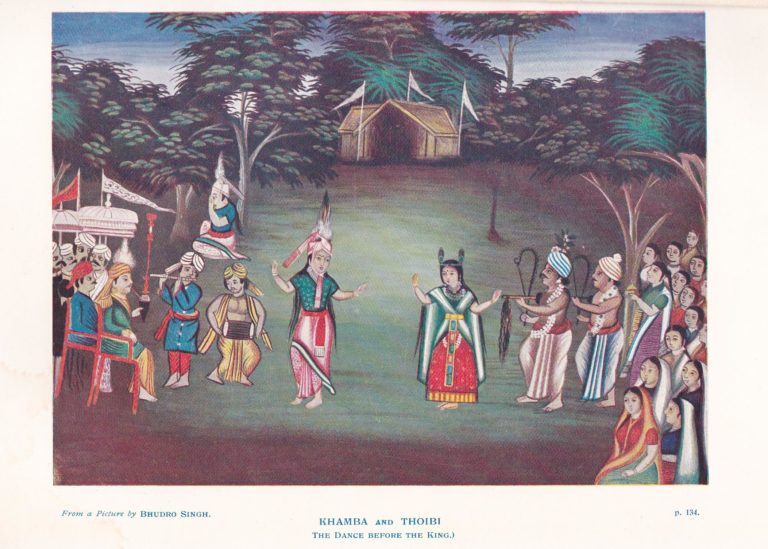
In the age of fast-paced digital romances, there exists an epic that reminds us of the raw, unfiltered intensity of love that transcends caste, class, and even fate itself—Khamba Thoibi Sheireng, Manipur’s literary crown jewel. But beneath the poetic verses and grand gestures lies a fiery tale of political defiance, gender roles, and cultural pride that modern India has conveniently overlooked.
In This Article:
- What Is Khamba Thoibi Sheireng?
- Why This Epic Still Haunts Manipuri Hearts
- Modern Designers, Are You Listening?
- Political Undertones and What They Reveal
- Final Word — A Love That Still Echoes
What Is Khamba Thoibi Sheireng?
Penned by Hijam Anganghal Singh, Khamba Thoibi Sheireng is a 39,000-line Meitei epic written in 1940, often called the “Iliad of Manipur.” It narrates the saga of Khamba, a brave orphaned warrior, and Thoibi, the princess of the ancient Moirang kingdom, whose forbidden love challenged monarchs, patriarchs, and caste elites alike.
Why This Epic Still Haunts Manipuri Hearts
- A Cultural Powerplay: The epic is deeply rooted in the Moirang folklore and Meitei tradition, offering a rare lens into the region’s spiritual, social, and political evolution before Indian unification.
- Khamba as a Revolutionary Icon: Orphaned, poor, and oppressed, Khamba’s rise from poverty to respect defies the rigid social hierarchies of the time that choked many Manipuri dreams—a storyline that eerily mirrors today’s social battles.
- Thoibi as the Original Feminist Rebel: Unlike many mythological women bound by fate or duty, Thoibi chooses her destiny, defying her father and social conventions to fight for her love. In an age when women were often silenced, Thoibi roared.
Modern Designers, Are You Listening?
Here’s the hottest take: Design elements inspired by Northeast India’s tribal traditions—including Manipuri phaneks and moirangphee patterns—are gaining popularity in modern fashion spaces.
Is cultural appropriation the new couture? Modern fashion moguls are quick to label these as “boho” or “ethnic chic” without acknowledging that these are lived traditions of a community struggling for identity and representation.
Political Undertones and What They Reveal
Khamba and Thoibi weren’t just lovers; they were rebels. Some interpret their story as a symbolic resistance to traditional authority and social inequality. With Manipuri identity often marginalized in mainstream Indian discourse, this tale is more than folklore—it’s a call to recognize Northeast India’s ignored histories.
Final Word — A Love That Still Echoes
While Bollywood continues to recycle love triangles and toxic romances, Khamba Thoibi Sheireng stands as an eternal ode to love that was honest, rebellious, and revolutionary. It’s high time we brought this epic into classrooms, screenplays, and national consciousness.
By – Nikita