


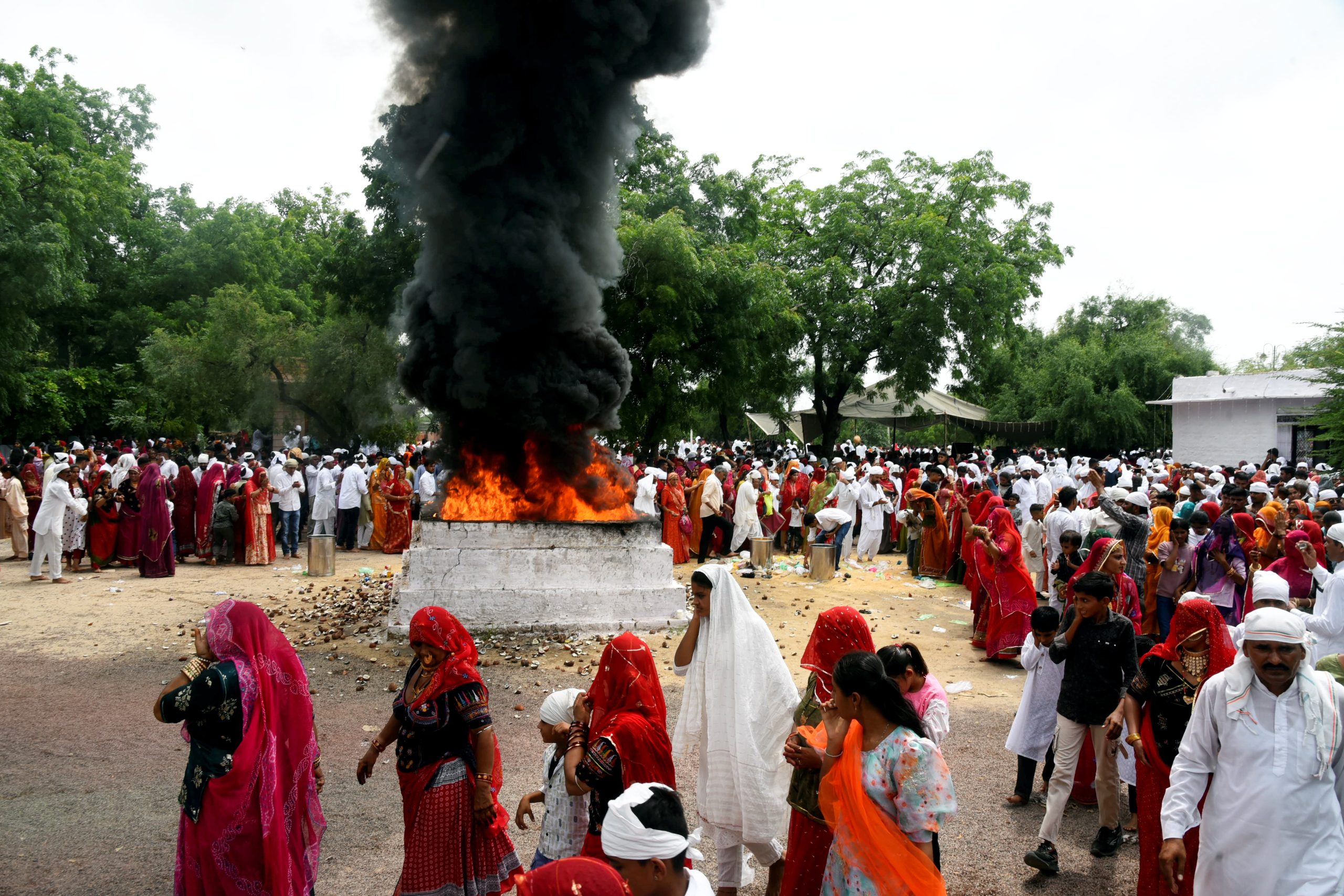
India has no shortage of festivals, but few carry the weight of sacrifice like Khejarli. Held every year in September in Khejarli village, Jodhpur, Rajasthan, this festival is not about dance or fireworks—it’s about remembering the 363 Bishnoi men and women who laid down their lives in 1730 to save trees. Yes, you read that right—people died, hugging trees, so that the royal axes of Maharaja Abhay Singh could not bring them down.
This incident became immortal in history as the Khejarli Massacre and has since turned into a symbol of eco-resistance. Today, the Khejarli Festival is not just a local event but a global message: nature is worth dying for, but more importantly, worth living for.
What Really Happened in 1730?
- Amrita Devi Bishnoi, a village woman, hugged a khejri tree (Prosopis cineraria) and refused to let it be cut.
- She declared: “Sar sānte rūkh rahe to bhī sasto jān”—if a tree is saved by sacrificing one’s head, it’s a cheap deal.
- Inspired, 363 Bishnois followed her example and sacrificed themselves.
- The Maharaja, shaken, issued a royal decree banning tree felling in Bishnoi villages.
This was long before climate change entered global debates. The Bishnois weren’t activists—they were warriors of the soil.
The Festival Today: Not Just Ritual, But Rebellion
Every September, thousands gather at Khejarli to:
- Pay homage at the memorial of Amrita Devi and other martyrs.
- Participate in green pledges and tree plantation drives.
- Attend seminars, folk performances, and spiritual prayers.
- Discuss modern-day threats like illegal mining, deforestation, and industrial pollution in Rajasthan.
Unlike flashy Bollywood-backed festivals, Khejarli doesn’t sell glamour—it sells responsibility. And maybe that’s why it doesn’t get the TRP coverage it deserves.
Why Khejarli Matters in 2025
In a year when Indian cities are choking on smog and forests are being cleared for “development projects,” the Khejarli Festival is a slap in the face of policymakers. Politicians talk about “green initiatives,” but are busy laying highways over farmland. The Bishnoi sacrifice shouts across centuries—true sustainability comes from action, not speeches.
Can India Afford to Forget?
The Khejarli Festival is more than an eco-pilgrimage—it’s a mirror. It asks every Indian:
- Are we ready to protect our natural heritage?
- Or will we trade our trees for malls, roads, and mines?
In a time when the environment is the biggest political battlefield, the Khejarli Festival isn’t just a commemoration—it’s a warning. Ignore it, and we may not have any trees left to hug.
The Khejarli Festival 2025 stands as proof that long before climate summits, rural Rajasthan had already defined environmental ethics—with blood, courage, and an uncompromising love for nature.
By – Nikita