


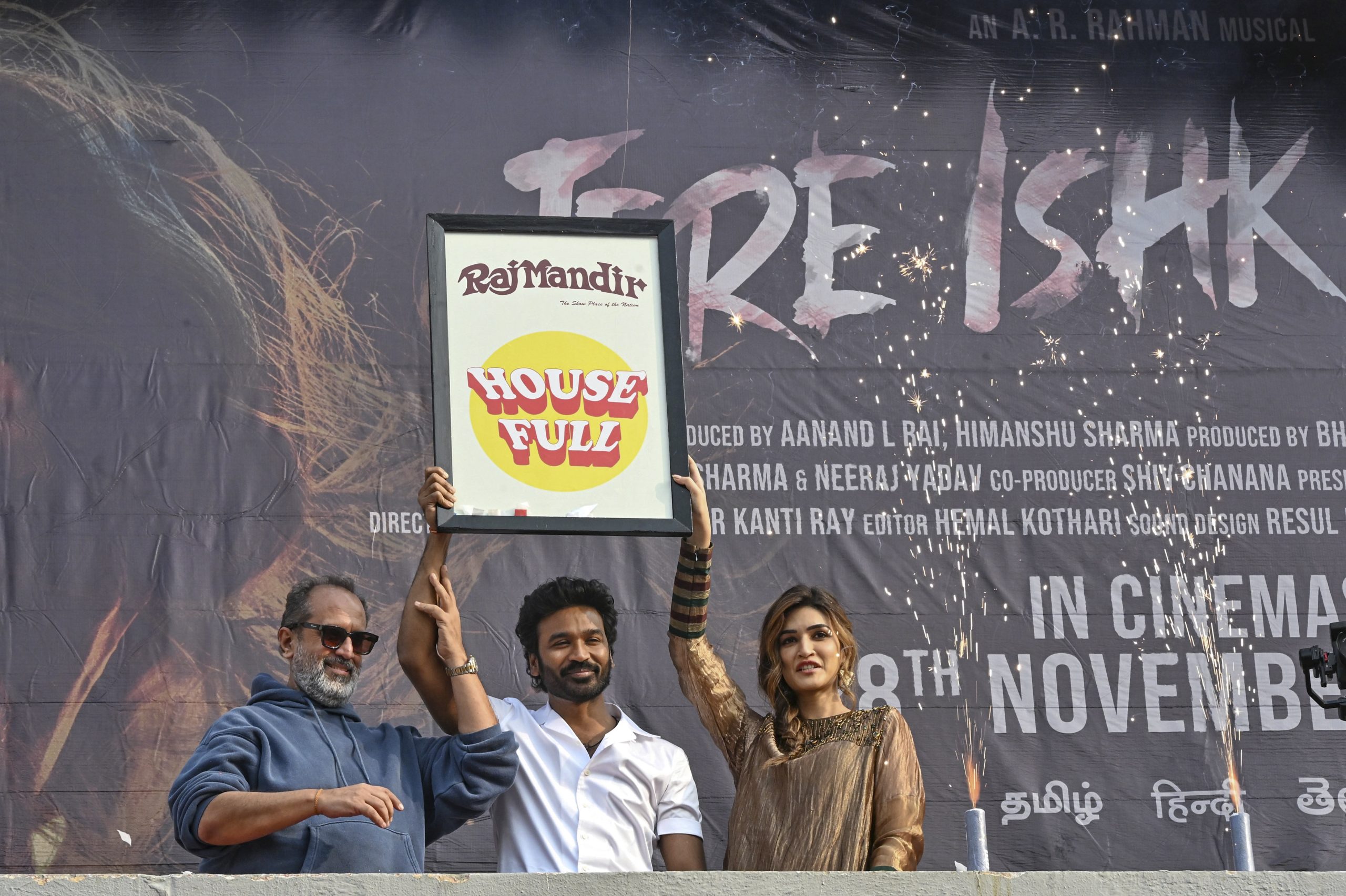
Kriti Sanon has always been an actor who embraces layered, emotionally complex characters, but her role as Mukti in Tere Ishk Mein has sparked one of the most intense conversations of her career. After the film’s release, a section of viewers labelled the central relationship and her character “toxic,” igniting a wave of online debate. Instead of shying away, Kriti stepped forward with a thoughtful, nuanced response—one that highlights her belief in the power of perspective and the importance of artistic discourse.
A Character Built on Flaws, Guilt, and Humanity
In interviews, Kriti explained that Mukti was intentionally written as a deeply flawed woman navigating emotional turmoil and guilt. She emphasized that audiences today often judge characters through rigid moral frameworks, forgetting that human beings are inherently imperfect.
She noted that mistakes don’t automatically make someone evil, and that characters—like real people—carry reasons, histories, and emotional wounds behind their actions. Her reflections align with her comments that moral judgment is not always linear and that storytelling thrives on complexity.
“Toxic” Is a Perspective, Not a Verdict
Kriti addressed the growing trend of labeling characters and relationships with terms like “toxic” and “red flag.” She acknowledged that these terms have become extremely common in online discourse, but stressed that they represent individual perspectives, not universal truths.
For her, the conversation itself is valuable. She believes that when a film sparks debate—whether about morality, relationships, or character choices—it means the art has done its job. Viewers engaging passionately, even critically, is a sign that the story has resonated.
Debate Is Part of Art
Kriti’s stance is rooted in a broader philosophy: art is meant to provoke thought, not provide moral instruction. She highlighted that discussions, disagreements, and varied interpretations are essential to the artistic experience.
By embracing the debate rather than resisting it, she reinforces the idea that cinema is a space where audiences can explore uncomfortable emotions, question characters’ decisions, and reflect on their own values.
-By Manoj H