


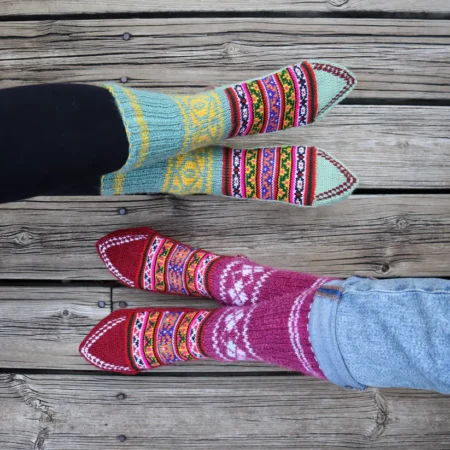
In the serene valleys of Lahaul, nestled amidst the towering Himalayas, a centuries-old tradition of hand-knitting socks and gloves is weaving its way into global recognition. These vibrant, woolen creations, known for their intricate patterns and cultural significance, have become symbols of both heritage preservation and women’s empowerment in the region.
In This Article:
From Missionary Roots to Cultural Mainstay
The genesis of Lahauli knitting can be traced back to 1862 when Moravian missionaries introduced knitting techniques to the local women of Keylong. Establishing the first knitting school, they taught German-style knitting, which the Lahauli women adapted, infusing indigenous motifs and designs. This fusion gave birth to a unique craft that has been passed down through generations, becoming an integral part of Lahaul’s cultural fabric.
Crafting Tradition: The Art of Lahauli Knitting
Lahauli socks and gloves are meticulously handcrafted using wool sheared from local sheep. The process involves knitting in sections with four double-pointed needles, creating vibrant patterns known as “dashi.” These patterns incorporate up to eight colors and feature motifs like Bumchang, Lari, Zildan, Kuru, Thingma, and Kyog, each holding cultural significance. The result is not just a garment but a tapestry of Lahauli heritage.
Empowering Women Through Handicrafts
The resurgence of interest in Lahauli knitwear has significantly impacted the local economy, particularly empowering women. Thousands of women have formed self-help knitting groups, transforming traditional knowledge into economic opportunity. These groups, supported by initiatives like the Panchayati Raj Department, have enabled women to earn livelihoods, gain financial independence, and even participate in international exhibitions.
Geographical Indication: A Mark of Authenticity
In 2019, Lahauli knitted socks and gloves received the Geographical Indication (GI) tag, a certification that recognizes their unique origin and craftsmanship. This designation not only protects the authenticity of the products but also enhances their marketability, opening doors to national and international markets. The GI tag has been instrumental in promoting Lahauli knitwear as a premium, heritage product.
Global Recognition: Showcasing Lahauli Craftsmanship
The global appeal of Lahauli knitwear was evident when these handcrafted items were showcased at a prestigious exhibition in Berlin, Germany, in November 2024. Organized by the Department for Promotion of Industry and Internal Trade under the “Invest India” initiative, the exhibition featured seven GI-certified handicrafts from India, including Lahauli socks and gloves. This international platform highlighted the intricate artistry of Lahauli women and brought global attention to their craft.
Tourism and Market Expansion
The opening of the Atal Tunnel in 2020, connecting Lahaul Valley to the rest of Himachal Pradesh, has significantly boosted tourism. Increased tourist footfall has led to higher demand for local handicrafts, providing artisans with new markets. Women now sell their products in local shops, roadside stalls, and hotels, with some even exploring online platforms to reach a broader audience.
Preserving Heritage, Weaving Futures
The journey of Lahauli knitted socks and gloves from local tradition to global recognition exemplifies the power of cultural preservation and women’s empowerment. As these artisans continue to weave their heritage into each stitch, they not only keep their traditions alive but also craft a sustainable future for their communities.
By – Sonali
Also Read – The Nicobari Canoe: A Timeless Maritime Heritage of the Nicobar Islands