


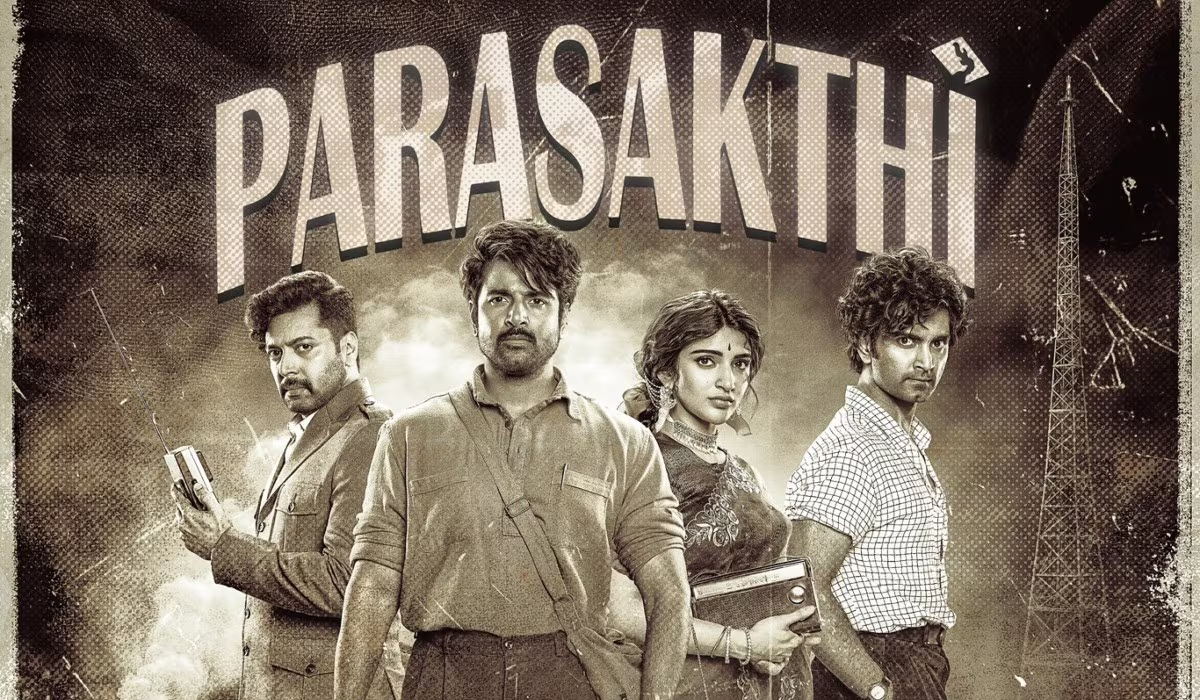
The Madras High Court on Friday refused to stay the scheduled theatrical release of Parasakthi, the highly anticipated Tamil film starring Sivakarthikeyan, dismissing a petition that alleged plagiarism in its story. The decision paves the way for the movie’s release on January 10, just ahead of the Pongal festival, despite ongoing legal contention.
The court, presided over by Justice Senthilkumar Ramamoorthy, heard detailed arguments from both sides before declining to grant an injunction against the film’s release. Advocate PS Raman, representing director Sudha Kongara, and senior counsel Aravind Pandian, on behalf of producer Dawn Pictures, successfully argued against the interim relief sought by the petitioner.
Plagiarism Claim by Assistant Director
The controversy began when K.V. Rajendran, who worked as an assistant director, filed a petition in the Madras High Court claiming that the story of Parasakthi was lifted from his registered work titled Chemmozhi. According to Rajendran, his story, which he said was registered with the Tamil Film Writers’ Association in 2010, depicted events similar to the anti-Hindi language agitations in Tamil Nadu, and the film’s makers had appropriated key elements without permission.
In his petition, Rajendran sought an interim injunction restraining the distribution or exhibition of Parasakthi both in theaters and on digital platforms, arguing that the film’s release would lead to “irreparable pain, suffering, and financial loss,” and that he would be deprived of recognition and future opportunities.
Court’s Rationale and Directions
Despite the seriousness of the allegations, the High Court did not grant a stay on the release. The judge noted that the petitioner filed his claim only in late December 2025, despite the film’s production and promotional campaign being publicly known since earlier in the year. This timing weighed against the petitioner’s request for blocking the release, the court observed.
Additionally, the court directed the South Indian Film Writers’ Association to conduct an inquiry into the plagiarism claim and submit a report by January 2, 2026. Both the petitioner and the film’s creative team were directed to present materials supporting their respective positions during this process. The court subsequently adjourned any further hearing on the main matter to late January.
During proceedings, counsel for the defense argued that the story of Parasakthi was registered in 2020 and denied any substantial similarity with Chemmozhi either in plot, structure, or screenplay. They also contended that an injunction at this stage would cause unjust financial harm to the producers and distributors who have planned a major festival release.
Film’s Anticipated Pongal Release
Parasakthi, directed by acclaimed filmmaker Sudha Kongara, stars Sivakarthikeyan, along with Ravi Mohan, Atharvaa, and Sreeleela in key roles. The film is set against the backdrop of socio-political movements in the 1960s, particularly focusing on the anti-Hindi agitations in Tamil Nadu, a subject that has strong historical resonance in Tamil cinema and politics.
Originally slated for a later January release, the film’s date was advanced to January 10, positioning it directly in competition with Thalapathy Vijay’s Jana Nayagan, which releases on January 9. Industry analysts say this could lead to one of the most closely watched box office contests during the Pongal season.
The decision to proceed with the scheduled launch has been welcomed by the film’s production team and distributors, who have maintained an aggressive promotional strategy leading up to the release. With a major festival window and strong star power, Parasakthi is expected to be a significant commercial and cultural event for Tamil cinema in early 2026.
Industry and Legal Implications
The ruling highlights the challenges of intellectual property disputes in Indian cinema, where script and story claims frequently arise in the lead-up to big releases. Legal experts say that while courts are cautious about restraining film releases without clear and compelling evidence, secondary mechanisms like industry body inquiries serve as a way to balance creative rights with commercial interests.
As the Writers’ Association investigates both works, further developments in the case could shape future standards for how story disputes are adjudicated within the Tamil film industry.
By – Sonali