


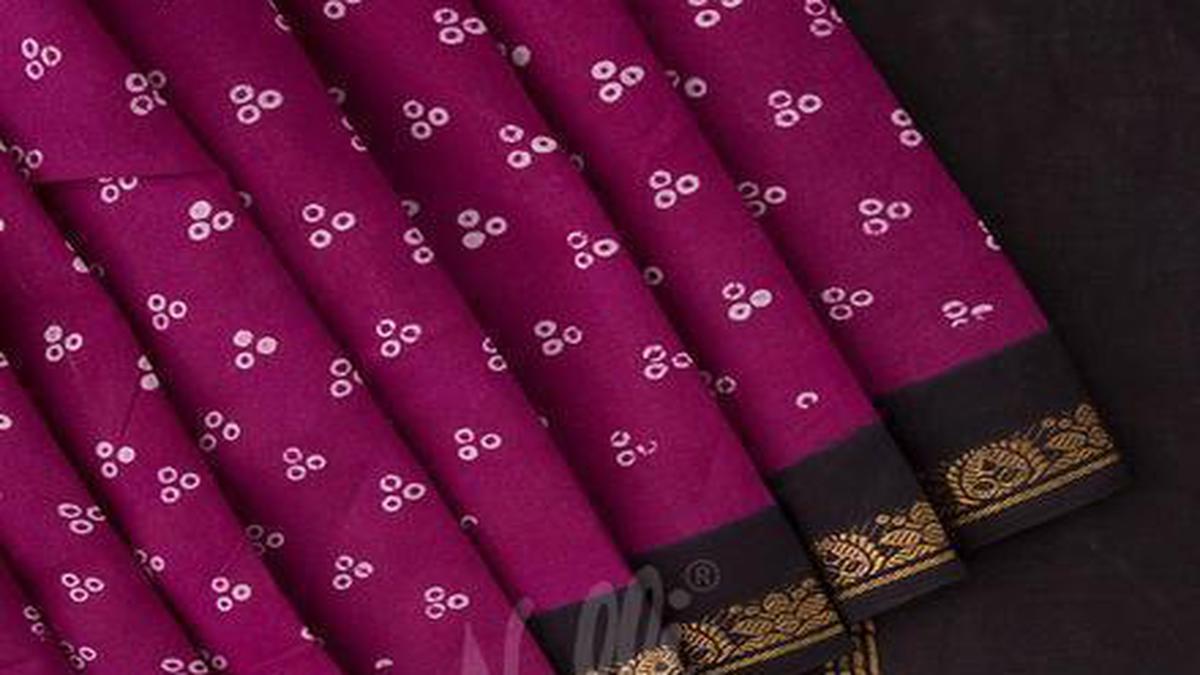
Madurai Sungudi — the intricately hand-tied, naturally dyed cotton sari with vibrant patterns — is not just a piece of fabric. It is Tamil Nadu’s living legacy, an artistic rebellion, and a symbol of South India’s textile pride. But in the age of polyester knockoffs and designer couture, this heritage is being choked not by competition, but by bureaucratic incompetence, political neglect, and fashion elitism.
In This Article:
- What Makes Madurai Sungudi Truly Regal?
- Who Killed the Sungudi Star? A Case of Political and Cultural Betrayal
- Not Just A Sari, But A Social Statement
- From Madurai to Met Gala? Or Just More Mud?
- The Thread of Hope – A Weave Worth Saving
- Final Word – If We Let Sungudi Die, What’s Next?
What Makes Madurai Sungudi Truly Regal?
- Handcrafted through a traditional bandhani-style tie-dye process
- Originated in Madurai by Saurashtrian weavers over 400 years ago
- Awarded the Geographical Indication (GI) tag in 2005
- Known for unique dots (putta), natural dyes, and breathable fabric
- Once adorned by temple dancers, royal courtesans, and Tamil matrons
Madurai Sungudi isn’t just cloth — it’s coded history in every dot. Yet, it’s vanishing from mainstream wardrobes faster than the government can utter “vocal for local.”
Who Killed the Sungudi Star? A Case of Political and Cultural Betrayal
Despite its GI-tag status, Sungudi weavers face no official market support, no price assurance, and no protection from power loom piracy.
Hard-hitting truths the government won’t tell you:
- Estimated to be less than 5% of annual Tamil Nadu textile budget goes to traditional crafts
- No central MSP or targeted subsidies for Sungudi weavers under schemes like SAMARTH or PMEGP
- Design theft by big brands and Bollywood designers remains unchallenged
- Even after Make in India, the local handloom sector gets crushed by synthetic imports from China and Bangladesh
So the real question is: Is Madurai Sungudi being buried alive in the grave dug by policy apathy and fashion fascism?
Not Just A Sari, But A Social Statement
Wearing Sungudi once meant wearing resistance, pride, and purity. Today, it’s marketed like an “ethnic costume” for Onam sales and Instagram reels.
Cultural Sellout Alert:
- Corporate brands are marketing Sungudi patterns without crediting weavers or origin communities
- Film stylists slap a Sungudi print on a lehenga and call it “fusion,” stripping it of regional context
- Local artisans are earning less than ₹150 per sari after days of work, while brands flip it for ₹3000+
From Madurai to Met Gala? Or Just More Mud?
Even celebrities who champion Indian textiles rarely mention Sungudi. Why? Because South Indian weaves remain underrepresented in elite fashion circles. All the love is showered on Banarasi, Chikankari, or Kanjivaram. Sungudi is the ignored sibling of the sari family.
It’s time to call out the hypocrisy of fashion media and policymakers who preach preservation but don’t walk the warp.
The Thread of Hope – A Weave Worth Saving
Reviving Madurai Sungudi isn’t just about nostalgia — it’s economic justice, cultural continuity, and textile decolonisation. Here’s what needs to be done:
- GI-tag enforcement with penal action against fake sellers
- Mandatory state quota in government textile procurement (schools, hospitals)
- Direct-to-customer platforms for Sungudi weavers, cutting out middlemen
- High-profile endorsements from Tamil celebrities and politicians
- Fashion weeks in Madurai — not just Mumbai!
Final Word – If We Let Sungudi Die, What’s Next?
The fall of Madurai Sungudi would be a massacre of centuries-old knowledge, an erasure of identity, and a betrayal of India’s handloom roots. If Bollywood can borrow its aesthetics, if designers can rip off its motifs, and if governments can use it as a tourism slogan — then why can’t they protect it?
The dot is fading. But the fight must intensify.
By – Nikita