


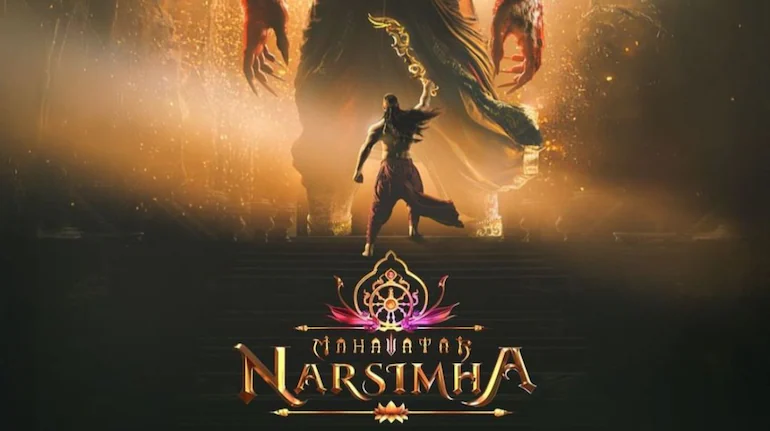
Director Ashwin Kumar’s Mahavatar Narsimha has shattered expectations, racing past Rs 100 crore globally in just under two weeks since its July 25 release. This Indian-made animated epic, produced by Hombale Films and Kleem Productions, retells the tale of Lord Vishnu’s Narasimha avatar and has stormed theaters across Hindi, Telugu, Tamil, Kannada, and Malayalam markets. From bustling multiplexes in Mumbai to rural screens in Andhra Pradesh, its Rs 105 crore global haul marks a historic milestone. Its cultural resonance and bold animation signal a turning point for India’s animation industry. Through word-of-mouth buzz and family-friendly appeal, it’s rewriting the narrative, sparking discussions on X with #MahavatarNarsimha.
A Historic Breakthrough
With a modest Rs 15 crore budget, Mahavatar Narsimha has defied odds, grossing Rs 91.25 crore domestically in 10 days and climbing to Rs 105 crore worldwide, per trade reports. Surpassing international hits like Spider-Man and Kung Fu Panda in India, it’s become the highest-grossing animated film in the country. The Telugu 3D version’s 88.94% occupancy and Hindi 3D’s 68.30% reflect a pan-India embrace, fueled by its mythological roots and stunning visuals.
Animation in India: A New Dawn?
India’s animation industry, long overshadowed by Hollywood giants, has struggled with a narrow market—previous top earners like Hanuman (2005) barely crossed Rs 20 crore. Mahavatar Narsimha’s rise, backed by technological leaps and emotional storytelling, suggests a shift. Industry voices like Taran Adarsh hail it as a “blockbuster rewriting history,” while Hombale Films’ Chaluve Gowda sees it as evidence that Indian audiences crave culturally rooted narratives. With a planned seven-part Mahavatar Cinematic Universe through 2037, the film could spark a franchise boom.
What Lies Ahead?
This success hints at a golden era for Indian animation, with potential for global exports, as seen in its UK and Australia releases. Yet challenges persist: high production costs, a lack of original scripts, and competition from live-action blockbusters like Saiyaara. The film’s appeal to families and kids, evident in its occupancy trends, could drive demand for diverse genres—comedy, sci-fi, or fantasy—if studios invest in talent and technology. Posts on X reflect optimism, with calls for more animated ventures, but the industry’s future hinges on balancing tradition with creativity.
A Cultural Milestone with Questions
Mahavatar Narsimha’s Rs 100 crore feat is a triumph, challenging the narrative that animation is a niche genre in India. As #AnimationIndia trends, it prompts reflection: Will this inspire a wave of homegrown animated stories, or reinforce a reliance on mythological crutches? The industry stands at a crossroads—ready to soar or risk repeating history.
-By Manoj H