


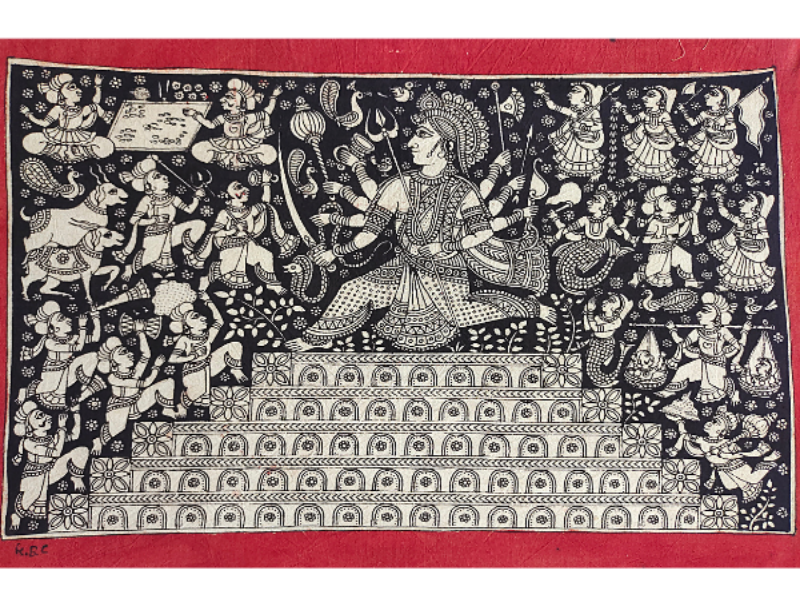
Mata ni Pachhedi, a traditional ritual textile art form closely associated with Ahmedabad, Gujarat, is gaining renewed attention both nationally and internationally as a vibrant emblem of India’s folk heritage. Practised by a small community of skilled artisans, the art form is recognised as a significant cultural treasure, blending spirituality, history and artistic expression.
What Is Mata ni Pachhedi?
Mata ni Pachhedi, literally meaning “behind the Mother Goddess,” refers to hand-painted and block-printed textile panels historically used as portable shrines or sacred backdrops in the worship of the Mother Goddess (Mata). These cloth hangings, traditionally crafted on rectangular pieces of cotton, depict the central deity surrounded by mythological and symbolic motifs, often in bold colours like red, black and white.
Artisans from the Devipujak or Vaghri community, especially the Chitara families of Ahmedabad, have been the custodians of this craft for centuries. Oral histories suggest the tradition is at least 300–400 years old, with some sources indicating roots may extend further back.
Cultural and Spiritual Roots
The origin of Mata ni Pachhedi is deeply tied to community resilience. In earlier eras, many nomadic and marginalised groups, including sections of the Vaghri community, were barred from mainstream temples. They responded by creating their own sacred imagery on cloth, enabling worship in homes and communal spaces. These textiles functioned as mobile temples that brought the divine presence of goddess worship into their environment.
These painted panels were traditionally used during major festivals such as Navaratri, the nine-night celebration of the Goddess, and other rituals dedicated to forms of Durga, Kali, Bahuchar Mata and other deities central to the local devotional landscape.
Artistic Techniques and Symbolism
Mata ni Pachhedi is often referred to as the “Kalamkari of Gujarat” due to its hand-painting tradition and dye-based processes that echo pen-and-dye textile practices found in other regions.
The process traditionally uses:
- Natural dyes: especially deep reds and blacks, with the undyed cloth serving as white/negative space.
- Hand tools: bamboo pens and, in some cases, wooden blocks for repeat motifs and borders.
- Symbolic motifs: central depictions of the goddess surrounded by animals, celestial bodies, floral designs, and narrative panels that signify cosmic and folk elements.
These elements imbue the work with layers of devotional meaning—red often read as divine power, black as protection, and white as purity.
Modern Recognition and Revival
In a major cultural milestone, Mata ni Pachhedi was awarded a Geographical Indication (GI) tag in 2023, affirming its unique identity as a product of Gujarat’s cultural heritage. This tag not only helps protect the craft but also opens avenues for greater visibility, market value, and preservation.
Contemporary projects—from craft exhibitions to collaborations with fashion designers incorporating Pachhedi motifs into modern garments—reflect a growing interest in bringing this traditional art into broader visibility. However, the number of traditional practitioners remains small, with only a handful of families continuing the ancestral craft.
As artisans engage with younger audiences and institutions work on preservation, Mata ni Pachhedi stands at a crossroads of heritage conservation and creative evolution—a living testament to India’s enduring artistic legacy.
By – Sonali