


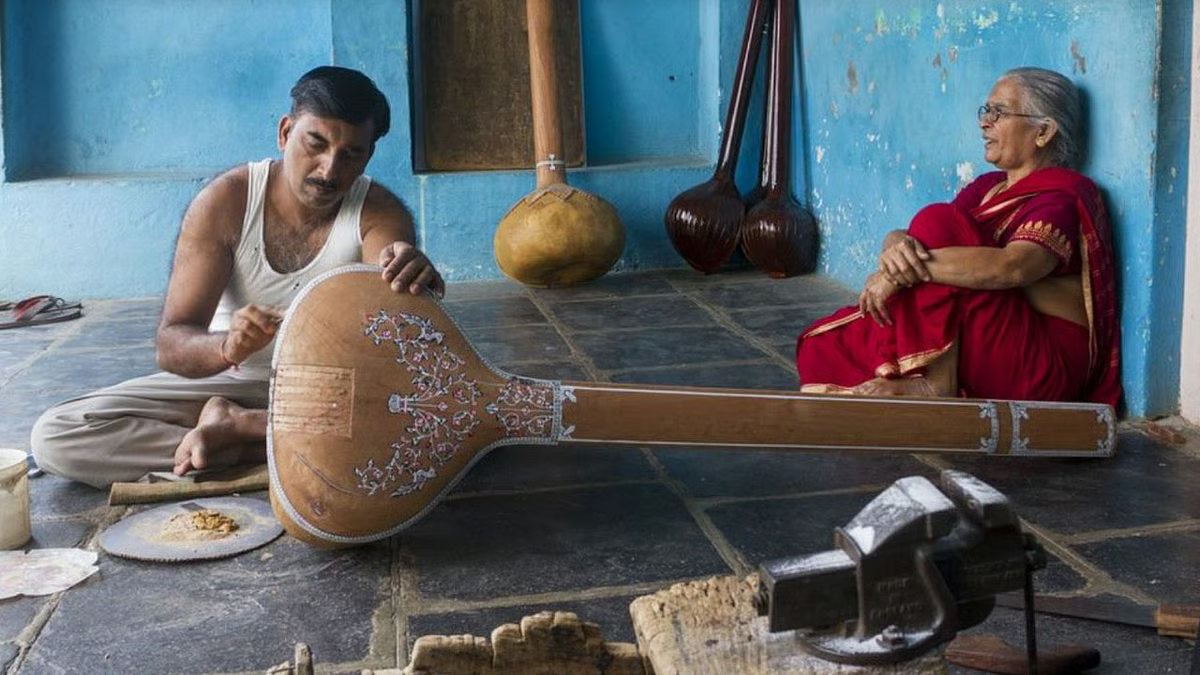
The Miraj Sitar stands as a timeless emblem of Indian classical music, crafted in the narrow lanes of Miraj, a historic town in Maharashtra’s Sangli district. Born in 1850 through the ingenuity of brothers Faridsaheb and Mohinuddin Shikalgar, this stringed marvel has echoed through the hands of maestros like Ravi Shankar and Vilayat Khan. Its rich tonal quality, rooted in Miraj’s musical legacy and the Kirana gharana, captivates artists worldwide. Handmade with pumpkin gourds and red cedar wood, the craft thrives despite modern challenges, sparking pride on X with #MirajSitar.
A Craft Born of Resilience
The story begins with the Shikalgar community, traditionally metalsmiths, pivoting to music during Miraj’s Maratha rule. Faridsaheb’s breakthrough—using gourds as resonators after studying acoustics—laid the foundation, refined over generations. By the late 19th century, Miraj’s sitar-makers were crafting instruments for legends like Abdul Karim Khan, whose recovery from plague tied his fate to the town. Today, 50 families in Sitarmaker Galli, many bearing the surname Sitarmaker, continue this legacy, shaping 150–250 sitars annually.
The Artistry Behind the Sound
Each Miraj Sitar is a labor of love, taking a month to craft with limited output—eight pieces at best. Pumpkin gourds from Pandharpur form the tumba, dried and hung to avoid fungus, while Karnataka’s red cedar wood builds the neck. The javari, fine-tuned for tonal brilliance, reflects centuries of expertise. Prices range from ₹15,000 to ₹35,000, yet the craft faces a paradox: global demand from the U.S. and Europe coexists with local disinterest, as younger generations chase driving or mechanics over sitar-making.
Challenges in a Digital Age
The rise of electronic tanpuras and music apps has slashed demand, a blow worsened by the 2020 pandemic, which halved business for artisans like Balasaheb Mirajkar. Raw material costs soar—gourds now fetch ₹1,500 each—while labor-intensive methods deter mass production. Some adapt, crafting guitars or Zitars, but the craft’s survival hinges on preserving intangible skills passed down through families. Critics question if modernization, like plastic inlays replacing sambar horns, erodes authenticity.
A Melody for the Future
The Miraj Sitar’s soul lies in its handmade imperfections, a contrast to mass-produced alternatives. As #PreserveMirajCraft trends, the challenge is balancing tradition with innovation—perhaps training youth or digitizing sales further.
-By Manoj H