


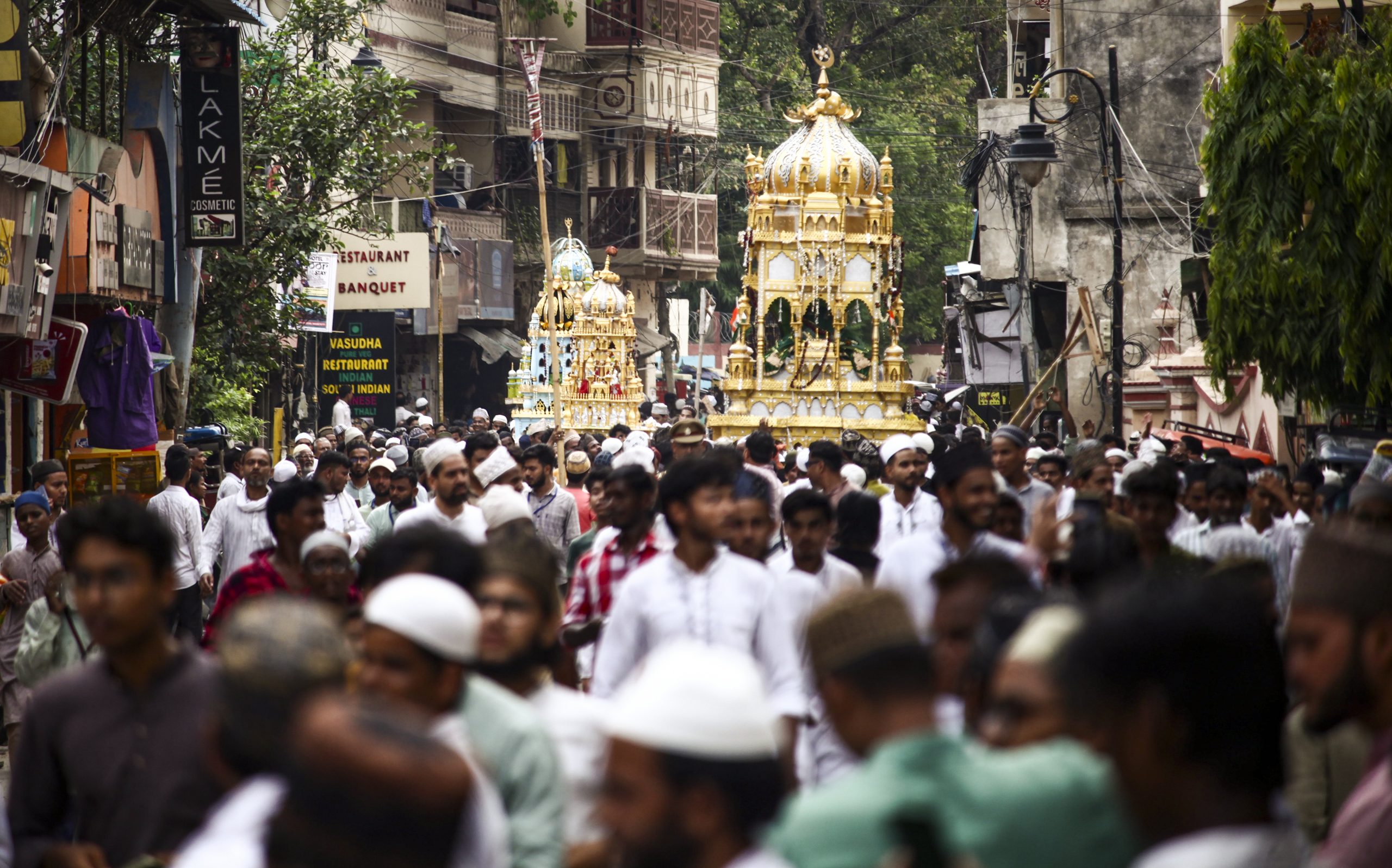
Every year, as the Islamic lunar calendar begins with the month of Muharram, communities across India come alive with a unique blend of ritual, reverence, and regional custom. Often misunderstood as a celebration, Muharram is, in truth, a solemn period of mourning that marks the martyrdom of Imam Hussain, the grandson of Prophet Muhammad, in the Battle of Karbala in 680 CE. But in India, Muharram is not confined to religious lines—it becomes a shared cultural observance, marked by processions, artistic tazias, communal kitchens, and stories passed down generations.
In This Article:
The Soul of Muharram: Not a Festival, But a Remembrance
While predominantly observed by Shia Muslims, the spirit of Muharram in India transcends sectarian boundaries. Its themes—sacrifice, justice, and standing against oppression—resonate universally. From large cities to small towns, this mourning period is as much about community and compassion as it is about historical remembrance.
Tazias and Processions: Stories Told Through Art and Movement
Perhaps the most visually striking part of Muharram in India is the tazia—a replica of Imam Hussain’s tomb in Karbala, crafted from bamboo, wood, paper, and foil. Often towering in height and adorned with delicate designs, these tazias are carried through streets in processions that bring entire neighborhoods together.
The final day of Muharram, Ashura, sees the most intense expressions of mourning. In some areas, self-flagellation or chest-beating rituals are performed by the devout to share in the suffering of Karbala. The sounds of “Ya Hussain” chants, the rhythmic beat of traditional drums, and the slow march of barefoot mourners reflect the weight of the grief carried through generations.
Langars and Sabeels: Feeding All in the Name of Humanity
What sets Indian Muharram apart is its spirit of inclusivity and service. Throughout the month, and especially during Ashura, community kitchens (langars) and free water kiosks (sabeels) are set up in towns and cities. These are open to all people—regardless of religion or caste, symbolizing the universal values of charity and equality that Imam Hussain stood for.
In many localities, it’s common to see Hindus and Muslims working side by side, distributing food, offering water, and participating in processions—sometimes even jointly constructing tazias. In cities like Lucknow and Hyderabad, this interfaith participation is both historic and ongoing.
Diverse Traditions Across Indian States
What makes Muharram in India especially rich is the regional variation in its observance:
Uttar Pradesh (Lucknow, Amroha, Jaunpur):
The heartland of Indian Shia culture, Lucknow hosts elaborate majlis (religious gatherings) and grand processions. Tazias here are often intricately built and carried on elephants or horses, accompanied by elegiac poetry and laments.
Telangana (Hyderabad):
The city’s Bibi ka Alam procession is legendary, carrying what is believed to be a relic of Imam Hussain. The processions see participation from thousands and feature panjas, or symbolic metal hands, representing the loyalty of Hussain’s followers.
Maharashtra (Mumbai, Pune):
In Mumbai, areas like Byculla and Mazgaon are known for deeply rooted Muharram customs. The tazias are often the result of joint efforts by Hindu and Muslim craftsmen, and local residents of all faiths contribute to langars.
West Bengal (Murshidabad, Kolkata):
In this region, Muharram includes jatra-style storytelling—a form of folk theatre. Islamic tales of Karbala are performed in dramatic and artistic ways, blending Islamic and Bengali folk traditions.
More Than Religious Memory—A Collective Conscience
Muharram in India stands as a living example of how grief, when rooted in humanity, becomes a bridge—not a barrier. The sorrow of Karbala becomes a shared moral memory, echoing through decorated tazias, free meals offered to strangers, and quiet tears shed in public processions.
It’s a time when people remember not just the martyrdom of Imam Hussain, but the values of resistance, truth, and compassion he died for. And in India, that remembrance becomes not just religious, but richly cultural—a reminder that the deepest sorrows often create the strongest bonds.
By – Nikita