


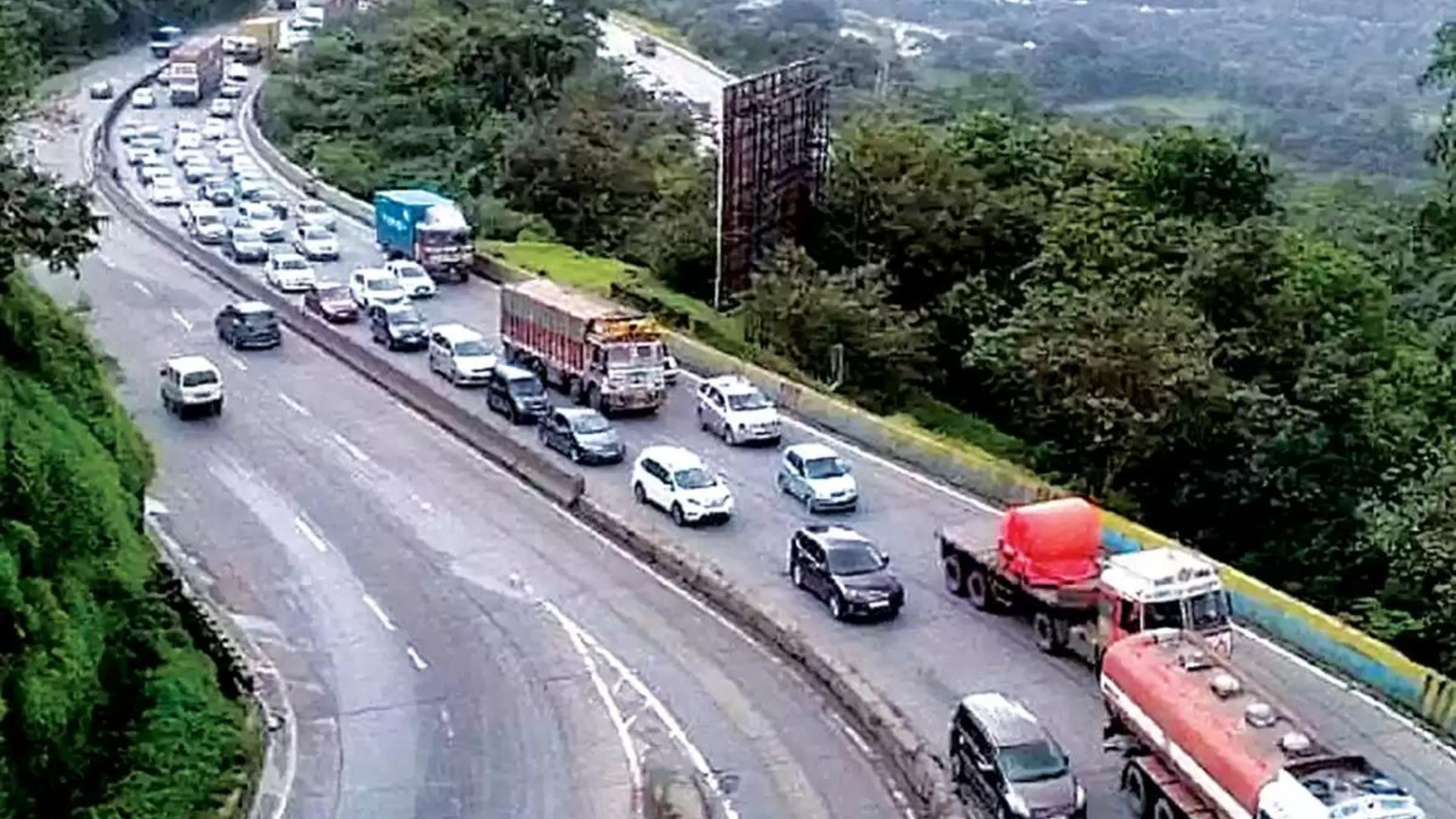
According to officials from the state transport department, the ITMS, which has been in place on the Mumbai-Pune Expressway since July 2024, has played a key role in reducing accidents, along with stricter enforcement, enhanced patrolling, and public awareness drives.
Under the system, 17 violations such as overspeeding, illegal parking, wrong entry, driving without a seat belt, using mobile phones while driving, and lane-cutting are monitored using advanced surveillance cameras and automated systems.
Talking to PTI, additional transport commissioner Bharat Kalaskar said the ITMS has proved a deterrent and helped control overspeeding, which is one of the major causes of accidents and fatalities.
He said after getting multiple e-challans, drivers do not dare to speed.
“ITMS has reduced overspeeding and lane-cutting tendencies on the Mumbai-Pune Expressway significantly. As fatalities are directly proportional to speed, the control on overspeeding and other violations have helped bring down accidents,” he said.
Authorities plan to implement the system on the Samruddhi Expressway as well, officials said.
Of the 191 accidents recorded on the Mumbai-Pune Expressway in 2024, 90 were killed in 74 fatal crashes, while the Samruddhi Expressway saw 137 accidents, of which 96 were fatal and claimed 126 lives, the official data stated.
Operational for over two decades, the 95-km Mumbai-Pune Expressway — officially named Yashwantrao Chavan Expressway — is India’s first access-controlled, six-lane expressway, connecting the financial capital to Pune, an IT hub.
The 701-km Mumbai-Nagpur Expressway, named Hindu Hrudaysamrat Balasaheb Thackeray Maharashtra Samruddhi Mahamarg, is operational between Igatpuri in Nashik district and Nagpur, and its final phase between Igatpuri and Amane in Thane district is nearly complete and expected to open to the public soon. PTI KK ARU