


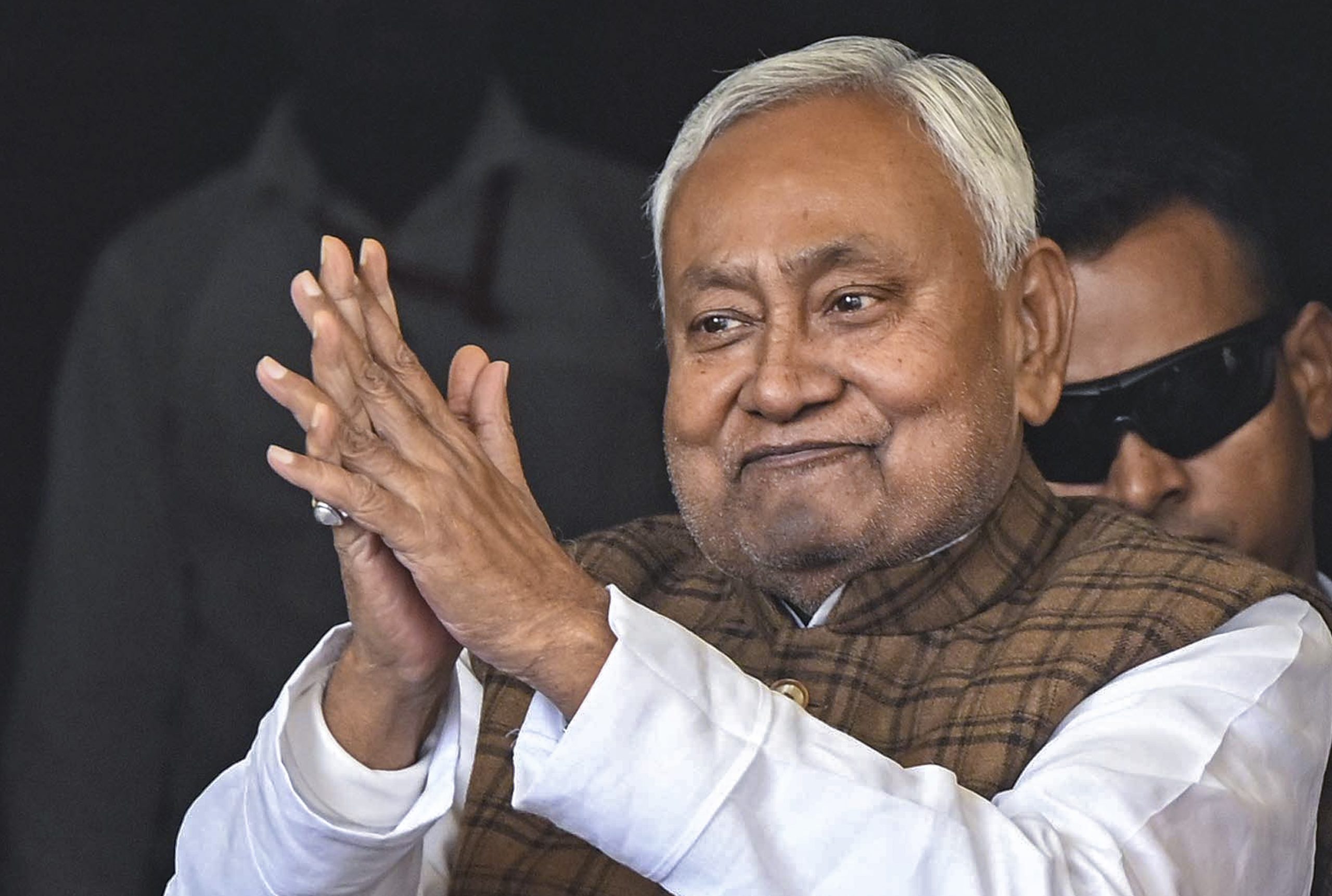
Patna, Dec 23 (PTI) — Bihar’s political landscape in 2025 was dominated by an intense battle for power that culminated in a decisive NDA victory in the November assembly elections, defying predictions of anti-incumbency after nearly two decades in office. The verdict once again underlined the centrality of Chief Minister Nitish Kumar, who was sworn in for a record 10th term, cementing his status as the state’s longest-serving chief minister.
Kumar, 75, led his JD(U) to a near doubling of seats compared with the 2020 polls, even as ally BJP retained its position as the senior partner in the coalition. His oath-taking ceremony, attended by Prime Minister Narendra Modi, symbolised a renewed emphasis on stability within the NDA after years marked by political realignments.
In the new assembly, Kumar set the tone by stressing close coordination with the Centre, repeatedly crediting what the government termed the “double-engine” model for Bihar’s development push. This narrative became a cornerstone of the NDA campaign.
The opposition, led by RJD’s Tejashwi Yadav, sought to counter this with a strong populist pitch focused on jobs, allowances and social security. Pre-poll surveys projected Yadav as a preferred chief ministerial candidate, and he accused the government of copying opposition welfare ideas in the run-up to the elections. The ruling alliance, however, maintained it was merely accelerating delivery.
Welfare measures dominated the political discourse. The government expanded pensions, announced free electricity up to 125 units, reserved government jobs for women domiciled in Bihar and rolled out the ‘Mukhya Mantri Mahila Rojgar Yojana’, under which Rs 10,000 was transferred to over 1.5 crore women. While the timing of some payouts drew criticism, these schemes significantly boosted the NDA’s appeal.
The election season was also shaped by the Election Commission’s Special Intensive Revision (SIR) of electoral rolls, which led to the deletion of around 65 lakh names. While the EC maintained these were duplicate or ineligible entries, the INDIA bloc, led by Congress’s Rahul Gandhi, branded the exercise “vote theft”. Gandhi’s ‘Voter Adhikar Yatra’, undertaken with Yadav and Left allies, drew crowds but failed to translate into electoral gains, with the Mahagathbandhan restricted to fewer than 40 seats in the 243-member House.
Data later showed the opposition’s vote share remained largely intact compared with 2020, but the NDA benefited from a nearly 10 per cent rise in its own vote share, attributed largely to welfare outreach. New political entrants, including Prashant Kishor’s Jan Suraaj Party, failed to make an impact.
Beyond elections, governance challenges marked the year. Infrastructure development was showcased through new bridges, connectivity projects and partial commissioning of the Patna Metro. However, a series of bridge collapses across districts raised serious concerns over construction quality and oversight, prompting reviews, administrative action and the introduction of a more robust bridge maintenance framework with third-party inspections.
The year also saw progress in healthcare infrastructure with new government medical colleges and hospitals, expansion of sports facilities under the Khelo India programme, and cultural events such as Bihar Diwas being used to project a blend of heritage and development.
Taken together, 2025 emerged as a defining year for Bihar — one shaped by political consolidation under Nitish Kumar, an aggressive welfare strategy, and a renewed, if scrutinised, push on infrastructure.
Category: Breaking News
SEO Tags: #swadesi, #News, Nitish’s record 10th term, freebies, infra push cap Bihar’s eventful 2025