


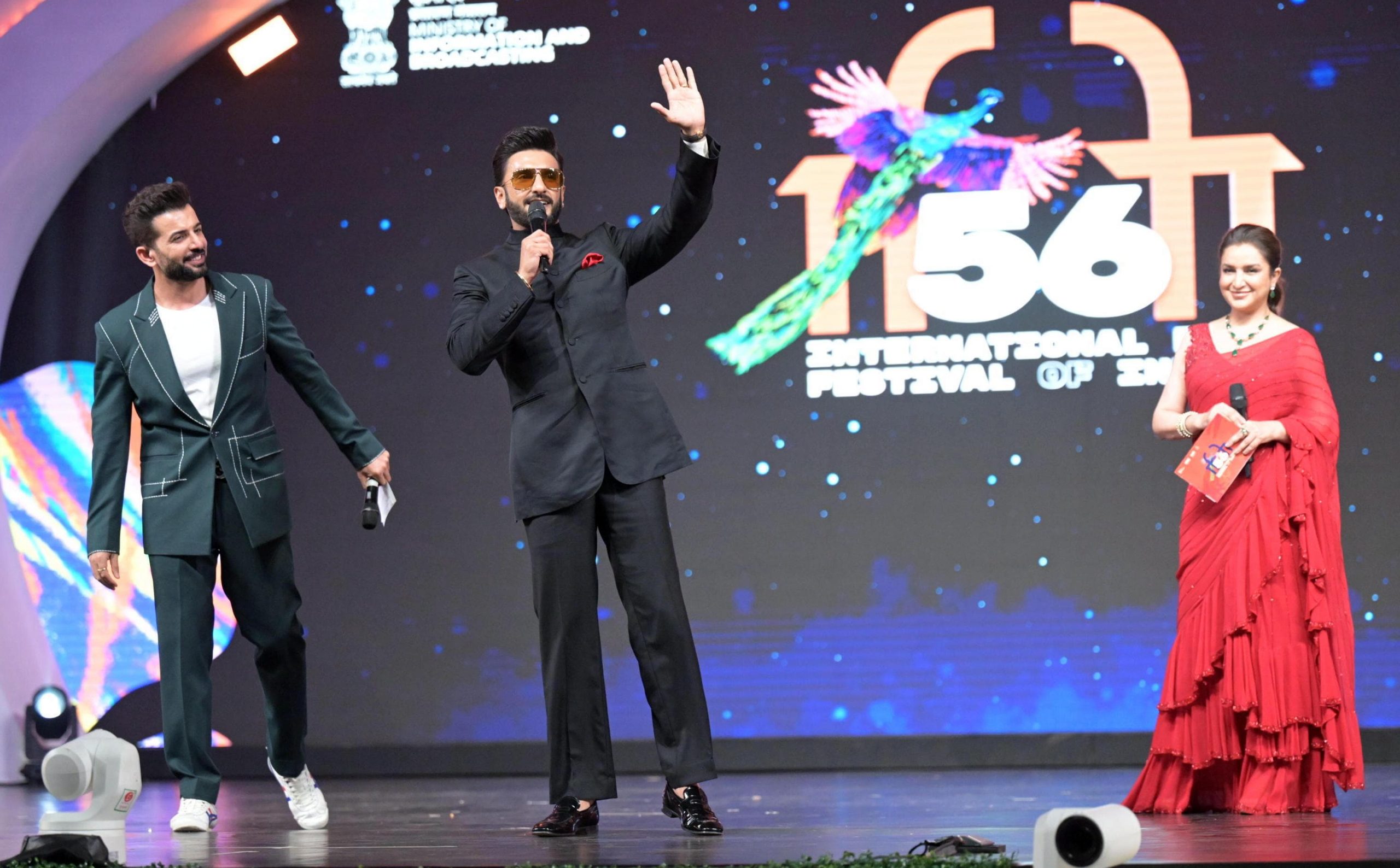
The closing ceremony of the 56th International Film Festival of India (IFFI) in Goa on November 29, 2025, turned controversial when actor Ranveer Singh mimicked a pivotal scene from Rishab Shetty’s Kantara: Chapter 1 during his on-stage appearance. The moment, intended as a tribute to Shetty’s acclaimed performance, instead drew sharp criticism for allegedly disrespecting the film’s cultural and religious elements. Singh, who was promoting his upcoming film Dhurandhar, reenacted the intense Daiva possession sequence—where Shetty’s character is overtaken by the goddess Chamundi Daiva—prompting immediate backlash online. Videos of the act, showing Singh’s exaggerated imitation, went viral, amassing millions of views and sparking debates on cultural appropriation and sensitivity.
The Incident: From Praise to Provocation
During the event, Singh took the stage to honor South Indian cinema and specifically praised Shetty, seated in the audience. “I watched Kantara Chapter 1 in theatres, and Rishab, it was an outstanding performance, especially when the female ghost (Chamundi Daiva) enters your body—that shot was amazing,” Singh said, before launching into the mimicry. The sequence, a climactic highlight of the 2025 film, depicts a profound spiritual trance rooted in Tuluva culture, where Daivas are revered as guardian deities. Singh’s light-hearted reenactment, complete with theatrical gestures, elicited laughs from some in the crowd but ignited fury among others who viewed it as mockery of a sacred ritual. Additional footage showed Shetty signaling Singh to stop, which only amplified the controversy.
The Backlash: Calls for Apology and Boycott
Social media erupted with condemnation, with users accusing Singh of trivializing religious sentiments. “You think our deities are comedy props, Ranveer Singh? Chamundi Daiva is worshipped, not ridiculed!” one post read, garnering widespread support. The Hindu Janajagruti Samiti (HJS) filed a police complaint in Panaji, alleging Singh insulted Goddess Chamundadevi by referring to her as a “female ghost” and imitating the possession scene. “This is blasphemy—apologize immediately or face boycott!” echoed sentiments from thousands, with hashtags like #BoycottRanveerSingh trending. Shetty, who attended the event, has not issued a formal statement, but his on-stage reaction fueled perceptions of discomfort.
Ranveer’s Response: Sincere Apology Issued
On December 1, 2025, Singh took to Instagram Stories to address the uproar, posting a handwritten note: “My intention was to highlight Rishabh’s incredible performance in the film. If I’ve hurt anyone’s sentiments, I sincerely apologise.” He emphasized his deep respect for all cultures and traditions, adding, “I have always admired and celebrated the diversity of our country.” The apology, while met with mixed reactions—some calling it genuine, others “too little, too late”—has somewhat tempered the storm, though the HJS demanded a formal public clarification.
A Broader Conversation: Sensitivity in the Spotlight
The incident has reignited debates on cultural representation in Bollywood, where actors often draw from regional traditions for dramatic effect. Kantara: Chapter 1, a massive hit blending folklore with action, has been lauded for authentically portraying Tuluva rituals, making Singh’s imitation particularly sensitive. As Singh prepares for Dhurandhar’s December 5 release, the controversy serves as a reminder of the line between admiration and appropriation in an increasingly globalized industry.
A Lesson in Laughter and Limits
Ranveer Singh’s IFFI mimicry isn’t jest—it’s jolt. As apologies attempt amends, it thunders: Can tribute tip into trespass? The cultural clash affirms yes, scripting a call for caution in cinema’s ceaseless canvas.
-By Manoj H