


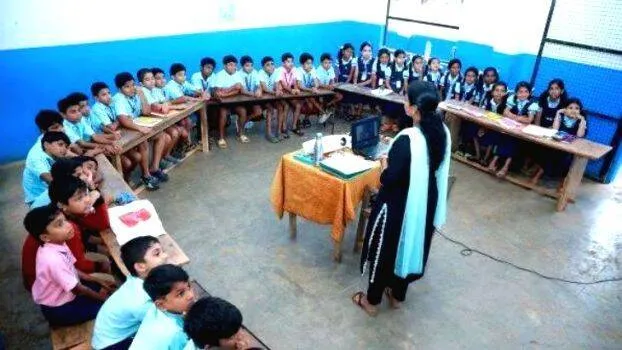
In 2025, schools in Kerala, Tamil Nadu, West Bengal, and Punjab are revolutionizing classroom dynamics by adopting U-shaped or semicircular seating, eliminating the traditional concept of “backbenchers.” Inspired by the 2024 Malayalam film Sthanarthi Sreekuttan, this shift, first implemented at Ramavilasom Vocational Higher Secondary School (RVHSS) in Valakom, Kerala, aims to foster inclusivity and engagement. To ensure every student feels seen and valued. Rearranging desks to place all students in the “front row” enhances teacher-student interaction across these Indian states.
In This Article:
- A Cinematic Spark for Change
- Breaking Classroom Hierarchies
- Impact and Reception
- A New Era of Learning
A Cinematic Spark for Change
The idea originated from a scene in Sthanarthi Sreekuttan, where a student proposes a U-shaped seating model to bridge the front-back bench divide. Kerala’s RVHSS, supported by Transport Minister K. B. Ganesh Kumar, piloted the layout in lower primary classes, with eight schools in Kerala, one in Punjab, and others in Tamil Nadu and West Bengal following suit by July 2025. Director Vinesh Viswanath told PTI, “We never expected such a social impact,” noting its revival of past practices like the 1994 District Primary Education Programme.
Breaking Classroom Hierarchies
Traditional rows often sidelined backbenchers, stereotyped as distracted or disengaged. The U-shaped setup, as seen in West Bengal’s Barlow Girls’ High School, ensures every student faces the teacher, improving visibility and participation. Headmistress Deepasri Majumdar reported that all 55 students in a Class VII pilot were attentive, a rarity in conventional setups. Tamil Nadu’s “Pa-shaped” model, named after the Tamil letter, is being piloted, with plans for statewide rollout. This fosters equality, especially in public schools with learning disparities.
Impact and Reception
Educators like Meera, a Tamil Nadu teacher with 29 years of experience, call the shift “rewarding,” noting increased eye contact and engagement. A 2025 study from Central University of Kerala found enhanced student confidence and reduced anxiety. However, X posts reveal mixed sentiments—some praise inclusivity, while others, like industrialist Anand Mahindra, nostalgically defend backbenchers’ creative freedom. Critics cite ergonomic concerns, like neck strain, and space issues in overcrowded classes.
A New Era of Learning
The U-shaped model, inspired by Finland and Norway’s child-centric systems, is transforming classrooms into inclusive spaces. As more schools in these states adopt it, per The Hindu (2025), this reform signals a broader shift toward equitable education, ensuring no child is left behind—literally or figuratively.
-By Manoj H