


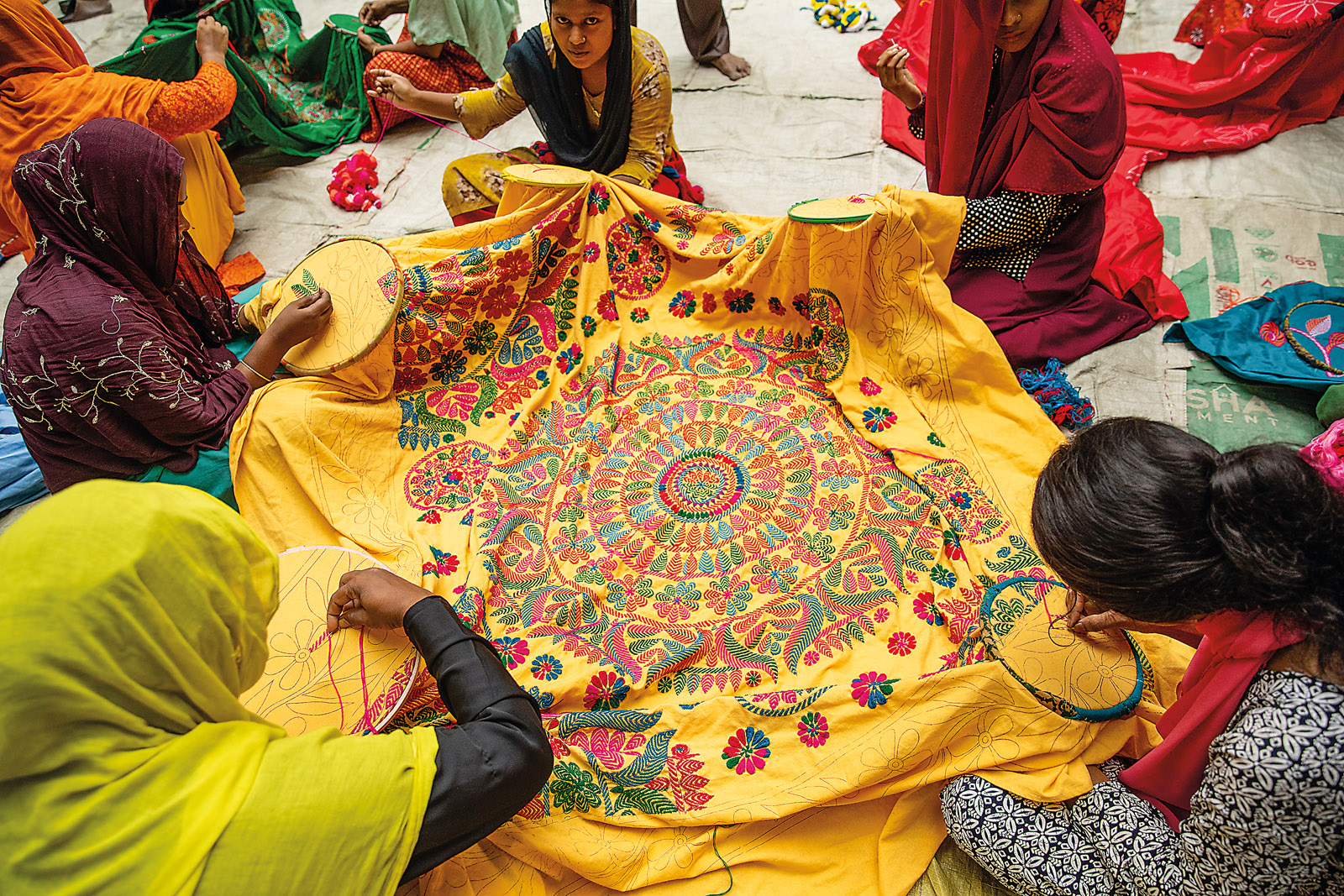
Nokshi Kantha, also known as Nakshi Kantha, is a centuries-old tradition of embroidered quilting from the Bengal region, spanning present-day Bangladesh, West Bengal, Tripura, and parts of Assam. The term combines “nakshi” (from naksha, artistic patterns) with “kantha” (meaning quilt, derived from Sanskrit kontha, rags). What began as humble, practical quilts to provide warmth evolved into richly patterned works of folk artistry.
In This Article:
Origins and Historical Roots
The art of kantha-making has been documented as early as the 16th century in Sri Sri Chaitanya Charitamrita. Initially utilitarian patchwork, these quilts were made from layers of old saris, lungis, and dhotis, stitched together to create functional bedding. Over time, simple running stitches (known as the kantha stitch) were embellished to represent life’s stories, traditions, and dreams, birthing the delightful complexity of nokshi kantha.
Craftsmanship and Iconic Motifs
The foundation of nokshi kantha is the running stitch, but over the years artisans have introduced cross-stitch, satin, back, and herringbone stitches for texture and depth. Typical motifs include:
- Lotus, sun, moon, and tree of life: symbols of hope and renewal
- Fish, animals, birds, geometric designs: reflecting everyday life and religious symbolism.
Many pieces feature a central medallion surrounded by narrative elements such as wedding rituals, village scenes, fertility symbols, and mythological storytelling.
Cultural Significance and Social Role
Nokshi kantha quilts are more than craft, they are living diaries. Created often by multiple generations over months or even years, they preserve personal histories, familial bonds, and regional identities. As Maleka Khan, a noted social worker, stated: rural women “declined to just throw them away. Rather, they reused them in ingenious ways”.
Moreover, these quilts became a space for quiet creativity, made during monsoons, after chores, and often gifted at weddings and births, embedding emotional value within their stitches. In 2008, India granted Geographical Indication status to Nakshi Kantha under the auspices of West Bengal’s application, thereby officially recognising the craft as unique to its geography and craftsmanship.
Revivals, Recognition, and Modern Adaptations
Folk Revival and Artistic Recognition
Revived in the early 20th century by Rabindranath Tagore’s Kala Bhavana in Santiniketan and later by NGOs, nokshi kantha has gained renewed interest as a sustainable, artisanal practice. Artisans such as Padma Shri awardee Takdira Begum and Mahua Lahiri have led the contemporary resurgence, bringing global attention to their craft.
Global Fashion and Sustainable Living
With surging emphasis on sustainability and upcycling, nokshi kantha has found a place in global fashion and home décor. Artisans in Bangladesh and India collaborate with NGOs (like Kantha Bae or Aarong), while boutique designers incorporate the quilts into international collections.
Challenges and Future Outlook
Despite resurgence, artisans still face economic challenges, with insufficient pay relative to the time invested . Preserving traditional methods while adapting to modern markets remains key. There’s growing opportunity in equitable collaboration, cultural recognition, and ensuring artisans receive due credit and compensation.
Cultural Emblem of Bengal
Nokshi kantha—threaded with memories, traditions, and resilience—is more than an embroidered quilt; it is a cultural emblem of Bengal. From the silent homes of rural women to global catwalks and museum walls, every stitch narrates personal stories, social history, and timeless aesthetics. As attention turns toward sustainable and meaningful fashion, nokshi kantha’s heritage craft stands poised to inspire generations ahead—historical, artistic, and social, all woven into fabric.
By – Sonali