


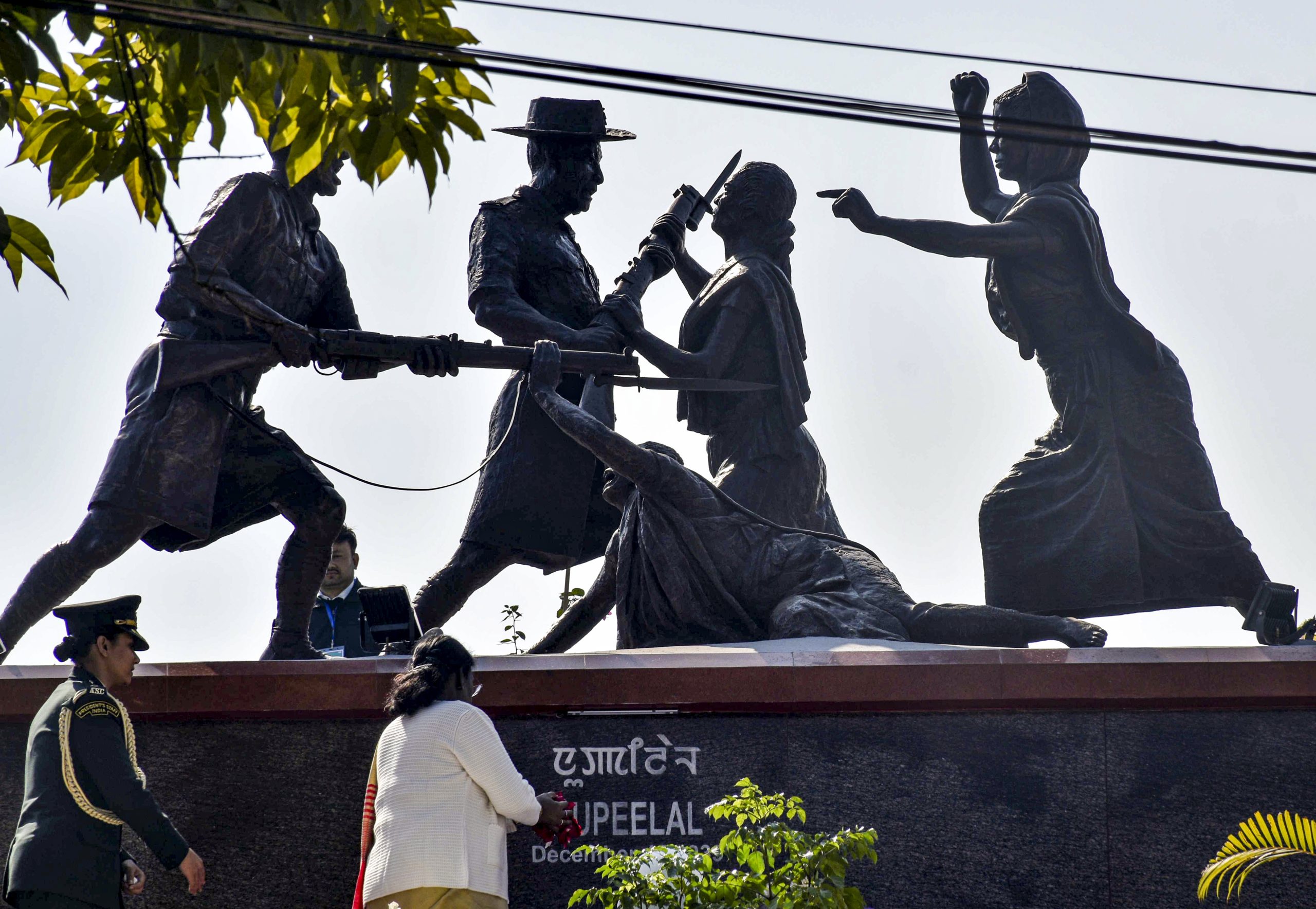
Manipur on Friday observed Nupi Lal Day, paying solemn and spirited tribute to the brave Manipuri women who led historic uprisings against colonial oppression and economic injustice in the early 20th century.
Nupi Lal, literally “women’s war,” refers to two major agitations led predominantly by Manipuri women against British authorities and exploitative local policies. The first took place in 1904, when women rose against the reimposition of the Lallup system of forced labour, which compelled men to perform unpaid service.
The more widely commemorated second uprising erupted on December 12, 1939, and is observed every year as Nupi Lal Day. On that day, hundreds of women marched to the State Durbar Office in Imphal, demanding an immediate halt to the export of rice—a vital staple whose large-scale export had created an artificial scarcity and near famine in Manipur.
Eyewitness accounts and archival records describe how unarmed women protesters confronted colonial troops. Many were injured when the forces used bayonets and rifle butts against the largely non-violent demonstrators, but the women refused to retreat.
Statewide Observance and Tribute
This year, Nupi Lal Day was observed not only across Manipur but also in Manipuri communities in Tripura, Assam, and parts of Bangladesh, with floral tributes, cultural programmes, memorial runs, and public discussions on women’s role in society.
The main state function was held at the Nupi Lal Memorial Complex in Imphal, where Chief Minister N. Biren Singh, ministers, civil society leaders, and descendants of the freedom fighters gathered to pay homage. Floral wreaths were laid at the memorial statue, and speakers highlighted both the historical significance of the movement and its continued relevance.
Beyond official ceremonies, cultural events including plays, songs, and marches sought to recreate the spirit of the women’s resistance. A notable feature in recent years has been the Nupi Lal Ningshing Lamjel, a commemorative run involving hundreds of women dressed in traditional attire, symbolising unity, resilience and peace.
Voices of Leadership and Reflection
Addressing the gathering, Chief Minister Biren Singh underlined the indomitable spirit of Manipuri women who “fought without weapons but with unyielding determination”. He urged younger generations to draw inspiration from their courage and apply those values to present-day social and economic challenges.
Speakers emphasised that Nupi Lal was not merely a protest against specific colonial or local measures but a broader assertion of economic rights, dignity and community self-respect at a time when Manipur’s people faced scarcity and exploitation under a combined feudal-colonial regime.
Social activists and historians also drew parallels between the legacy of Nupi Lal and contemporary movements for women’s empowerment, noting the enduring centrality of women in Manipur’s socio-political life.
Legacy and Contemporary Relevance
The significance of Nupi Lal goes beyond annual remembrance; it endures as a powerful example of grassroots resistance led by women. In many ways, the movement helped catalyse later economic and political reforms in the region and encouraged women to take an active role in public affairs.
Today, that legacy is visible in institutions such as Ima Keithel (Mother’s Market) in Imphal—often described as the world’s largest all-women’s market—as well as in ongoing community initiatives that place women at the forefront of social change.
Looking Ahead
As Manipur and its diaspora mark another Nupi Lal Day, leaders, scholars, and citizens alike reaffirm their commitment to the values of justice, equity and collective action embodied by the women of 1904 and 1939.
Their sacrifices remain integral to the story of resistance and resilience in India’s freedom struggle and continue to inspire movements for gender equality and social empowerment across the region.
If you tell me your target word limit (e.g., 400 vs 800) and whether this is for print or web, I can trim or expand this version accordingly.
By – Sonali