


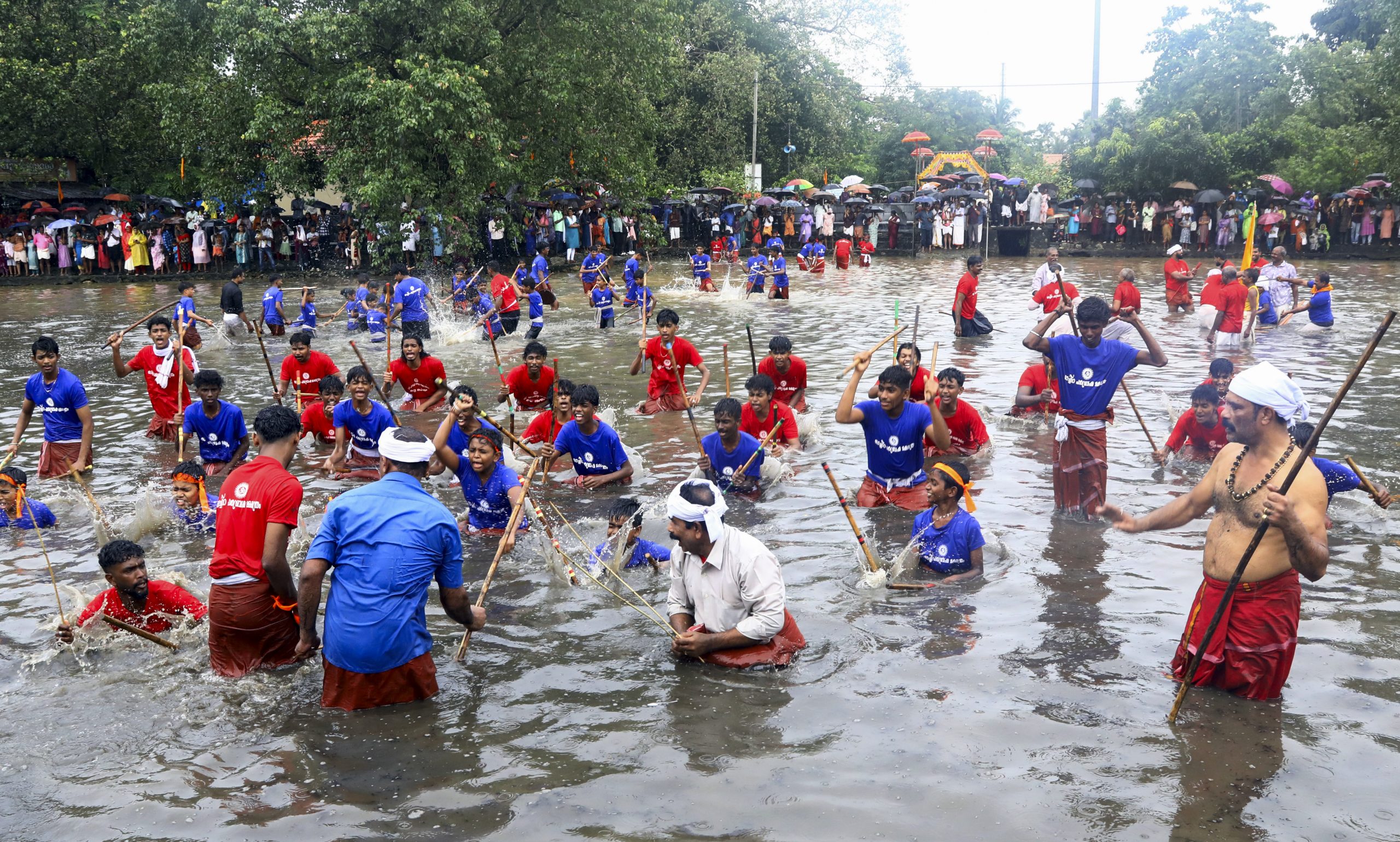
As the monsoon clouds roll into Kerala, the village of Ochira in the Kollam district becomes the setting for an extraordinary spectacle — Ochira Kali, a mud-splashed reenactment of history, heritage, and unity. Held annually in June, this ancient festival blends martial arts, spiritual devotion, and cultural pride into a vivid celebration unlike any other.
In This Article:
The Temple with No Idol
The Ochira Parabrahma Temple, where this festival unfolds, stands out in a state famed for its rich temple traditions. Here, there is no idol or sanctum. Instead, devotees worship Parabrahma—the universal consciousness—beneath the shade of age-old banyan trees, reflecting the temple’s non-dualistic spiritual philosophy and unique openness.
A Battle Reimagined in Mud
Celebrated on the first and second days of Mithunam (mid-June), Ochira Kali is a mock battle that commemorates a historical conflict between the kingdoms of Kayamkulam and Travancore. The battlefield, called padanilam, transforms into a muddy arena where hundreds of participants engage in choreographed duels.
- Participants, often trained in Kalaripayattu (Kerala’s traditional martial art), wield wooden sticks and shields
- The mud-filled water rises to the knees, adding to the visual drama
- Drums like the ‘chenda’ beat rhythmically, fueling the energy of the crowd
This isn’t just a performance—it’s a symbolic tribute to valor and history, rooted in Kerala’s martial legacy and communal strength.
Festival of Inclusion and Unity
What sets Ochira Kali apart is its inclusive spirit. People from various castes, communities, and regions take part in the event. It reflects the egalitarian nature of Parabrahma worship, where no barriers of religion, class, or ritual hierarchy exist.
The event is a powerful blend of:
- Sacred devotion
- Martial discipline
- Folk tradition and fun
Ochira Kali is where religion meets performance, and history is kept alive through movement, rhythm, and mud.
Eduppu Kaalas: The Majestic Bull Effigies
Another significant feature of the temple’s cultural calendar is the Eduppu Kaalas—giant bull effigies paraded during Onam. These figures are not just decorative; they are deeply symbolic.
According to legend:
- The divine presence of Parabrahma appeared in the form of a bull
- Even today, cattle are revered and allowed to roam freely around the temple grounds
- These effigies represent divine strength and guardianship
Why Ochira Kali is Unmissable
Ochira Kali is more than a spectacle—it is a living archive of Kerala’s cultural and spiritual ethos. From mud-splattered warriors to mythic processions, from inclusive participation to ancient martial arts, the festival is an ode to a time when spirituality and community were inseparable.
Whether you’re a cultural traveller, history enthusiast, or spiritual seeker, witnessing Ochira Kali under Kerala’s grey monsoon sky is a raw and unforgettable experience.
By – Nikita