


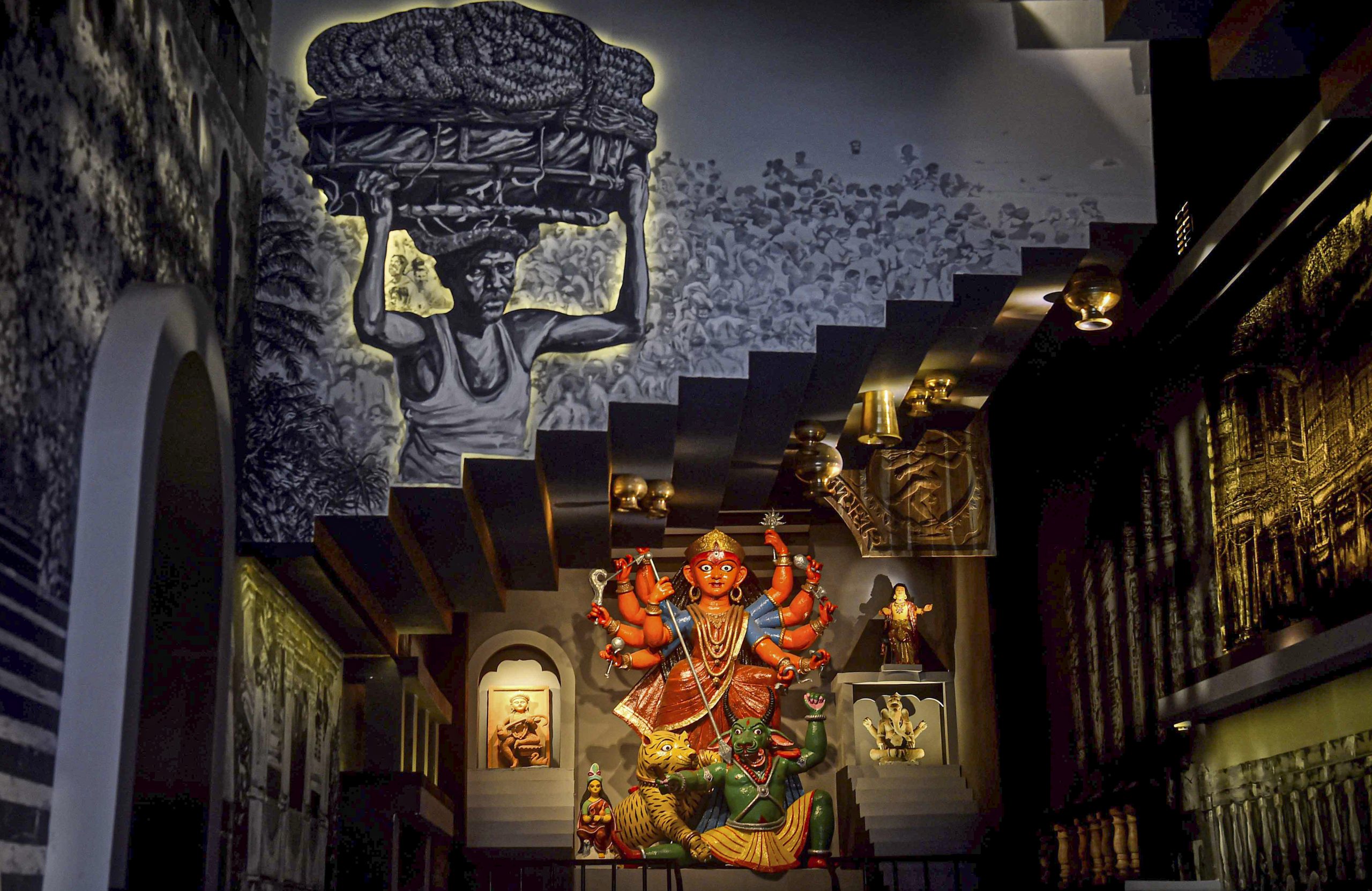
Both festivals honor the same fierce goddess and commemorate her legendary victory over the demon Mahishasura, yet Navratri and Durga Puja unfold as strikingly different cultural experiences across India. While one emphasizes personal devotion through fasting and dance, the other transforms entire cities into open-air art galleries celebrating community and abundance.
A Tale of Two Timelines
The fundamental distinction begins with duration and structure. Navratri, meaning “nine nights,” spans exactly that period with devotees worshipping nine distinct forms of Goddess Durga. This festival dominates Gujarat, Maharashtra, and northern India, where each night builds toward the climactic celebration of Dussehra.
Durga Puja, conversely, concentrates its grandeur into five intense days of celebration, though it forms part of a ten-day festival cycle. West Bengal, Assam, and Odisha become the epicenter of this cultural carnival that UNESCO recognized as Intangible Cultural Heritage in 2021. The festival symbolizes the goddess’s homecoming to her maternal home from Mount Kailash.
Fasting Versus Feasting: Contrasting Food Philosophies
Perhaps nowhere is the cultural divide more pronounced than in dietary practices. Navratri observers embrace strict fasting protocols, replacing regular salt with rock salt (sendha namak) and avoiding onions, garlic, meat, and eggs. Devotees consume only sattvic foods like fruits, buckwheat flour rotis, and dairy products, viewing this abstinence as spiritual purification.
Durga Puja flips this approach entirely. Bengali celebrations center around elaborate community feasts featuring fish curries, mutton dishes, and traditional sweets like rosogolla and sandesh. The festival embraces non-vegetarian cuisine as part of welcoming the goddess home, viewing abundance rather than deprivation as appropriate celebration. These community meals, called “bhog,” serve thousands daily and foster fellowship alongside faith.
Dance Versus Art: Different Forms of Devotion
Navratri nights explode with energetic Garba and Dandiya Raas performances, particularly in Gujarat and Maharashtra. Participants dressed in vibrant chaniya cholis and kediyus dance in concentric circles around the garbha deep, a clay pot containing a lit lamp symbolizing life and the womb. UNESCO recognized Garba as Intangible Cultural Heritage in 2023, acknowledging its role in breaking social barriers and uniting communities.
The dance represents a dramatization of Durga’s nine-day battle against Mahishasura, with Dandiya sticks symbolizing warriors’ weapons. These celebrations can draw thousands of participants who dance late into the night, transforming public spaces into massive outdoor dance floors. Durga Puja channels artistic expression differently through elaborate “pandals” temporary pavilions showcasing masterful clay sculptures and themed installations. These structures function as large-scale public art displays, exploring themes from mythology to contemporary social issues. The festival transforms Kolkata into the world’s largest public art gallery, attracting 25 million visitors annually with a budget of $9.52 billion.
Regional Identity and Cultural Expression
The festivals reflect distinct regional identities. Navratri embodies Gujarat’s folk traditions, with communities gathering for Garba nights that preserve ancient dance forms while accommodating modern musical influences. Maharashtra adds its own flavor through Kavadi processions and devotional bhajans.
Durga Puja represents Bengali cultural nationalism, with elaborate rituals including Mahalaya morning radio programs, classical music performances, and poetry recitals. The festival serves as both religious observance and cultural statement, reinforcing Bengali identity through art, literature, and cuisine.
Global Celebrations and Diaspora Traditions
International celebrations highlight these cultural differences. Cities like New Jersey and Leicester host massive Garba nights that feel like “Bollywood concerts mixed with cardio”, maintaining the festival’s democratic, participatory spirit. These events welcome people of all backgrounds, preserving Navratri’s inclusive tradition.
Bengali communities worldwide recreate Durga Puja through cultural associations that construct authentic pandals in cities like Toronto, Vancouver, and London. These celebrations emphasize artistic authenticity and cultural preservation, often importing artists from Bengal to create traditional clay sculptures.
Spiritual Philosophy: Discipline Versus Celebration
The underlying spiritual approaches differ fundamentally. Navratri emphasizes personal discipline, self-purification, and individual connection with the divine through fasting, prayer, and devotional dance. The festival encourages introspection and spiritual cleansing during the seasonal transition.
Durga Puja celebrates divine feminine power through community joy, artistic expression, and cultural abundance. Rather than personal austerity, it emphasizes collective celebration, viewing the goddess’s annual visit as cause for maximum hospitality and festivity.
Modern Evolution and Cultural Impact
Both festivals continue evolving while preserving core traditions. Navratri has embraced contemporary music and fashion while maintaining traditional dance forms and spiritual significance. Global diaspora communities adapt celebrations to local contexts while preserving essential elements like the garbha deep and traditional costumes.
Durga Puja increasingly functions as both religious festival and cultural exhibition, with pandals competing for artistic innovation while maintaining devotional authenticity. The UNESCO recognition has elevated international awareness, positioning the festival as a global cultural phenomenon rather than merely regional celebration.
These parallel celebrations demonstrate how a single mythological narrative, Durga’s victory over Mahishasura, can inspire radically different cultural expressions. While both festivals honor the triumph of good over evil, they reflect distinct regional philosophies about devotion, community, and celebration, creating two unique windows into India’s rich festival traditions.
By – Sonali