


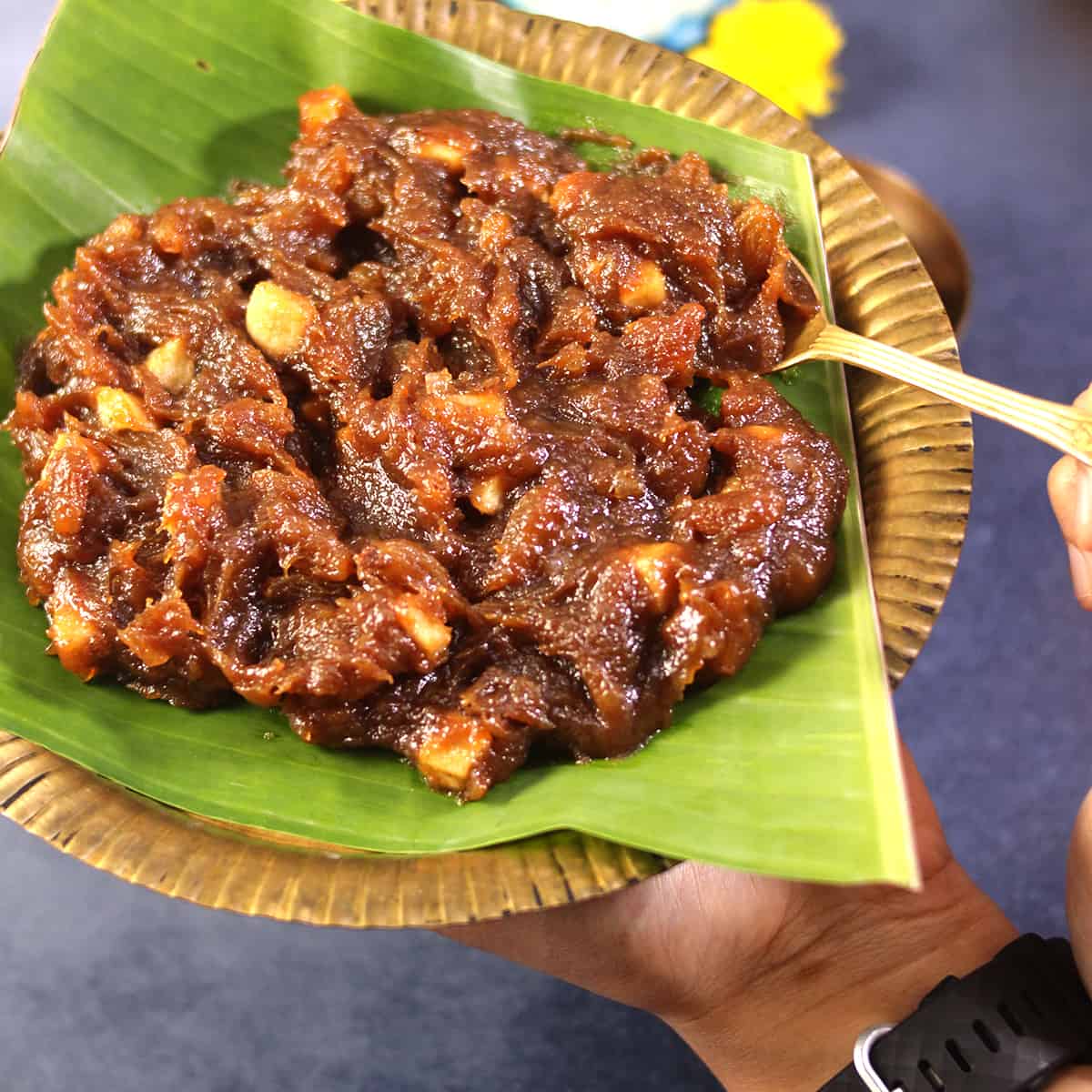
Palani Panchamirtham, the sacred temple prasadam of the renowned Arulmigu Dhandayuthapani Swamy Temple in Palani, Tamil Nadu, continues to captivate devotees far and wide. In 2019–20, it received India’s first-ever Geographical Indication (GI) tag for a temple prasadam, cementing its regional pride and revered status.
In This Article:
- What Makes Palani Panchamirtham Unique?
- Quality Assurance and Supply Chain
- Misinformation Spurs Legal Action
- Cultural Significance Amid Global Dialogue
- Recipe Economics and Local Community Impact
- Looking Ahead: Safeguarding Tradition
Smooth, rich, and steeped in tradition, the sweet concoction of the Palani Hills is more than a religious offering; it symbolizes centuries of heritage, rigorous quality standards, and authenticity unique to its hilltop origins.
What Makes Palani Panchamirtham Unique?
Crafted daily as part of the temple’s abhisheka rituals, a jar of Palani Panchamirtham typically combines five core ingredients like banana, ghee, honey, jaggery, and cardamom augmented with dates, raisins, and sugar candy.
A distinctive feature is the use of the Virupakshi (or Virupatchi) Hill Banana, cultivated in the Palani Hills: its low moisture content enhances shelf life and flavor, allowing thousands of jars to be packed and sold without refrigeration.
Approximately 20,000 to 30,000 jars are sold daily in normal times, and on major auspicious occasions like Thaipusam, this can scale to over 100,000 jars a day.
Quality Assurance and Supply Chain
The Tamil Nadu government’s HR&CE (Hindu Religious and Charitable Endowments) department strictly oversees the sourcing of ingredients. In 2024, amid a wave of controversies over temple-prasadam quality in South India, Tamil Nadu officials clarified that the ghee used in Palani Panchamirtham comes exclusively from Aavin, the state-run dairy cooperative, not from any private firm facing allegations elsewhere.
A 2024 fact-check initiative confirmed this, discrediting rumors linking the Palani prasadam supply chain to companies under scrutiny in other states.
Misinformation Spurs Legal Action
Despite official clarifications, rumors and speculation have persisted. In March 2024, Dindigul district police booked nine individuals, including members of Hindu organizations, for spreading false allegations that the temple was distributing spoiled or expired Panchamirtham.
An earlier food safety inspection, prompted by anonymous complaints, found no expired or unsafe products and even issued recommendations to improve packaging. To combat misinformation, the temple administration lodged complaints under various IPC (now BNS) sections after discovering that some fake claims were aimed at benefiting commercial sellers in Panchamirtham.
Cultural Significance Amid Global Dialogue
Palani Panchamirtham isn’t solely about taste—it carries deep cultural significance. Legends say that Lord Ganesha offered this divine mix to settle a dispute with Lord Murugan, embedding the prasadam within Tamil devotional narratives.
It also featured prominently at the 2024 Muthamizh Murugan International Conference, a global spiritual event in Palani attended by pilgrims and scholars from across the Tamil diaspora, celebrating Murugan devotion and temple culture.
Recipe Economics and Local Community Impact
The economic ripple effect of GI certification is palpable in villages around Palani. Cultivation of Virupakshi bananas, jaggery from Kangeyam, and honey production have all seen boosts due to demand. A representative recipe lists quantities such as six to eight bananas, jaggery, dates, raisins, sugar candy, ghee, honey, and cardamom, signaling support for local growers and vendors.
This symbiosis ensures both the preservation of traditional flavors and the economic upliftment of regional farmers and food artisans.
Looking Ahead: Safeguarding Tradition
Palani Panchamirtham stands as a symbol of Tamil Nadu’s rich spiritual heritage and culinary craftsmanship. From earning India’s first temple-prasadam GI tag to rallying quality-ensuring measures, it exemplifies how tradition, regulation, and community livelihood can intertwine. Amid ritual fervor, daily abhisheka, and large-scale distribution, its core identity, a parcel of divine mixture, remains untouched.
As devotees relish its sacred sweetness, Palani Panchamirtham continues to bridge the ancient and the modern, nurturing devotion and confidence in equal measure.
By – Sonali