


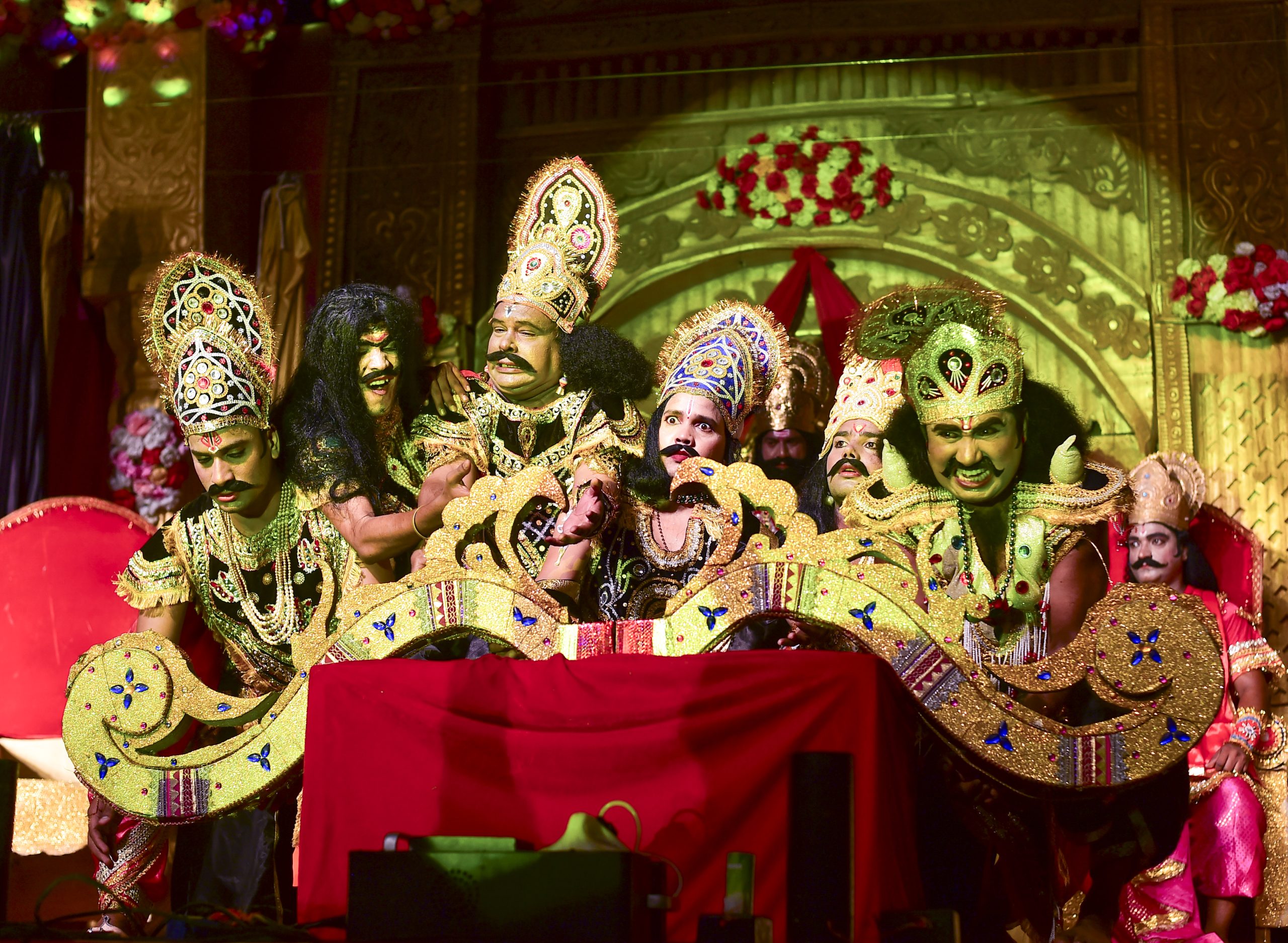
Ramlila, the traditional performance of the Ramayana epic, is a dynamic theatrical retelling of Lord Rama’s life, battles, and triumphs, involving actors, musicians, and community participants across northern India. Performed annually during Dussehra (September-October), it spans 10-31 days, featuring dialogues, songs, and enactments of key scenes like Rama’s exile and the defeat of Ravana. Rooted in Tulsidas’s 16th-century Ramcharitmanas, Ramlila unites villagers in open-air settings, from Ayodhya’s streets to Varanasi’s ghats, drawing thousands without regard to caste or age. Recognized by UNESCO as an Intangible Cultural Heritage in 2008, it preserves oral traditions and fosters social harmony in India’s diverse 780-language landscape.
Historical and Mythological Roots
Ramlila’s origins trace to the 16th century, when Tulsidas composed Ramcharitmanas to make the Sanskrit Ramayana accessible in Awadhi Hindi, enabling widespread performances. Tradition credits Megha Bhagat, Tulsidas’s disciple, with the first enactment in 1625, though some date it to 1200-1500 CE in Ramnagar, Varanasi. Mythologically, it draws from the Ramayana, recounting Rama’s exile, Sita’s abduction, and the war against Ravana, symbolizing dharma’s victory over adharma. Over centuries, it evolved from Vedic recitations to folk theatre, incorporating local dialects and customs, becoming a tool for moral education and community bonding.
Theatrical Elements: A Feast of Performance and Participation
Ramlila’s dramatic force lies in its immersive style: actors in elaborate costumes and masks portray gods, demons, and sages, with dialogues in regional Hindi dialects. Scenes unfold sequentially, from Rama’s birth to Lanka’s burning, accompanied by bhajans, dhol drums, and conch shells. Unlike scripted plays, it invites audience interaction—villagers sing along or join processions, blurring performer-spectator lines. Costumes, made from local fabrics, and effigies of Ravana add visual splendor, while night performances under panchlight lamps create an ethereal atmosphere. In Ramnagar, the 200-year-old tradition lasts a month, shifting venues daily across the Ganges, engaging the entire population.
Traditions and Regional Variations
Ramlila varies by region, reflecting cultural diversity. In Ayodhya, birthplace of Rama, it emphasizes devotion with grand chariots; Varanasi’s Ramnagar Ramlila, UNESCO-highlighted, features lavish sets and month-long enactments. Vrindavan adds Krishna elements, while Almora, Satna, and Madhubani incorporate local folk dances. Jhankis (tableaux pageants) in masked forms, like pantomime, dominate some areas, with no dialogues but narrated backdrops. Community preparation—mask-making, costume sewing—fosters unity, transcending caste and religion. Dussehra climaxes with Ravana’s effigy burning, symbolizing evil’s defeat.
The Living Heritage: Preservation Amid Modern Challenges
UNESCO’s 2008 recognition safeguards Ramlila as a “masterpiece of oral and intangible heritage,” promoting its role in cultural continuity. It brings communities together, teaching values like righteousness, but faces threats from TV soap operas reducing audiences. In 2025, digital adaptations—live streams and YouTube channels—preserve it for diaspora, while efforts in Uttar Pradesh and Bihar revive youth participation. Ramlila’s spontaneity—villagers volunteering as extras—ensures its vitality, embodying India’s theatrical soul.
A Timeless Epic Enacted
Ramlila isn’t mere theatre—it’s a living Ramayana, asking: Can ancient tales unite a modern nation? With its songs, dances, and dialogues, it proves yes, weaving tradition into India’s eternal cultural tapestry.
-By Mnaoj H