


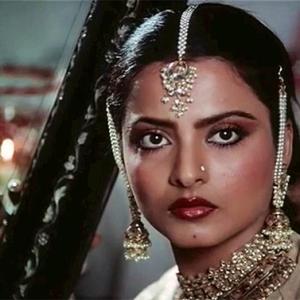
The iconic Bollywood film Umrao Jaan (1981), featuring the legendary actress Rekha in one of her most celebrated roles, is all set to be re-released in theatres across India on June 27, 2025. This much-awaited theatrical return invites audiences to experience once again the haunting poetry, rich cultural tapestry, and soulful music that have cemented Umrao Jaan as an evergreen masterpiece in Indian cinema.
In This Article:
Digitally remastered and restored with painstaking detail, this re-release promises to revive the magic of a film that redefined period dramas and gave Indian cinema one of its most iconic female protagonists.
Rekha’s Defining Role as Umrao Jaan
Umrao Jaan is not just a film; it is a cinematic poem. Rekha’s portrayal of Amiran, later known as Umrao Jaan Ada, transcended the screen and entered the cultural lexicon as the quintessential representation of grace, melancholy, and resilience.
The story follows Amiran, a young girl abducted and sold to a kotha in 19th-century Lucknow, where she transforms into a famed courtesan-poet. Rekha’s impeccable acting earned her the National Film Award for Best Actress, and her performance is often regarded as one of the finest in Bollywood history.
Her command over Urdu diction, emotive expressions, and subtle body language created a character whose pain and dignity resonated universally.
The Cinematic Craft Behind Umrao Jaan
The film was directed by Muzaffar Ali, whose vision brought to life the opulence and cultural milieu of Lucknow’s nawabi era. The screenplay carefully balanced poetic storytelling with social commentary, focusing on the nuanced lives of courtesans—women who were artists, intellectuals, and survivors.
- The screenplay was adapted from the 1905 Urdu novel Umrao Jaan Ada by Mirza Hadi Ruswa.
- The film’s art direction meticulously recreated the grandeur of 19th-century Lucknow.
- Costumes, designed with historical precision, became trendsetters in Indian bridal and formal wear.
The Music – A Timeless Symphony
One of the film’s most enduring legacies is its music, composed by the legendary Khayyam with lyrics by Shahryar. The soulful ghazals elevated the narrative and remain etched in the memories of millions:
- “In Aankhon Ki Masti” — a sensuous melody that beautifully captures Umrao’s charisma.
- “Dil Cheez Kya Hai” — a philosophical reflection on love and loss.
- “Yeh Kya Jagah Hai Doston” — depicting the bittersweet world of the kotha.
These songs, rendered in classical styles, continue to be performed and cherished, showcasing the perfect fusion of poetry and melody.
A Digitally Remastered Experience for 2025 Audiences
With advancements in digital restoration technology, Umrao Jaan has been given new life through enhanced visuals and audio quality. The remastering process involved:
- Cleaning and repairing original film negatives.
- Color correction to restore the lush and warm tones of the cinematography.
- Audio remastering to clarify vocals and instrumentals while retaining authenticity.
This careful restoration aims to attract young audiences who may not have had the chance to watch the film on the big screen before, while delighting longtime fans with sharper picture and sound.
Rekha’s Enduring Legacy Through Umrao Jaan
Rekha’s performance in Umrao Jaan is often cited as a career-defining milestone that elevated her to the pantheon of Bollywood legends. Over 40 years later, her portrayal continues to inspire:
- Acting students study her nuanced performance to understand subtle emotional depth.
- Fashion designers reference her iconic costumes and hairstyles.
- Poets and performers celebrate her command of Urdu and classical expression.
In interviews and retrospectives, Rekha herself has acknowledged the film as a turning point in her career, blending her personal artistry with a powerful cultural narrative.
The Cultural Impact and Continued Relevance
Umrao Jaan’s impact stretches beyond cinema into literature, music, and the arts. The film:
- Elevated the courtesan’s story from taboo to celebrated artistry.
- Sparked renewed interest in Urdu poetry and classical Indian music.
- Influenced subsequent Bollywood films, including the 2006 remake starring Aishwarya Rai.
Culturally, the film is seen as a bridge connecting India’s rich historical heritage with modern storytelling, encouraging audiences to appreciate classical art forms.
Why the Re-Release Matters Today
In a time when Bollywood is saturated with high-budget blockbusters and fast-paced content, the re-release of Umrao Jaan is a breath of fresh air—reminding viewers of the power of poetry, restraint, and timeless beauty.
Cinema chains and distributors believe the film’s return will:
- Reintroduce classic narratives to a younger generation.
- Offer a theatrical experience that streaming platforms can’t replicate.
- Celebrate the art of slow, meaningful cinema.
Film critics have noted the importance of preserving and showcasing such classics to maintain Bollywood’s artistic heritage.
Audience Expectations and Box Office Potential
The theatrical return of Umrao Jaan has generated excitement among cinephiles, historians, and cultural enthusiasts. Anticipated highlights include:
- Special screenings with discussions on Indian classical arts.
- Revival of ghazal performances in conjunction with the film’s music.
- Appreciation nights featuring Rekha’s other classic works.
With the buzz on social media and promotional campaigns underway, the film is expected to draw significant crowds in metropolitan cities and cultural hubs.
Final Thoughts – A Cinematic Gem Returns
The re-release of Umrao Jaan is not just a commercial event; it is a cultural celebration of a film that has stood the test of time. Rekha’s ethereal portrayal, the poetic narrative, and soul-stirring music continue to evoke emotions across generations.
For those who missed its original theatrical run and those who want to relive the magic, June 27, 2025, marks a rare chance to witness a masterpiece that encapsulates the very essence of Indian cinematic poetry.
By – Nikita