


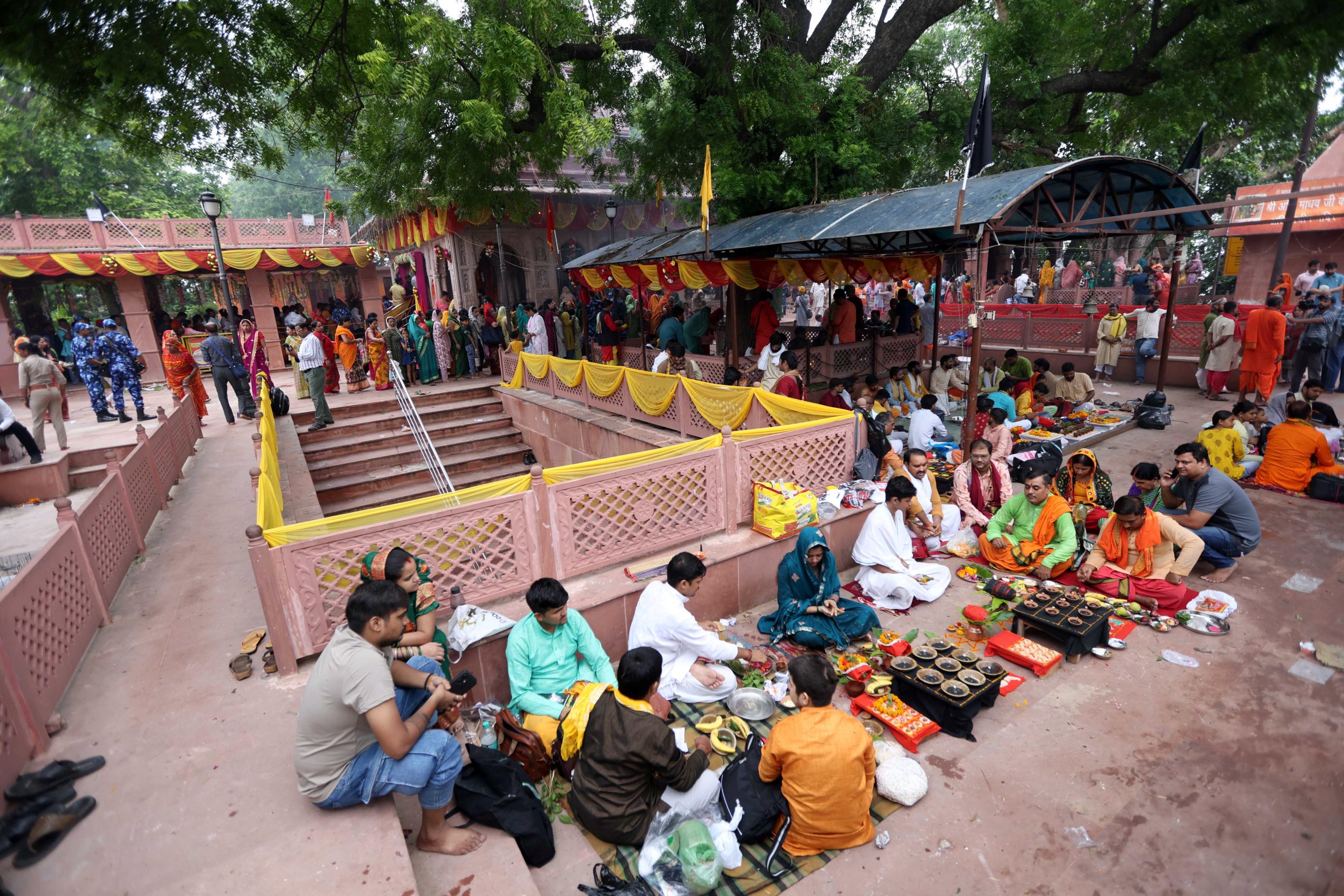
Every year, during the monsoon month of Shravana (July–August), Nag Panchami is celebrated across India with a unique blend of devotion, folklore, and mysticism. Rooted in ancient Hindu traditions, the festival honours the serpent deities: Nagas, who are revered as protectors, symbols of fertility, and guardians of the underworld. The celebration of Nag Panchami not only reflects mythological depth but also mirrors the evolving dynamics of ritual practices in contemporary society.
In This Article:
- Mythological Origins
- Symbolism of Serpents in Hinduism
- Traditional Rituals and Practices
- Changing Perspectives and Modern Reforms
- A Festival of Reverence and Reflection
Mythological Origins
The mythological roots of Nag Panchami are intertwined with several Hindu scriptures. One prominent legend is from the Mahabharata, where Janamejaya, the son of King Parikshit, conducts a grand serpent sacrifice (Sarpa Satra) to avenge his father’s death by snakebite. The ritual threatened to annihilate the entire serpent race until it was stopped by the sage Astika, whose eloquence and devotion pacified the king. The day Astika halted the sacrifice is believed to be the fifth day of Shravana (Panchami), now celebrated as Nag Panchami, a symbolic truce between humans and serpents.
Another popular tale revolves around Lord Krishna. As a child, Krishna is said to have defeated the venomous serpent Kaliya who had poisoned the Yamuna River. Krishna danced on Kaliya’s many heads, ultimately sparing his life upon the serpent’s promise to leave the area. This act not only established Krishna as the divine protector but also emphasized the theme of coexistence between humans and nature.
Symbolism of Serpents in Hinduism
In Hindu cosmology, serpents are powerful symbols. They are often associated with both creation and destruction. Lord Shiva wears the cobra Vasuki around his neck, signifying control over death and time. Vishnu rests on the thousand-hooded Shesha Naga, floating on the cosmic ocean. Serpents also represent Kundalini energy, the primal life force believed to reside at the base of the spine in yogic philosophy, often depicted as a coiled serpent.
This duality, serpents as both dangerous and divine—has rendered them objects of both fear and reverence. Nag Panchami, therefore, serves as an occasion to pacify these forces through rituals and offerings.
Traditional Rituals and Practices
On Nag Panchami, devotees worship live snakes or their symbolic images. Villages and towns in Maharashtra, Karnataka, Bengal, and parts of North India witness different customs. Women often draw snake figures using geru (red clay) and milk is offered to ant hills, snake holes, or idols in temples.
In regions like Maharashtra, live cobras are carried by snake charmers from village to village. Devotees offer milk, turmeric, and flowers, believing that worshipping the Nagas will protect their families from snakebites and bring prosperity. In Bengal and Assam, the deity Manasa Devi, the goddess of snakes, is venerated with folk songs and rituals extending over several days.
Importantly, in many rural beliefs, snakes are seen as agricultural protectors, keeping rodent populations in check, thus symbolizing ecological balance.
Changing Perspectives and Modern Reforms
In recent years, growing awareness about animal rights and wildlife conservation has influenced how Nag Panchami is observed. The traditional practice of capturing live snakes and feeding them milk, harmful to both the snakes and the environment, is being discouraged.
Animal welfare organizations and forest departments in states like Maharashtra and Karnataka have stepped in with awareness drives. Devotees are now encouraged to use idols or images instead of live snakes. Milk is symbolically offered and then donated to the needy. Urban temples are also adapting by conducting eco-friendly rituals and spiritual lectures on the symbolism behind serpent worship rather than literal practices.
A Festival of Reverence and Reflection
Nag Panchami, with its ancient roots and rich symbolism, is more than a religious ritual—it is a reflection of humanity’s evolving relationship with nature and the mystical. As myths continue to shape its observance, the festival now stands at the intersection of faith, ecology, and cultural sensitivity. Whether through symbolic offerings or ethical reforms, Nag Panchami reminds us of the enduring power of myth and the need for harmony with the natural world.
By – Sonali