


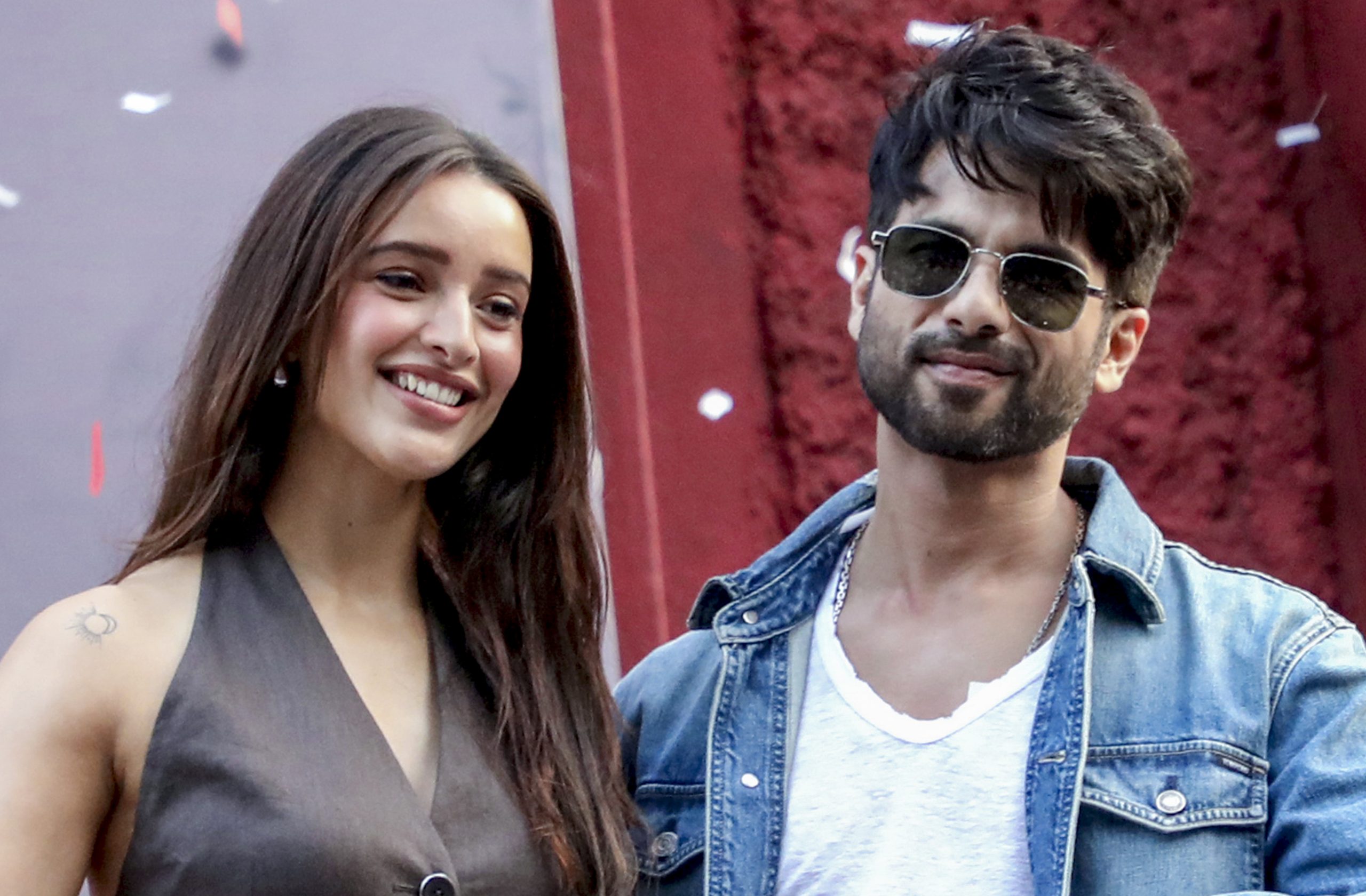
With Vishal Bhardwaj’s O’Romeo arriving as a Valentine-weekend release, Shahid Kapoor is back at the centre of a familiar debate: is he an under-celebrated star who never got his “due,” or a high-variance actor whose career reflects deliberate risk rather than a straight-line box-office strategy?
Shahid’s career has always created two parallel narratives. One celebrates a performer who can carry romance, rage, vulnerability, and menace with equal conviction. The other points to a filmography that swings between peak form and puzzling detours—fuel for the argument that choices, not talent, have capped his stardom.
Talent that’s hard to argue with
Even critics who don’t buy the “star” thesis rarely question the “actor” thesis. Shahid’s best performances—Kaminey, Haider, Udta Punjab—are built on control: internalised tension, physical precision, and the confidence to play characters that aren’t designed to be liked. That’s also why his commercial highs tend to come when his intensity is paired with a strong directorial vision—Padmaavat and Kabir Singh remain among his biggest box-office landmarks.
What strengthens the “talent” side of the debate is that Shahid often speaks like a craft-first actor, not a brand manager. In recent interviews, he’s criticised a “business-first” approach and the urge to over-control creativity—an argument that resonates with cinephiles even if it makes trade watchers uneasy.
Choices that keep splitting the room
And yet, the inconsistency critique exists for a reason. For every career-defining win, there’s a run of films that either underperform or arrive without a compelling enough hook to justify their scale. That’s why his filmography is often read like a volatility chart: spikes (Kabir Singh, Padmaavat) followed by softer phases where momentum doesn’t compound the way it does for peers with more predictable commercial lanes.
This uneven rhythm shapes public perception. Online discourse tends to be binary—either “criminally underrated” or “wasted potential”—because Shahid refuses to stay in one box long enough for a single narrative to settle.
The Bhardwaj factor: where his strengths become inevitable
Vishal Bhardwaj is not just a one-off collaborator; he’s one of the few directors who repeatedly returns to Shahid across very different worlds—(Kaminey, Haider, Rangoon, O’Romeo)—suggesting that when the writing and direction match his temperament, Shahid can look like a generational actor.
Public and industry divide: the star strategy question
There’s also a softer, more modern reason the debate persists: Shahid’s persona is not built on constant self-mythologising. He has described himself as “quietly ambitious” and has spoken about how overt self-promotion feels unnatural to him—an approach some read as grounded authenticity, and others read as a missed opportunity in an attention-driven era.
Shahid Kapoor polarises because his career doesn’t behave like a typical “star story.” He’s delivered undeniable peaks, but he’s also embraced unpredictability—sometimes by design, sometimes by miscalculation. The result is a rare modern Bollywood profile: an actor whose ability is widely accepted, but whose trajectory remains permanently debatable. And that may be the real point—Shahid’s legacy isn’t just about hits or flops; it’s about what happens when craft keeps colliding with the cost of choice.
By – Sonali