


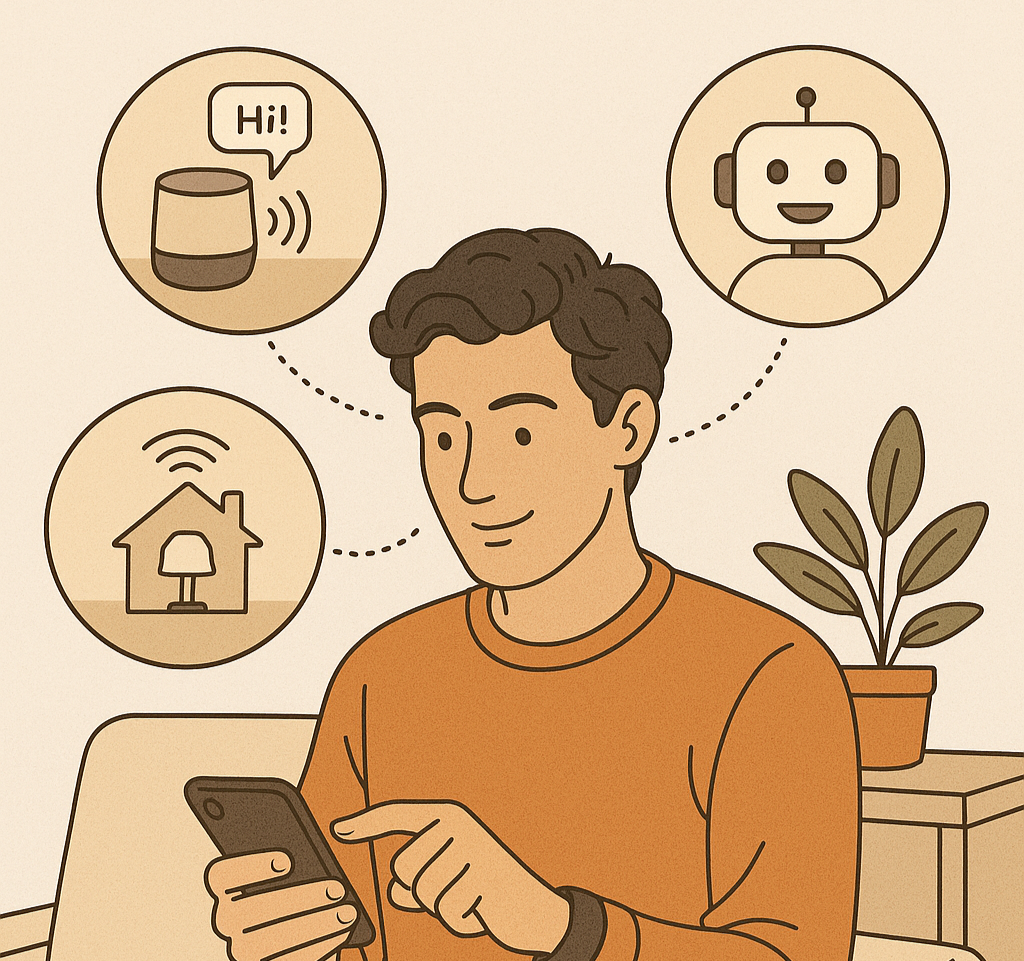
We ask Alexa to play our favourite song. Siri sets our morning alarms. ChatGPT helps us brainstorm ideas for work. But somewhere along the way, Artificial Intelligence (AI) has quietly crossed into far more personal territory.
Now, we’re asking it questions like:
“Should I break up with my partner?”
“Am I a good parent?”
“What should I do with my life?”
It’s no longer science fiction. AI is becoming a confidante. But should it be?
In This Article:
Let’s unpack this modern-day dilemma.
The Rise of AI as Your Life Companion
Today, AI doesn’t just answer questions—it listens, suggests, and sometimes even simulates empathy through trained patterns.
Apps like Replika, Pi AI, and even ChatGPT are being used by millions to navigate complex emotional and personal decisions:
- Relationship struggles
- Job stress
- Loneliness and anxiety
- Life goals and decision paralysis
And let’s be honest—it’s available 24/7, doesn’t judge, and usually has a decent memory of your last rant.
According to Arturo Martín de Nicolás in a LinkedIn article, AI can even serve as a kind of mental mirror, helping you reflect on your choices more objectively.
Why Some People Trust AI More Than Humans
It may sound wild, but there’s a growing crowd that trusts AI more than their closest friends.
Amit Nikhade, in his Medium post, says it clearly: “AI gives unbiased responses, doesn’t lie to impress, and offers logical, emotion-free advice.”
Some reasons why people lean on AI:
- It doesn’t have an agenda
- It’s not emotionally reactive
- It remembers patterns and can offer clear, structured suggestions
- It feels safer than oversharing with judgmental humans
Let’s be honest, sometimes we just want someone (or something) to listen—no interruptions, no lectures.
But Here’s Where It Gets Murky
While all this sounds great, experts in AI ethics urge serious caution.
The Science Exchange at Caltech warns that current AI tools do not truly understand human emotion or social context. They mimic responses based on data—but they don’t feel.
Key risks you should know:
- AI doesn’t know your lived experience—it’s guessing from patterns.
- Your data might not be secure, especially with unregulated third-party apps.
- AI can unknowingly reinforce harmful biases in sensitive matters.
- There’s no accountability if the advice goes wrong.
As a hard-hitting piece in The Conversation rightly says: “AI doesn’t care—it computes.”
So, Should You Trust It? Here’s the Middle Ground.
The good news? You don’t have to choose one or the other.
Here’s what the experts recommend:
Use AI for clarity and reflection, not for final decisions
Don’t share anything deeply personal unless you’re sure it’s encrypted
Treat AI like a notepad or mirror, not a mentor
If something feels too big—talk to a human
As American University’s research on Responsible AI concludes, “Trust in AI must be earned, not assumed.”
Final Thoughts: It’s Not About Trusting AI—It’s About Trusting Yourself
AI can guide. It can assist. Sometimes, it can even feel like it understands. But at the end of the day, it’s a tool—not a therapist, not a parent, not a soul.
So the next time you find yourself typing a life-altering question into a chatbot, pause for a moment. Use AI to clarify your thoughts—but let your heart, your values, and your loved wisdom lead the way.
Because the most trustworthy advice still comes from within—not from an algorithm.
By – Nikita