


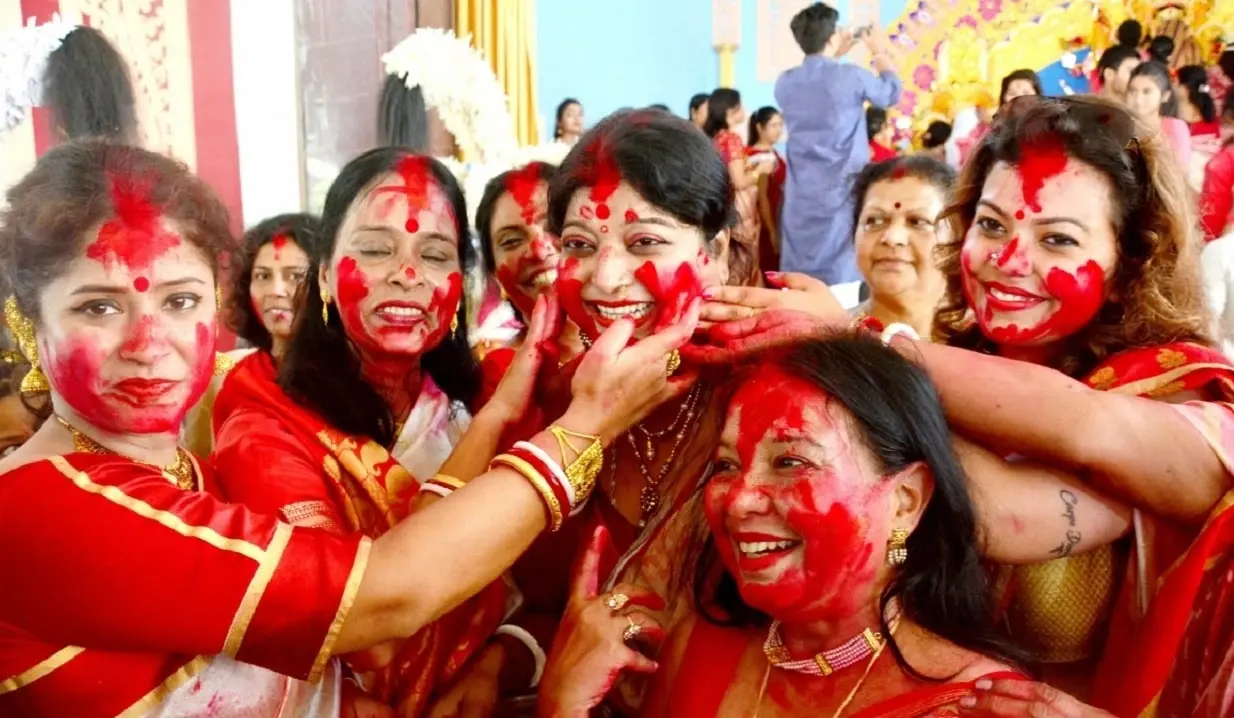
Sindoor Khela, a vibrant and symbolic ritual during Durga Puja, involves married women applying vermilion (sindoor) to each other and the Goddess Durga’s idol, marking the festival’s emotional farewell on Dashami (Vijayadashami). Celebrated primarily in West Bengal, Odisha, and Assam, it falls on October 2, 2025, as part of the five-day Durga Puja (September 28–October 2), drawing millions to pandals for a playful yet profound exchange of blessings. Rooted in Bengali traditions, the ritual, also known as Thakur Boron or Sindoor Utsav, symbolizes marital bliss, sisterhood, and feminine power, uniting communities in a colorful celebration of joy and devotion across India’s ₹101 billion cultural landscape.
Historical and Mythological Roots
Sindoor Khela traces back approximately 400 years, coinciding with the early days of Durga Puja’s formalization in Bengal. Mythologically, it honors Goddess Durga’s return to her marital home (Kailash) after her annual visit to Earth, where she slays Mahishasura, symbolizing good over evil. The vermilion application echoes Durga’s adornment as a married woman, invoking blessings for long marital life and family prosperity. Historical accounts link it to the 16th-century Bhakti movement, where rituals emphasized women’s agency and community bonds. In Bengal, it evolved as a counter to patriarchal norms, empowering women through shared festivities before the idol’s immersion (Visarjan).
Rituals: A Splash of Red and Sisterhood
On Dashami, married women, dressed in traditional red and white sarees (shakha-pola), gather at pandals after offering sindoor to Durga’s feet. They smear vermilion on each other’s foreheads, cheeks, and hair, accompanied by laughter, music, and chants of “Asche bochor abar hobe” (We shall meet again next year). The playful “khela” (game) involves gentle pursuits, symbolizing the transfer of good fortune and warding off evil. Beforehand, women feed Durga sweets and perform Thakur Boron (bidding farewell). The ritual ends with Visarjan processions, immersing idols in rivers, blending joy with bittersweet goodbye. In 2025, eco-friendly sindoor from natural ingredients gains traction, aligning with sustainable celebrations.
Regional Variations and Cultural Significance
Primarily a Bengali tradition, Sindoor Khela thrives in Kolkata’s 3,000+ pandals, where it draws 10 million visitors annually, fostering sisterhood amid dhak drums and dhunuchi dances. In Odisha, it’s integrated with silver filigree idols and Vedic chants; Assam’s Ahom-style pujas add tribal motifs. The ritual empowers women, symbolizing fertility and protection, countering societal pressures. In the diaspora—London to New York—virtual khelas maintain ties, with social media amplifying #SindoorKhela2025 among 467 million users. It promotes marital harmony, with studies linking such rituals to stronger community bonds in Bengal.
Modern Evolution and Challenges
Sindoor Khela evolves with inclusivity, welcoming unmarried women and LGBTQ+ participants in progressive pandals, reflecting 2025’s gender fluidity. However, commercialization risks diluting its essence, with synthetic sindoor posing health hazards. Eco-initiatives, like biodegradable idols, address environmental concerns from immersions. In India’s 780-language tapestry, it bridges tradition and modernity, asking: Can playful rituals heal societal divides? As women splash red in 2025, the answer shines through sisterhood’s vibrant hue.
-By Manoj h