


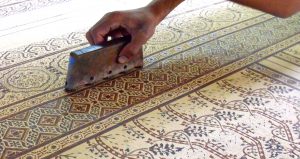
In the bustling lanes of Jamalpur and old Ahmedabad, a heritage textile craft once pushed to the margins is drawing renewed attention. Ahmedabad’s Sodagari Block Print—a traditional hand block-printing style rooted in the city’s historic mercantile culture—has gained stronger visibility recently, supported by formal Geographical Indication (GI) protection that helps safeguard authenticity and origin-linked identity.
A Craft Shaped by Trade and Travel
The name “Sodagari” is linked to the idea of sodagar—a merchant—reflecting Ahmedabad’s long-standing relationship with trade networks and textile commerce. The craft is widely associated with Jamalpur’s printing clusters and the larger textile ecosystem that historically powered Ahmedabad’s reputation as a major cloth and dyeing centre.
Craftsmanship: Hand-Carved Blocks, Layered Prints
Sodagari block printing is defined by hand-carved wooden blocks and manual, repeat-press printing, where each layer of colour and motif is aligned by hand. Practitioners often use durable woods (commonly teak) for blocks, with motifs spanning florals, geometrics, paisleys, and nature-inspired forms—many in earthy, heritage palettes that are often associated with natural dye traditions.
Typical production flow includes:
- Fabric preparation: washing and pre-treatment to improve dye absorption.
- Block carving: artisans engrave motifs into wooden blocks with high precision.
- Printing and layering: separate blocks are used for separate motifs/colours, producing depth through repetition and alignment.
- Fixing and finishing: washing, drying, and finishing steps to improve colour stability and wear.
Because the process is manual, small variations are natural, making each piece subtly distinctive.
GI Recognition: What It Changes
Ahmedabad Sodagari Block Print is listed as a GI-registered handicraft under India’s GI framework, which helps protect the craft name and origin-linked identity from misuse and imitation. For artisans and producer groups, GI status can strengthen branding, improve market signalling around authenticity, and support premium positioning in national and export-facing craft markets—especially when paired with authorized-user onboarding and consistent quality benchmarks.
Artisans and Adaptation
Sustaining any heritage craft requires both preservation and adaptation—keeping the core technique intact while widening product relevance. Several artisan families and craft practitioners in Ahmedabad have worked to sustain Sodagari printing across generations while also experimenting with contemporary applications and consumer-friendly formats. (For instance, the Banglawala family is frequently referenced in public-facing craft initiatives and outreach around the form.)
Contemporary Relevance and the Road Ahead
Today, Sodagari prints are seen across kurtis, dupattas, stoles, scarves, shawls and turbans, with increasing interest from design students and heritage-fashion buyers seeking slow, craft-led textiles. The next phase of growth will depend on three practical levers:
- Authorised-user expansion and traceability (so GI protection translates into real market advantage).
- Design + product innovation without diluting core identity.
- Market access via exhibitions, tourism circuits, and e-commerce storytelling that credits artisan labour and provenance.
If momentum continues, Sodagari Block Print can remain what it has always been at its best: a living craft tradition—practical, exportable, and unmistakably Ahmedabad.
By – Sonali