


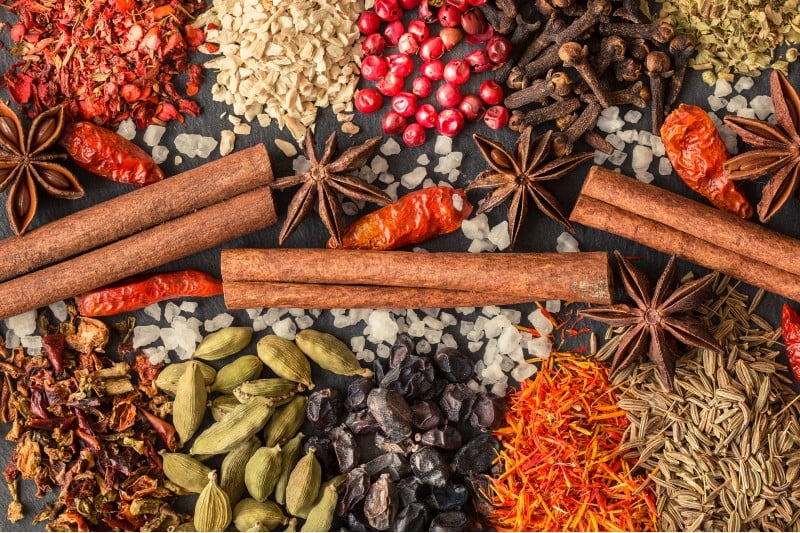
In Indian kitchens and ceremonies, spices are rarely “just flavour.” They sit at the crossroads of food, faith, and folk medicine—carried through generations in masala dabbas, festive prasad, and everyday tempering (tadka).
Turmeric: The Golden Marker of Auspiciousness
Turmeric (haldi/haridra) is among India’s most symbolically loaded spices. Archaeological research has discussed turmeric evidence from the Indus-civilisation horizon—most notably at Farmana (2600–2200 BCE)—pointing to its deep antiquity in the region’s foodways.
In ritual life, turmeric is widely described as associated with purity, protection, and auspicious beginnings, which is why haldi remains central to wedding ceremonies and festival practices.
On the health side, modern studies link curcumin with anti-inflammatory/antioxidant effects, though outcomes vary by condition and dosage.
Jeera: The Everyday Digestive Anchor
Cumin (jeera) is the quiet backbone of countless Indian dishes—especially in tadka—building aroma at the very first step. Its long-standing association with digestion reflects an Indian culinary instinct: taste and comfort must travel together.
Hing: The Pungent Protector of Sattvic Kitchens
Asafoetida (hing) is famously transformative—sharp when raw, mellow and savoury once bloomed in hot oil. It’s a staple in many vegetarian traditions, especially where onion and garlic are avoided, and it’s also documented for carminative/digestive use in traditional practice.
Black Pepper: Heat, Prestige, and the Old Spice Routes
Black pepper (kali mirch/maricha) has been prized for centuries—so much so that it became a key driver of long-distance trade between India and the Mediterranean world.
In Ayurveda-focused literature, maricha is repeatedly described in terms of deepana/pachana (digestive/appetite-stimulating roles), and modern research explores its bioactive components like piperine.
Cardamom: The “Queen of Spices” on Festive Tables
Cardamom (elaichi), often popularly called the “queen of spices,” is tied to celebration—chai, mithai, kheer, and prasad—where fragrance signals festivity as much as taste.
Cloves: Warmth in Food, Familiarity in Healing
Cloves (laung) bring warmth to biryanis and garam masala—and they also sit in the Indian home-remedy cabinet. Clove oil’s role in toothache relief is widely documented, which is why laung remains a common after-meal chew in many homes.
Beyond the Kitchen
Across India, spices continue to function as cultural shorthand—for hospitality, ritual purity, seasonal wisdom, and regional identity. They are history you can smell: on the plate, in the prayer space, and in the everyday act of tempering oil.
By – Sonali