


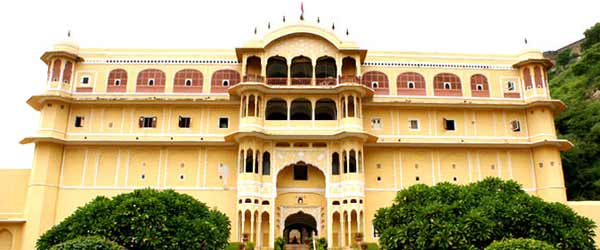
Rajasthan’s architectural heritage tells stories in sandstone, intricate narratives carved into facades that have stood for centuries. At the heart of this visual symphony are two foundational elements: the chhajja and the haveli. These aren’t merely structural components but rather expressions of a culture that married function with artistry, turning desert homes into monuments of merchant pride and royal grandeur.
The Chhajja: Where Function Meets Artistry
The chhajja is an overhanging eave or roof covering that stands as a hallmark of Indian architecture, characterized by its distinctive large support brackets adorned with artistic designs. In the harsh climate of Rajasthan, this simple-sounding element becomes a masterstroke of climate-responsive design.
Functionally, the chhajja serves multiple purposes that make desert living more bearable. It shields windows and walls from the relentless solar radiation, prevents rainwater from seeping into the structure, and creates semi-outdoor shaded spaces that naturally cool the building. Beyond protection, the chhajja transforms the facade, breaking the monotony of flat surfaces with sculptural elegance. Each chhajja in Rajasthan’s heritage structures tells of artisans who understood that practical solutions could also be beautiful.
In Jaisalmer’s renowned havelis, the chhajja is not a standalone feature but part of an intricate architectural vocabulary. It sits atop chabna (horizontal beams) supported by brackets called margol, creating a layered aesthetic that speaks to the builder’s ambition and the craftsman’s skill. The supporting structure itself becomes decorated with molded details called galar and projecting stone courses that frame each chhajja like a carefully composed artwork.
The Haveli: A Merchant’s Testament to Prosperity
A haveli is a traditional mansion or townhouse that represents the epitome of domestic grandeur in Indian architecture. The word itself derives from the Arabic “hawali,” meaning private or partitioned space, popularized during the Mughal era but reaching its architectural zenith in Rajasthan during the 18th and 19th centuries.
Havelis emerged as symbols of wealth and social status, particularly among merchant communities. When trade routes thrived and fortunes multiplied, wealthy families commissioned these palatial residences as tangible proof of their success. The construction of these sprawling complexes often spanned decades, with each generation of a family adding their residence, creating interconnected compounds that rivaled small fortified towns.
The architectural design of a haveli is characterized by detailed carvings, spacious courtyards, and an amalgamation of various regional styles. Unlike European mansions that display wealth outward through grand facades to the street, havelis famously turned inward. The real marvel lay within private courtyards called “chowk,” which formed the beating heart of each residence, allowing natural light and ventilation while maintaining privacy. However, the outer facade transformed into an elaborate piece that showcased the craftsperson’s artistry.
Rajasthan’s Distinctive Haveli Character
Rajasthani havelis stand apart with their masterful use of yellow sandstone, intricate jharokhas (overhanging balconies), elaborate carved woodwork, and colorful painted murals. The most celebrated example, Patwon Ki Haveli in Jaisalmer, exemplifies this magnificence. Built beginning in 1805 by wealthy merchant Guman Chand Patwa and his sons over 55 years, this complex comprises five interconnected havelis. The structure demonstrates the signature Jaisalmer style using local yellow sandstone that imparts a distinctive golden glow, earning the city its nickname as the “Golden City.”
The artistry visible in Patwon Ki Haveli reveals scenes of everyday life, flora, and fauna etched into sandstone, depicting horses, cattle, and mythological creatures that offer glimpses into merchant household life. Massive arched gateways serve as grand entrances decorated with floral and geometric patterns, while the jharokhas provided ventilation in the desert climate while allowing occupants to observe the bustling streets.
Climate-Responsive Brilliance
The architecture of Rajasthan’s havelis wasn’t merely decorative; it was an intelligent response to environmental extremes. The thick sandstone walls provided thermal insulation, while strategic window placements with intricate jali screens (latticed screens) allowed air circulation while diffusing harsh sunlight. The chhajjas contributed significantly to this climate control strategy, extending shade throughout the day as the sun moved across the sky.
Central courtyards captured cooler evening breezes and allowed hot air to escape, creating natural ventilation that reduced the need for active cooling. Even the orientation of buildings was carefully considered, with longer walls facing north and south to minimize direct solar exposure.
Heritage Under Preservation
Today, many of Rajasthan’s heritage havelis have been restored and converted into museums and heritage hotels, allowing visitors to experience the lifestyle of merchant families and understand the cultural values embedded in their architecture. The Archaeological Survey of India has overseen restoration efforts, ensuring these structures survive for future generations.
The chhajja and haveli represent more than architectural elements; they embody Rajasthan’s history, the aspirations of merchant families, and the ingenuity of craftspeople who transformed functional needs into timeless beauty. In these sandstone structures, every carving, every overhang, and every courtyard speaks of a civilization that understood that great architecture must serve both the body and the soul.
By – Sonali