


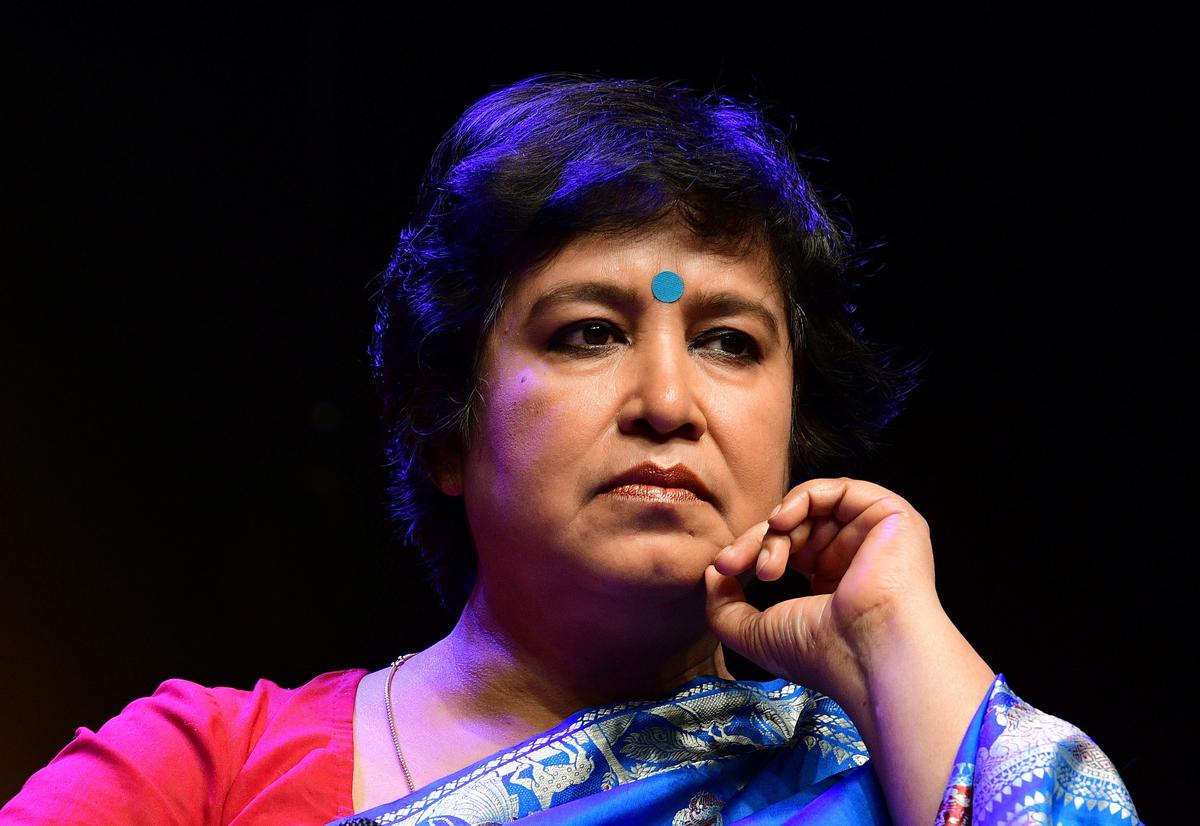
Exiled writer and human rights activist Taslima Nasreen has weighed in on the ongoing controversy surrounding acclaimed composer A.R. Rahman’s recent remarks on alleged communal bias in the Hindi film industry, describing Rahman as “too rich and famous” to face discrimination and highlighting the struggles of the marginalised.
The row erupted after Rahman, in an interview with the BBC Asian Network, suggested that a shift in “power dynamics” within Bollywood over the past eight years may have reduced opportunities for him and that this could be due to a “communal thing”. While he did not accuse any group directly, the remark triggered widespread debate and online reactions from celebrities, critics and social commentators.
Nasreen Highlights Inequality of Experience
In a detailed post on her X (formerly Twitter) handle on Sunday, Nasreen challenged Rahman’s implication that he experienced significant discrimination due to his religion. She argued that Rahman who is widely regarded as one of India’s most successful and highly-paid musicians is insulated by his stature and fame.
“Shah Rukh Khan is still the Badshah of Bollywood; Salman Khan, Aamir Khan, Javed Akhtar, Shabana Azmi all of them are superstars. The famous and the rich never face difficulties anywhere. No matter what religion they belong to…” Nasreen wrote, emphasising that eminent personalities rarely encounter the kind of hardships faced by common people.
She further contrasted Rahman’s experience with her own struggles as an atheist with a Muslim-sounding name. Nasreen recounted facing difficulties in renting accommodation, receiving medical care, and facing physical assaults which she attributed to prejudice rather than fame or professional success.
“Difficulties happen to poor people like me,” she said, insisting that Rahman’s acclaim spares him from the kinds of discrimination she has endured.
Rahman Seeks to De-escalate
Facing mounting reactions across social media and entertainment circles, Rahman released a video message reaffirming his love for India and clarifying his intentions. “Music has always been my way of connecting, celebrating and honouring a culture. … I understand that intentions can sometimes be misunderstood,” he said, adding that he “never wished to cause pain.”
The composer also expressed gratitude for the creative freedom he believes India offers, noting that the country “values diverse voices.”
Broader Reactions in Film and Music Circles
Nasreen is not the only prominent voice to comment. Poets, musicians, and industry veterans including Javed Akhtar, Leslie Lewis and Hariharan have also responded to Rahman’s remarks, some questioning the implications of his language and others defending his right to personal experience.
Additionally, Rahman’s daughters reposted an appeal titled “Disagree, Don’t Disgrace” urging critics to respect Rahman’s freedom to share his perspective, even amid disagreement.
A Debate Beyond Bollywood
The incident has reignited discussions on representation, privilege, and communal identity in India’s entertainment industry. While Nasreen’s comments underscore socio-economic disparities, supporters of Rahman argue that personal experiences of bias, even from public figures, merit respectful engagement rather than dismissal.
As the conversation continues, the exchange highlights the complexities of navigating identity, success, and perception in India’s cultural landscape far beyond cinema alone.
By – Sonali