


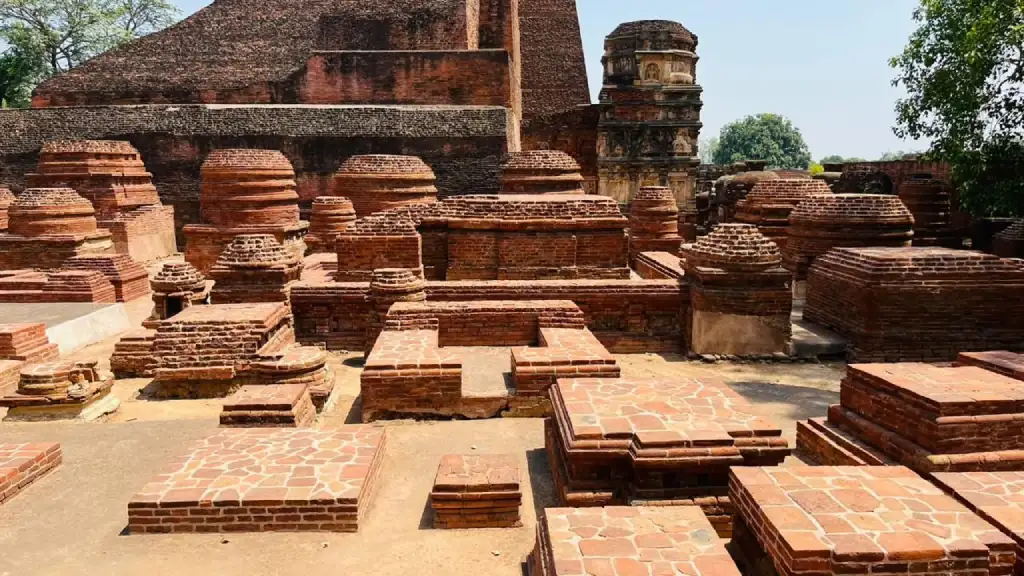
In 2025, India’s ancient temples are being rediscovered as more than spiritual centers—they were thriving universities fostering intellectual, cultural, and scientific exchange centuries before modern academia. From Tamil Nadu’s Chidambaram to Kashmir’s Sharada Peeth, these temple-universities, active from 600 BCE to the 12th century CE, nurtured scholars like Adi Shankara and Chanakya. Invasions, notably by Bakhtiyar Khilji, razed institutions like Nalanda and Vikramshila. By blending spiritual and secular learning, temples shaped India’s intellectual legacy, a narrative now revived through archaeological efforts and X campaigns like #AncientIndia.
In This Article:
- A Nexus of Knowledge and Spirituality
- Nalanda and Vikramshila: Global Beacons
- The Decline: A Tragic Loss
- A Lasting Legacy and Modern Revival
- Reclaiming the Narrative
A Nexus of Knowledge and Spirituality
Temples like Kanthalloor Shala in Kerala, dubbed the “Nalanda of the South,” offered diverse curricula—Vedas, astrology, medicine, music, and even atheism—drawing students from Sri Lanka and beyond, per Vediconcepts.org. Sharada Peeth in Kashmir, a Shakti Peeth, developed the Sharada script and hosted luminaries like Kalhana, author of Rajtarangini. Chidambaram and Brihadeeswara temples in Tamil Nadu were hubs for scriptures, logic, and astronomy, funding schools and libraries.
Nalanda and Vikramshila: Global Beacons
Nalanda, founded in 427 CE in Bihar, hosted 10,000 students and 3,000 teachers, offering courses in medicine, mathematics, and Buddhist philosophy. Chinese scholar Xuanzang documented its nine-story library, which burned for months during Khilji’s 1193 CE invasion. Vikramshila, established by King Dharmapala in the 8th century, rivaled Nalanda with 144 scholars teaching logic, tantra, and philosophy. Its central stupa and terracotta panels reflected a blend of spiritual and intellectual pursuits, influencing Tibetan Buddhism through scholars like Atisha.
The Decline: A Tragic Loss
Foreign invasions, particularly by Bakhtiyar Khilji in the 12th–13th centuries, devastated these temple-universities. Nalanda, Vikramshila, and Telhara were burned, with Khilji’s forces killing scholars and destroying manuscripts. A 1.5-foot ash layer at Telhara attests to the destruction’s scale. Political unrest and resource depletion further eroded these centers, though some, like Sharada Peeth, lingered until cultural disruptions ended their vibrancy. The shift to madrasas under Mughal rule marginalized these institutions.
A Lasting Legacy and Modern Revival
These temple-universities shaped global knowledge. Aryabhata’s work on zero at Nalanda influenced mathematics, while Pushpagiri’s Buddhist teachings reached Southeast Asia. The 2014 revival of Nalanda University near its ancient site aims to restore this spirit, welcoming global students, per CheggIndia.com (2025). Digital preservation of texts and archaeological efforts at sites like Pushpagiri in Odisha keep their legacy alive.
Reclaiming the Narrative
India’s temple-universities were not mere religious sites but global seats of learning, blending spirituality with scholarship. Their destruction was a cultural tragedy, yet their influence persists in modern education and India’s intellectual identity.
-By Manoj H