


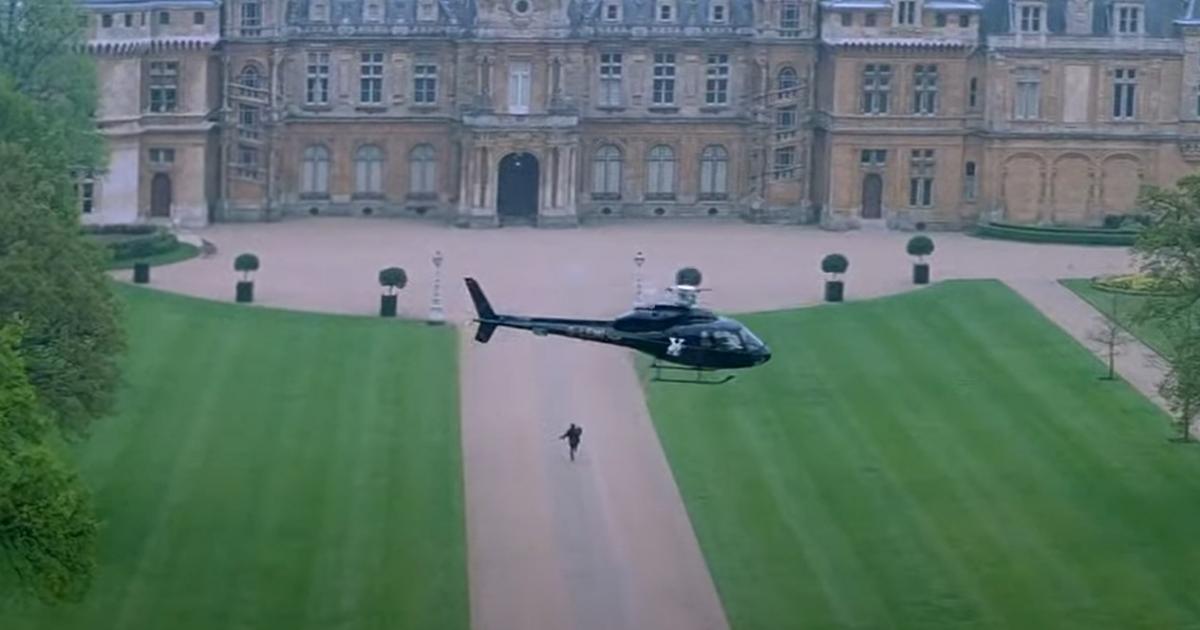
When Amitabh Bachchan’s character walked through the grand halls of the Raichand mansion in Kabhi Khushi Kabhie Gham, audiences marveled at the opulent setting. Little did they know they were witnessing a piece of British aristocracy worth millions, not just in cinematic value, but cold, hard cash.
The world of cinema creates mesmerizing illusions, but behind every prop, set, and location lies a complex web of economics that would make even seasoned investors pause. From Dorothy’s ruby slippers fetching $28 million at auction to the hidden costs of transforming 19th-century manors into Bollywood palaces, the financial machinery of movie magic reveals itself to be far more expensive and lucrative than most realize.
The K3G Mansion: When British Aristocracy Meets Bollywood
The iconic Raichand family residence that supposedly sat “close to Delhi’s Chandni Chowk” was actually Waddesdon Manor in Buckinghamshire, England, a testament to both cinematic deception and financial reality. Built between 1874 and 1889 for Baron Ferdinand de Rothschild, this architectural marvel originally cost approximately £1.5 million to construct, equivalent to tens of millions in today’s currency.
The manor, now owned by the National Trust and managed by the Rothschild Foundation, represents one of the world’s most valuable private collections, with the Rothschild family’s combined wealth estimated at approximately $300 billion. When Karan Johar selected this location for his 2001 blockbuster, produced on an unprecedented budget of ₹300-400 million ($6.36-8.48 million), he wasn’t just choosing a pretty backdrop, he was borrowing a piece of living history.
The choice proved prescient. Waddesdon Manor has since hosted productions including The Crown, Bridgerton, and Downton Abbey, with K3G remaining the only Indian film ever shot on the premises. Today, the manor attracts over 463,000 visitors annually, generating substantial revenue through its filming location services.
The Economics of Movie Props: From Warehouse to Auction House
The journey of movie props from film sets to collectors’ items reveals a fascinating economic ecosystem. When production wraps, props typically end up in studio warehouses, private collections, or auction houses, each path determining vastly different financial outcomes. The turning point came in 1970 when MGM’s legendary auction demonstrated the untapped value in movie memorabilia, transforming what studios once considered “junk taking up precious backlot real estate” into a multi-billion dollar market.
Recent auction results showcase this transformation dramatically. Dorothy’s ruby slippers from The Wizard of Oz shattered records by selling for $28 million in December 2024, while other iconic items like James Bond’s Aston Martin DB5 fetched $4.6 million and Marilyn Monroe’s white dress from The Seven Year Itch commanded $4.6 million. The prop rental market itself has grown into a $8.2 billion industry, with projections showing continued growth at a 6.2% compound annual growth rate through 2030.
The High-Stakes World of Set Construction
Behind every memorable movie moment lies substantial financial investment in set construction. Modern productions routinely spend millions creating authentic environments, with some reaching extraordinary heights. SS Rajamouli’s upcoming film featuring Mahesh Babu has reportedly constructed a recreation of Varanasi costing ₹50 crore ($6 million), the most expensive single set in Indian cinema history.
James Cameron’s Titanic set the benchmark for expensive movie sets, with the 40-acre facility containing massive water tanks and a 90% replica of the ship’s starboard side costing $30 million. Even smaller productions face significant costs, with basic film sets ranging from under $10,000 for simple constructions to several million for elaborate builds.
Location rental adds another layer of expense. Property owners can charge between $3,000 to $15,000 per day for filming locations, with rates typically calculated based on monthly mortgage payments. Professional filming warehouses command $1,000 to $5,000 for 24-hour rentals, while premium locations demand significantly higher fees.
The Investment Potential of Movie Memorabilia
The collectibles market for movie props has demonstrated remarkable resilience and growth potential. Research indicates that props with complete documentation and clear chain of custody can command prices between $118,750 and $200,000, while similar items lacking proper authentication may lose substantial value. The global prop rental market, valued at approximately $3 billion in 2023, is projected to grow at a 7% CAGR through 2030.
Legendary franchises particularly drive high valuations. Star Wars memorabilia continues breaking records, with Luke Skywalker’s lightsaber selling for $450,000 and an X-wing Fighter model fetching $2.3 million. The authentication process has become crucial, with items requiring proper certificates of authenticity and a documented chain of custody to achieve premium prices.
The Real Magic Behind the Movies
As audiences lose themselves in cinematic worlds, they’re witnessing economic phenomena worth billions. From centuries-old British manors moonlighting as Indian mansions to ruby slippers commanding prices higher than luxury homes, the hidden economics of movie props reveals an industry where fantasy and finance intertwine in the most unexpected ways.
The next time you watch K3G and marvel at the Raichand family’s opulent lifestyle, remember: you’re not just seeing movie magic—you’re witnessing a ₹1.5 million slice of British aristocracy, where every ornate detail represents both artistic vision and cold, calculated investment. In Hollywood and Bollywood alike, the most expensive illusions often hide the most valuable truths.
By – Sonali