


As the sun dips below the horizon and millions of devotees wade into sacred rivers across India, something far more than religious fervor ignites, a multi-billion rupee economic engine springs to life. Chhath Puja, India’s ancient festival of sun worship, has quietly transformed into one of the country’s most powerful seasonal economic drivers, proving that faith and commerce can flow together like the water in the very rivers where devotees make their offerings.
A Festival Reborn as an Economic Powerhouse
This year, Chhath Puja is set to generate an unprecedented ₹38,000 crore in trade across India, according to the Confederation of All India Traders (CAIT), a striking 22.58% jump from last year’s ₹31,000 crore. With approximately 150 million devotees participating in the four-day festival, the scale of this economic phenomenon is staggering. What began as a localized celebration in Bihar and Jharkhand has evolved into a pan-Indian event, drawing billions into local economies from Delhi to Odisha and from West Bengal to Maharashtra.
Delhi alone is expected to witness ₹6,000 crore in Chhath-related trade, with 1,500 ghats meticulously prepared for the faithful. The sheer magnitude of this festive spending has made Chhath impossible to ignore for economists, policymakers, and business strategists alike.
Artisans and Bamboo Baskets: Sustaining Livelihoods Through Faith
Behind every Chhath celebration lies a network of craftspeople whose entire annual income depends on these four sacred days. Bamboo basket weavers, the artisans crafting the iconic dalias, kulos, and soops work feverishly to meet demand, often earning 40% to 50% profit margins on each handmade basket. For many, Chhath represents the difference between economic security and financial hardship.
Pramila Mahali, a basket weaver from Balurghat, encapsulates this reality: “Chhath is crucial for us, as it brings most of our annual income. People buy bamboo baskets, Dala and Kulo only for this festival. The rest of the year, sales are minimal.” With thick bamboo costing around ₹150 and thin varieties ₹50-60, these artisans produce 4-5 baskets daily, yet their earnings remain confined to these fleeting weeks. According to reports, approximately 500 artisans have crafted over 5,000 baskets just to meet Kishan Ganj’s demand alone.
Agricultural Boom: Farmers Harvest Prosperity
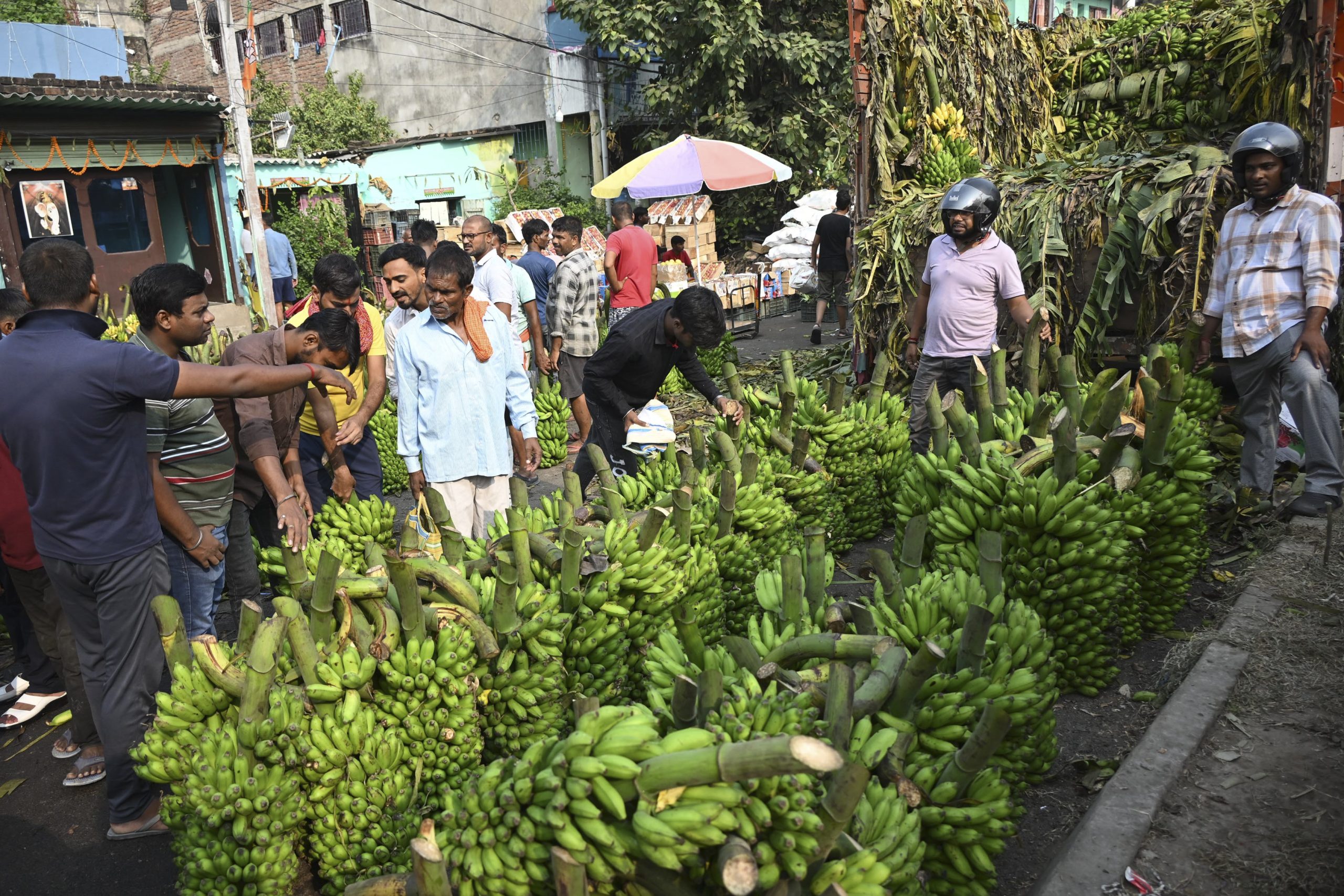
The festival’s economic ripple extends deep into rural agricultural markets. Prices for festival essentials like sugarcane, fruits, and vegetables soar dramatically as demand peaks. Bottle gourds, essential for Nahay-Khay rituals have jumped from ₹30-40 to ₹60-80 per piece, while bananas fetch ₹60-80 per dozen. These aren’t mere price increases; they represent additional revenue for farmers who, for much of the year, struggle with market uncertainties.
Sugarcane prices specifically benefit from festival demand, with government support further encouraging production. The Haryana government, recognizing this opportunity, recently raised sugarcane rates to ₹415 per quintal, recognizing that Chhath season represents a critical earning opportunity for farming communities.
Migration’s Economic Heartbeat: Remittances Return Home
Perhaps the most profound economic dimension lies in reverse migration during Chhath. Bihar’s massive diaspora, workers scattered across Delhi, Mumbai, Bangalore, and beyond, returns home with accumulated savings. This influx transforms rural economies overnight. Over 2 million migrant workers have already returned to Bihar, bringing not just their devotion but also their earnings, which they spend locally on festival preparations, new clothes, and market goods.
This temporary economic surge rejuvenates transportation sectors, retail markets, and hospitality industries. Train ticket prices rise, bus services multiply, and local shopkeepers witness unprecedented footfall, all cascading into employment and income generation.
The Vocal for Local Manifesto
In aligning with Prime Minister Modi’s “Vocal for Local” initiative, Chhath has become a festival of indigenous production. Markets overflow with handmade goods, traditional textiles, and artisanal products, explicitly rejecting imported alternatives. This conscious consumption pattern has elevated Chhath from a religious observance to an economic statement celebrating Swadeshi values and supporting India’s cottage industries.
Where Spirituality Meets Sustainability
As the festival’s last offerings dissolve into river waters, the economic impact persists long after the rituals conclude. Chhath Puja stands as a remarkable testament to how ancient traditions can fuel modern economies, sustaining livelihoods, supporting artisans, uplifting farmers, and reconnecting millions with both faith and economic opportunity. In honoring the sun’s eternal cycle, India has created an economic cycle that, like the sun itself, promises renewal season after season.
By – Sonali