


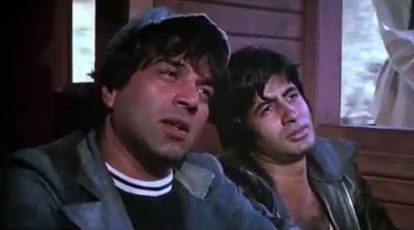
From the dusty landscapes of Ramgarh, where two outlaws forged an unbreakable bond, to the pristine beaches of Spain, where three friends rediscovered themselves, Bollywood’s portrayal of male friendship has undergone a remarkable transformation. This evolution reflects not just changing storytelling techniques but also the shifting social dynamics, urban sensibilities, and generational values of Indian society. The journey from the gritty, sacrificial friendships of the 1970s to the emotionally articulate, therapeutically aware bonds of the 2000s reveals how cinema has both mirrored and shaped our understanding of male relationships, moving from the archetypal to the aspirational.
The Golden Era Foundation: Sholay and the Brotherhood of Survival
Sholay (1975) established the definitive template for Bollywood friendship with the iconic pairing of Jai and Veeru. Their relationship was forged in the crucible of adversity, characterized by unwavering loyalty, shared danger, and an almost telepathic understanding that required few words. The friendship was external-facing, defined by actions rather than introspection, where emotional expression manifested through sacrifice and heroism rather than verbal articulation. Director Ramesh Sippy crafted a bond that was quintessentially masculine for its era – stoic, action-oriented, and ultimately tragic, with Jai’s death cementing the relationship’s legendary status.
This classic portrayal reflected the socio-economic realities of 1970s India, where survival often depended on community and mutual support. The friendship was utilitarian yet profound, stripped of psychological complexity but rich in emotional resonance. Jai and Veeru’s relationship functioned as a microcosm of Indian brotherhood built on shared struggles, tested through trials, and validated through sacrifice. Their famous coin-toss scene became an enduring symbol of playful competition within deep trust, establishing visual and narrative motifs that would influence friendship portrayals for decades.
The Urban Renaissance: Contemporary Friendship Paradigms
Zindagi Na Milegi Dobara (2011) represents the complete evolution of friendship portrayal in Bollywood, introducing psychological depth, emotional vulnerability, and therapeutic resolution to male bonds. Zoya Akhtar’s vision presented three urban, educated men who embark on a transformative journey not to fight external enemies, but to confront internal fears and relationship conflicts. The film pioneered the concept of friendship as a space for emotional healing, personal growth, and authentic self-expression, a stark departure from the action-driven dynamics of earlier decades.
The three protagonists – Arjun, Kabir, and Imran – each represent different facets of modern masculinity: the workaholic investment banker, the commitment-phobic advertising executive, and the sensitive poet struggling with family expectations. Their Spanish adventure becomes a metaphor for emotional liberation, where extreme sports serve as catalysts for psychological breakthrough rather than mere entertainment. The film’s treatment of conflict resolution through communication, its acknowledgment of mental health struggles, and its celebration of vulnerability marked a watershed moment in depicting male friendships.
Dil Chahta Hai: The Urban Awakening
Dil Chahta Hai (2001) deserves recognition as the bridge between classic and contemporary friendship portrayals. Farhan Akhtar’s directorial debut introduced urban sophistication to Bollywood friendship narratives, presenting three college friends navigating love, career, and evolving personal philosophies. Unlike the survival-based bonds of earlier films, these friendships were lifestyle-driven, characterized by witty banter, shared cultural references, and the luxury of choice in relationship dynamics. The film’s innovative narrative structure, following each friend’s individual romantic journey while maintaining their collective bond, established new storytelling possibilities for ensemble friendship films.
3 Idiots: Academic Brotherhood and Social Commentary
3 Idiots (2009) revolutionized the portrayal of friendship by embedding it within sharp social commentary about India’s education system and societal pressures. The relationship between Rancho, Farhan, and Raju transcended traditional friendship boundaries to become a mentor-student dynamic, where Rancho’s unconventional wisdom transformed his friends’ perspectives on success, family expectations, and personal fulfillment. The film’s treatment of suicide, academic pressure, and career anxiety through the lens of friendship provided a therapeutic framework that resonated deeply with young audiences facing similar struggles.
Kai Po Che: Friendship Against Historical Backdrop
Kai Po Che (2013) presented friendship tested against the backdrop of communal tensions in Gujarat, demonstrating how personal relationships navigate broader social and political upheavals. The bond between Ishaan, Omi, and Govind illustrated how friendships can both unite and divide when faced with ideological differences and external pressures. The film’s tragic conclusion served as a commentary on how societal forces can destroy even the strongest personal bonds, marking a return to the tragic elements of classic friendship narratives while maintaining contemporary psychological complexity.
Rock On: Creative Partnership and Reunion
Rock On (2008) explored the unique dynamics of creative partnerships within friendship, examining how artistic ambitions can both strengthen and fracture personal relationships. The film’s narrative structure, moving between past dreams and present realities, offered insights into how friendships evolve over time, survive separation, and find renewal through shared passions. The portrayal of male vulnerability, creative disappointment, and the therapeutic power of music provided another dimension to contemporary friendship narratives.
Thematic Evolution and Cultural Shifts
The transformation from Sholay to ZNMD represents broader cultural shifts in Indian society. Where earlier films portrayed friendship as a refuge from external threats, contemporary cinema presents friendship as a space for internal exploration and emotional growth. The evolution reflects increased urbanization, globalization, and psychological awareness in Indian society. Modern friendship films incorporate therapy culture, travel as transformation, and emotional intelligence as masculine virtues, concepts largely absent from earlier narratives.
The visual language has also evolved dramatically. Classic films used wide shots and action sequences to establish friendship bonds, while contemporary films employ intimate close-ups, conversational scenes, and scenic beauty to explore emotional landscapes. The integration of international locations, lifestyle elements, and cultural references reflects the global aspirations and exposure of modern Indian audiences.
The Eternal Bond, Reimagined
As the credits roll on this cinematic journey through four decades of friendship narratives, we witness not just the evolution of Bollywood storytelling but the transformation of Indian masculinity itself. From the silent sacrifices of Jai and Veeru to the articulated vulnerabilities of Arjun, Kabir, and Imran, these films have served as both mirrors and architects of how we understand male relationships. They have given us permission to cry, to fear, to seek therapy, and to choose healing over heroism. In this grand theater of human connection, Bollywood has shown us that the greatest adventure is not conquering external enemies, but befriending the complexities within ourselves and finding companions brave enough to join us on that journey.
By – Sonali