


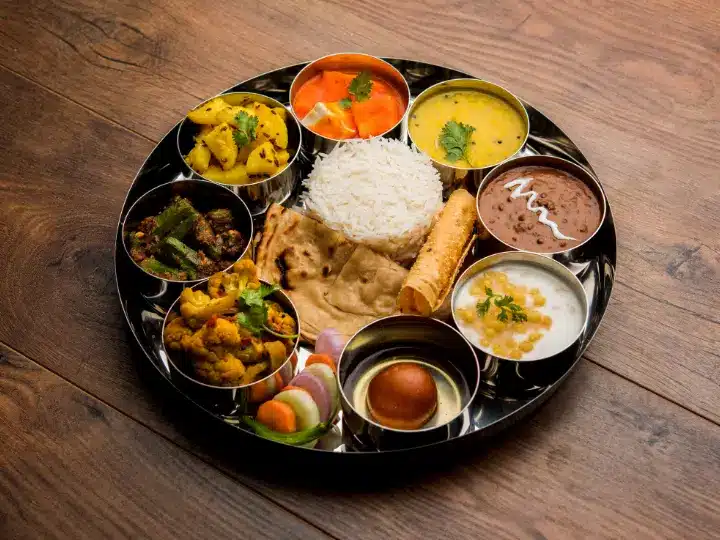
The Indian thali is more than a plate of food. It’s a compact system—built through lived experience—designed to solve three everyday problems at once: balanced nutrition, seasonal suitability, and affordability. Whether it’s Gujarati, Bengali, South Indian, Rajasthani, or North Indian, the thali’s structure repeats a simple pattern: a staple for energy, a protein anchor, vegetables for micronutrients and fibre, a sour/fermented element for digestion, and a little fat for satiety and absorption. Nutrition writers also describe the thali as a naturally “balanced meal” format when portions are sensible.
1) Complete Nutrition in One Plate
A well-built thali typically covers the major food groups in a single sitting—without expensive “superfoods.”
- Carbohydrates (energy): rice, roti, bhakri, millet rotis, idiyappam, appam, or regional breads.
- Protein (repair + satiety): dal, sambar, kadhi, chana/rajma, paneer, curd, fish/egg/meat in non-veg thalis. Indian dietary guidelines emphasise that diversified meals built around cereals, pulses, vegetables, fruits and milk/dairy can provide broad nutrient coverage, especially in vegetarian diets.
- Fats (absorption + fullness): ghee/oil, coconut, peanuts/til, and dairy fats in small amounts.
- Vitamins, minerals, phytonutrients: seasonal vegetables, greens, chutneys, and fruits—core to India’s diversified meal tradition.
- Fibre + gut support: whole grains, pulses, vegetables, and fermented sides (curd/chaas, pickles in moderation) help keep digestion regular. Traditional Indian meals are noted for high fibre contribution from vegetables, whole grains/millets and whole pulses.
The hidden science: cereal + pulse pairing
A classic thali combination—roti/rice + dal—isn’t random. National nutrition guidance notes that cereals/millets and pulses complement each other to improve protein quality.
2) Seasonality Built Into the Thali
Long before nutrition labels, Indian kitchens followed seasonal logic: eat what grows now, cook it in ways that suit the weather, and use spices to support digestion. Ayurveda’s Ritucharya formalises this idea as a seasonal regimen—adjusting diet and lifestyle with changing conditions.
Summer thali: cooling + hydrating
Think light grains, watery vegetables, and soothing sides:
- Lauki/tinda/tori, cucumber, pumpkin, simple dals (moong), mint/coriander chutneys
- Curd/chaas (as it suits you), lemon water, seasonal fruits
- The goal is to reduce heat load and keep digestion comfortable.
Monsoon thali: warm + digestive
Humidity and infections make this season tricky. Traditional meals often become hot, freshly cooked, and spice-supported:
- Khichdi, steamed foods, ginger/jeera/hing/turmeric, lighter dals
- Limited raw street snacks; more home-cooked warmth
Winter thali: hearty + energy-dense
Cold weather typically supports stronger appetite, so the thali becomes denser and warming:
- Sarson/bathua/methi, root vegetables, bajra/makki rotis
- Til-gud, peanuts, ghee in moderation, soups and broths
Seasonality also protects budgets: seasonal produce is usually more available and cheaper, so the thali naturally aligns nutrition with affordability.
3) Affordability: Maximum Nutrition at Minimum Cost
The thali is a masterclass in household economics.
- Low-cost foundations: rice/wheat/millets and lentils deliver calories + protein at scale.
- Seasonal vegetables: cheaper, fresher, and more nutrient-dense than out-of-season options.
- “Small quantity, big impact” ingredients: a spoon of ghee, a chutney, or a sprinkle of seeds lifts flavour and nutrition without raising cost dramatically.
- Zero-waste intelligence: leftovers are repurposed—dal becomes stuffing, rice becomes curd rice/lemon rice, roti becomes upma/churma—reducing waste and stretching resources.
Why the Thali Still Makes Sense in 2026
In an age of ultra-processed snacks, fad diets, and lifestyle disease risk, the thali remains quietly modern: it encourages variety, portion-based balance, and local seasonal eating—principles echoed in contemporary Indian dietary guidance that emphasises diversified food groups over packaged shortcuts.
The thali’s message is straightforward: healthy eating doesn’t require imported ingredients. It requires smart combinations, seasonal sense, and practical portions.
A simple “build-your-thali” rule
1 staple + 1 protein + 2 veg + 1 fermented/sour side + a little fat + (optional) small sweet/fruit.
Next time you sit down to a thali, look closely: every bowl is doing a job—nutrition, season and affordability working in the same frame.
By Manoj H