


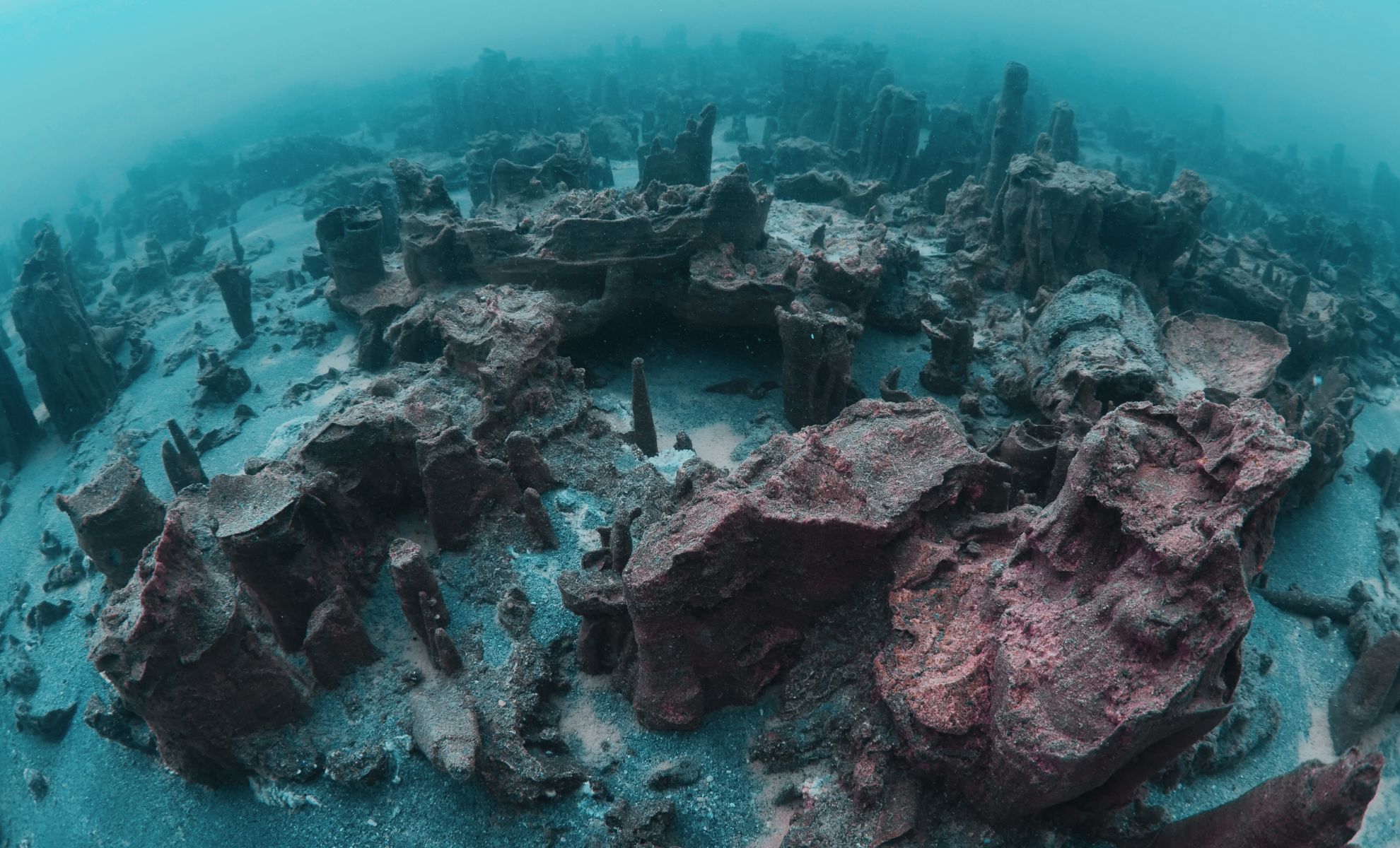
India’s rivers have long been considered sacred — flowing lifelines that have nourished civilizations for thousands of years. But what lies beneath these rivers tells a more mysterious story. Over time, researchers, archaeologists, and historians have found signs of ancient cities and lost civilizations buried beneath riverbeds, submerged in floods, or slowly consumed by shifting landscapes.
In This Article:
- Dwarka – Krishna’s Legendary City Underwater
- The Vanishing of the Saraswati River Civilization
- Krishna River’s Submerged Heritage
- Why Were These Cities Lost?
- Still So Much to Discover
These hidden settlements, once bustling with life, offer a glimpse into a past that was lost — not to war or decline, but to the silent movements of the Earth and water.
Dwarka – Krishna’s Legendary City Underwater
One of the most fascinating discoveries is the underwater city believed to be Dwarka, linked to Lord Krishna in Indian mythology. Located off the coast of Gujarat, marine archaeologists from the National Institute of Oceanography (NIO) have found stone structures, pillars, and pottery beneath the Arabian Sea.
Some of these ruins date back to around 1500 BCE, and the layout suggests a well-planned city with roads, fortifications, and even docks. While debates continue around the connection to Krishna’s Dwarka, many researchers agree that it was once a thriving port city, possibly submerged due to rising sea levels or a natural disaster like a tsunami.
The Vanishing of the Saraswati River Civilization
For years, the Saraswati River was thought to be mythical. But using satellite images and archaeological data, scientists from ISRO and the Archaeological Survey of India (ASI) have traced its likely course through parts of Haryana, Rajasthan, and Gujarat.
Along its dried-up bed, they’ve discovered the remains of settlements like Kalibangan, Banawali, and Rakhigarhi — key cities from the Harappan Civilization. Many of these towns were abandoned around 1900 BCE, possibly due to the river drying up, which caused people to migrate toward the Indus Valley.
Krishna River’s Submerged Heritage
In Andhra Pradesh, the Krishna River holds another piece of forgotten history. Archaeologists have found submerged ruins and temples in areas like Amaravati and Nagarjunakonda. These were once prominent Buddhist and cultural centers, but large parts now lie beneath reservoirs or have been lost to floods.
Some of these sites were relocated when dams were built, but underwater remains continue to emerge, hinting at a much older civilization once thriving along the river.
Why Were These Cities Lost?
Several natural causes may have contributed to the disappearance of these cities:
- Tectonic shifts and earthquakes causing land to sink
- Floods, tsunamis, or rising sea levels swallowing coastal areas
- Rivers drying up due to climate change or shifting monsoon patterns
- Human migration following water sources or better agricultural lands
Over time, what was once the center of civilization became a memory buried under layers of silt, sand, and water.
Still So Much to Discover
These submerged and forgotten cities remind us how much of India’s ancient history remains hidden. With advancements in underwater archaeology and satellite mapping, more discoveries are expected in the coming years.
India’s rivers have always been worshipped, but they may also be guardians of stories yet to be fully uncovered. These lost cities are not just ruins — they are proof of civilizations that once thrived, traded, prayed, and dreamed beside rivers that still flow today.
By – Nikita