


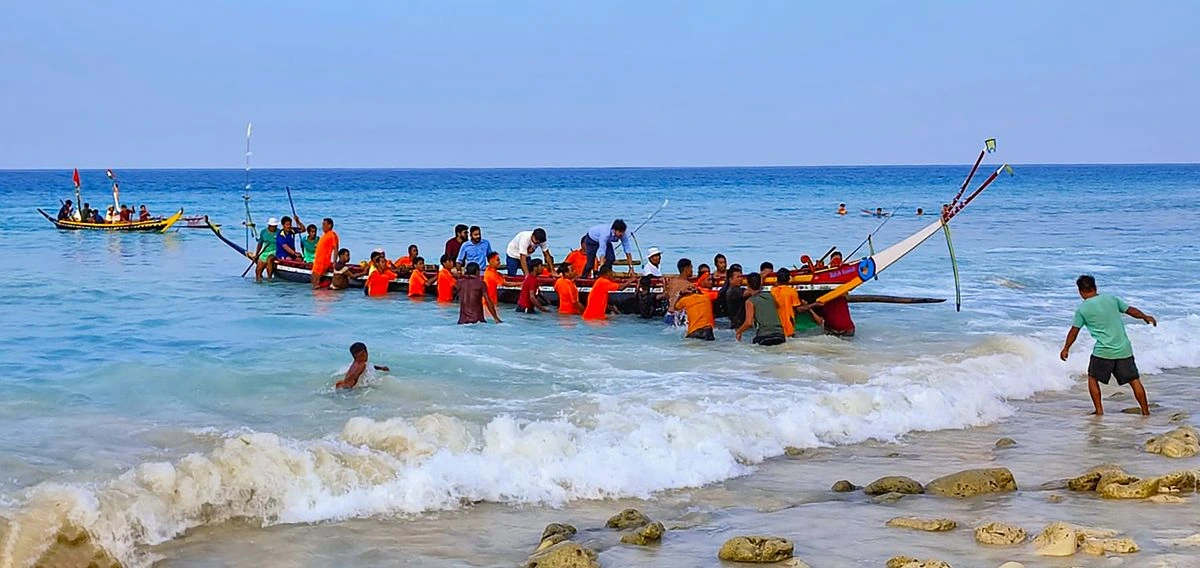
The Nicobari canoe is more than a traditional watercraft — it is a cultural emblem, a technological marvel, and a lifeline for the Nicobarese people. Nestled in the turquoise waters of the Bay of Bengal, the Nicobar Islands are home to an indigenous community whose identity is deeply tied to the sea. Central to this connection is the Nicobari canoe, locally known as odhan, which embodies centuries of seafaring wisdom passed through generations.
In This Article:
Ancestral Engineering on Water
The Nicobari canoe is renowned for its sleek design, light build, and unmatched agility in navigating shallow lagoons and open seas. Traditionally carved out of a single log of pandanus or breadfruit wood, it features a unique outrigger attached by wooden arms, which offers stability even in choppy waters. What sets it apart from other traditional boats is its asymmetrical hull — narrow on one side and slightly broader on the other — allowing greater control and efficiency when paddling.
Even though modern materials have entered the island ecosystem, many Nicobarese still prefer to build canoes using time-honored methods. Rope made from coconut husk fibers, hand tools for carving, and natural adhesives speak volumes about their self-reliance and ecological harmony.
A Lifeline for Island Life
In the Nicobar Islands, canoes are not used for recreation — they are a necessity. Fishing, inter-island travel, transporting coconuts, and even ceremonial functions are deeply intertwined with canoe culture. Without these agile vessels, life on the isolated archipelago would be almost impossible. Before the introduction of modern boats, Nicobari canoes were the only link between the scattered islands and often the only mode of accessing essential resources.
The canoe also plays a role in social rituals. In many villages, gifting a canoe is considered a prestigious gesture — a symbol of respect, gratitude, or alliance. Some canoes are passed down as heirlooms, becoming a tangible legacy of craftsmanship and familial pride.
The Canoe-Making Process: Skill Meets Soul
Crafting a Nicobari canoe is a communal activity. It often begins with selecting the right tree, done with a blend of knowledge and reverence for nature. The log is then hollowed, shaped, and left to season. The outrigger, usually made from a lighter material, is mounted on crossbeams, and every joint is fastened without nails — relying entirely on lashing and organic adhesives.
This intricate process may take weeks, and while younger generations are slowly drifting towards motorized boats, some communities are working to revive traditional canoe-making through workshops and oral history sessions. These efforts not only preserve craftsmanship but also reinforce a shared sense of identity.
Challenges to Survival
Despite its resilience, the Nicobari canoe faces a host of challenges. Deforestation, scarcity of quality wood, and climate change are slowly eroding access to traditional materials. Furthermore, the younger population’s shift toward mechanized transport is gradually breaking the chain of ancestral knowledge transfer. The 2004 Indian Ocean tsunami dealt a heavy blow — many canoes were destroyed, and so were the lives of those who depended on them.
In the years following, several NGOs and cultural preservation groups initiated programs to document and rebuild this vital cultural asset. However, these efforts need stronger support — not just from anthropologists and conservationists, but also from governments and tourism boards who can help integrate canoe heritage into eco-tourism and cultural education.
The Way Forward
Preserving the Nicobari canoe goes beyond saving a mode of transport; it is about safeguarding a worldview. As modernity sweeps across the islands, there is a risk of losing the quiet elegance of this seafaring tradition. By incorporating traditional canoe journeys into cultural tourism or organizing community-led boat-making exhibitions, the world can be given a glimpse into this heritage — one paddle stroke at a time.
The Nicobari canoe is not just wood, rope, and craftsmanship — it’s a floating chronicle of a people who learned to read the sea like a book and write their stories across waves. In its curved hulls and woven outriggers lies a rare wisdom — one that deserves to be heard, protected, and celebrated.
By – Jyothi
Also Read – Bodo Napham – The Soulful Fermented Fish Dish of Assam