


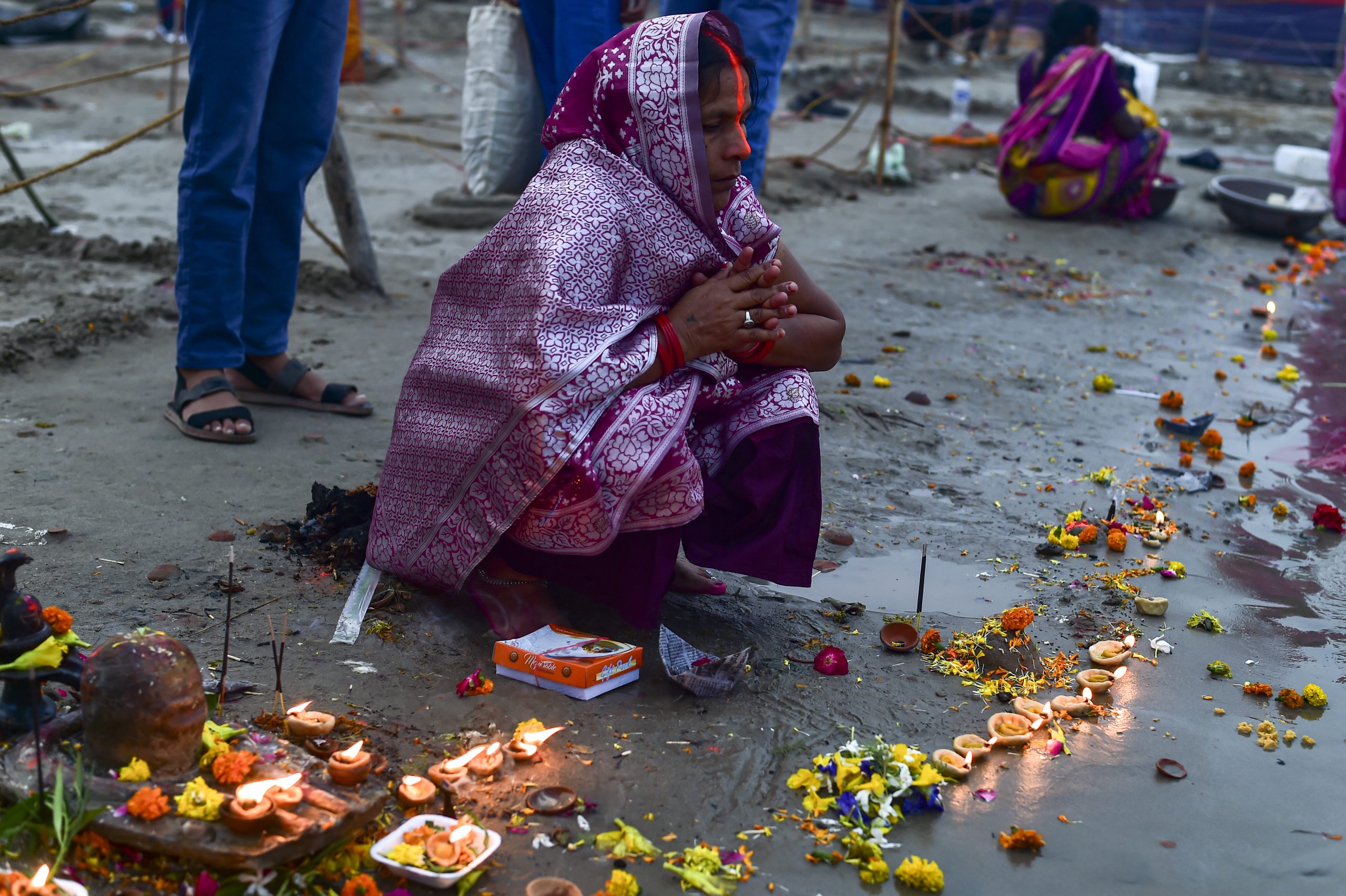
As dawn breaks across the riverbanks of Bihar and eastern Uttar Pradesh, thousands of devotees wade into sacred waters, their faces turned towards the rising sun. This isn’t merely a moment of religious devotion; it’s a scientifically orchestrated ritual where spirituality and human physiology dance in perfect harmony. Chhath Puja, celebrated from October 25 to 28, 2025, represents humanity’s oldest wisdom about harnessing cosmic energy, now being validated by modern science.
Understanding the Festival of the Sun God
Chhath Puja stands as one of India’s most ancient and scientifically sophisticated festivals, dedicated to Surya, the sun god, and Chhathi Maiya, the goddess of dawn. Unlike most Hindu festivals that rely on temple worship and ritual idols, Chhath Puja uniquely celebrates the sun through direct engagement with nature—no priests, no temples, no elaborate ceremonies. Celebrated twice annually during the months of Chaitra (March-April) and Kartik (October-November), the primary observance falls in Kartik, six days after Diwali.
The festival has profound mythological roots. According to ancient legends, Lord Rama and Sita performed Chhath Puja after their return from exile to thank the Sun God for sustaining them through their trials. In the Mahabharata, Kunti worshipped Surya through this very ritual, as Karna, her son by the Sun God, was himself a devoted sun-worshipper. Yet beneath these spiritual narratives lies a sophisticated understanding of seasonal health and solar energy that ancient practitioners encoded into ritual practice.
The Four Days of Transformation: From Purification to Solar Union
The festival unfolds over four meticulously structured days, each serving a distinct physiological and spiritual purpose. The first day, “Nahay Khay,” involves ritualistic bathing in holy water and consuming only simple vegetarian food, a process that initiates physical and mental cleansing. The second day, “Kharna,” involves fasting and preparation, while the main observances “Sandhya Arghya” (evening offering) and “Bhor Arghya” (morning offering), dedicate worship to the setting and rising sun, respectively.
The most rigorous aspect involves the sacred fast. Devotees, primarily women, observe a 36-hour nirjala vrat (fast without water or food), standing in water bodies and offering prayers to both the setting and rising sun. This isn’t arbitrary, it’s timed strategically within the seasonal calendar when the sun’s position creates ideal conditions for safe solar absorption and physiological benefit.
The Science Encoded in Sacred Practice
Modern health experts have begun documenting what ancient practitioners intuitively understood. Dr. Rajiv Ranjan Prasad from Aryabhatta Knowledge University notes that fasting for over 24 hours, combined with fresh food consumption and sun worship, significantly enhances devotees’ lifespan by building strong immunity. The science reveals a sophisticated mechanism: fasting activates autophagy, a cellular detoxification process where damaged cells are broken down and removed, rejuvenating the body at a molecular level.
The timing of Chhath Puja proves scientifically brilliant. During October-November, the sun sits lower on the horizon during sunrise and sunset, providing gentle UV exposure perfect for vitamin D synthesis without harmful radiation. Vitamin D, essential for bone health, immune function, and mood regulation, becomes optimally absorbed during these precise hours. Additionally, early sunlight exposure boosts serotonin levels, naturally enhancing mental health and emotional stability.
Standing in water during prayers offers unexpected hydrotherapeutic benefits. Immersion reduces joint and muscle stress, improves blood circulation, and regulates body temperature. The water’s reflective surface amplifies sunlight exposure, allowing devotees to absorb solar energy from multiple angles. Orthopaedic surgeon Dr. U.K. Jha explains that these water immersions rejuvenate the nervous system, flush harmful bacteria and viruses, and combat seasonal allergies and cough symptoms common during this transitional period.
The Solar Energy Connection: Astrological and Cosmic Dimensions
Beyond conventional medical science, Chhath Puja aligns with cosmic rhythms that astrology has long recognized. In 2025, the Sun transits through Libra, its debilitation sign, making Chhath prayers particularly significant for balancing weakened solar energy. Devotees believe that offering Arghya during this celestial period strengthens one’s personal solar energy, improving confidence, focus, and vitality. For those experiencing weak Sun periods in their horoscope, Chhath Puja rituals become especially powerful tools for restoration.
The festival embodies principles of cosmic alignment and human physiology working in unison. Water immersion, traditionally believed to prevent energy loss and facilitate upward movement of prana (life energy) along spiritual channels, now appears supported by grounding techniques recognized in modern stress-reduction therapies. Sun gazing during safe hours activates the retina, signaling the brain to stimulate the pineal, pituitary, and hypothalamus glands, the very centers regulating mood, sleep, and hormone balance.
Beyond Individual Health: A Festival of Equality and Ecological Consciousness
Chhath Puja transcends personal wellness to embody social and environmental significance. Unlike many Hindu festivals requiring elaborate hierarchies, Chhath requires no male priests or Sanskrit mantras, making it universally accessible. This egalitarian approach celebrates humanity’s shared dependence on the sun’s life-giving energy, irrespective of caste, economic status, or gender.
The festival also promotes environmental stewardship. Devotees clean rivers, ponds, and surrounding water sources before celebration, sanctifying these spaces for worship while simultaneously encouraging ecological consciousness. This sacred ecological practice reminds worshippers that they are guardians of Earth’s resources, responsible for preserving water purity for future generations.
Bridging Two Worlds
Chhath Puja represents humanity’s most profound achievement: the seamless integration of spiritual practice with scientific truth. Through disciplined fasting, mindful water immersion, and strategic solar engagement, devotees access both physical vitality and spiritual transcendence. Modern laboratories now confirm what devotional wisdom has practiced for millennia, that honoring the sun through ritualistic discipline transforms body, mind, and spirit simultaneously.
As thousands gather on riverbanks this October, they’re not simply worshipping an ancient deity. They’re participating in a cosmic exchange millions of years in the making, where the sun’s eternal generosity meets human consciousness in perfect recognition. In that sacred meeting of light and devotion lies the true power of Chhath Puja, a testament that science and spirituality, far from opposing forces, are ultimately expressions of the same universal truth.
By – Sonali